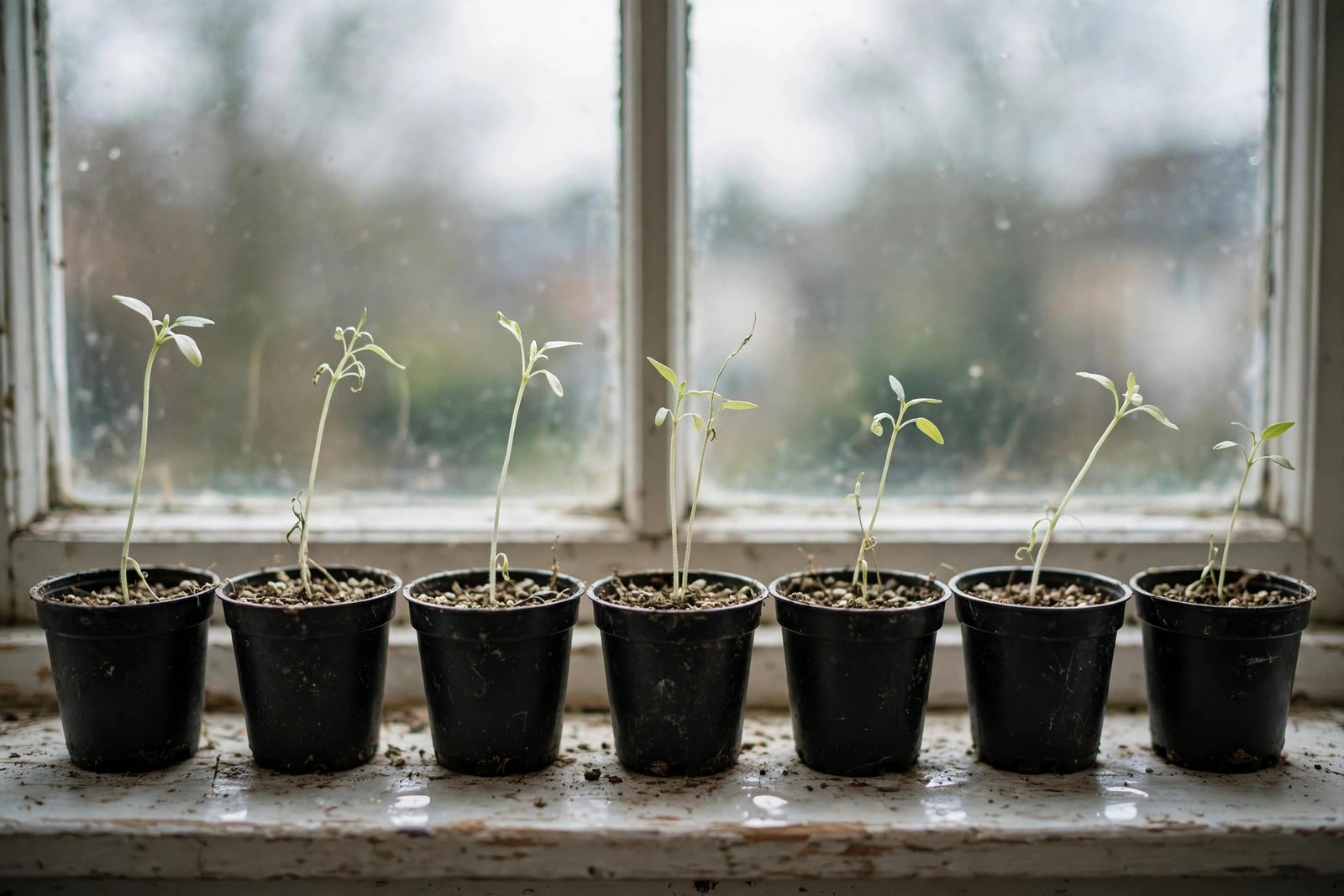
You bought a tray of healthy herb seedlings, potted them up with care, and waited for the lush, harvest-ready plants you imagined. Weeks later they are barely bigger than the day they arrived — alive, but small, pale, and stubbornly slow. It is one of the most common frustrations in container gardening, and it is almost never the plant’s fault. Herbs in pots grow slowly for a short list of fixable reasons, and once you find yours, growth can speed up surprisingly fast.
This guide goes through the causes in the order you should check them, explains the simple tests that reveal each one, and gives you natural, no-fuss ways to get your potted herbs growing strongly again.
Quick Answer
Potted herbs grow slowly mainly because of too little light, a pot that is too small, worn-out or compacted soil, irregular watering, and a lack of food. Cool temperatures and overcrowded seedlings — especially supermarket herb pots crammed with dozens of plants — are also common culprits. The fastest natural speed-ups are: move the pot to the sunniest spot you have, repot into fresh, good-quality soil in a slightly larger container, water consistently without drowning the roots, feed lightly and regularly, and harvest by pinching the tips, which forces the plant to branch and produce more leaves.
Cause 1: Not Enough Light (The Most Common Reason)
Most culinary herbs come from sunny climates and expect six or more hours of direct sunlight a day. On a dim windowsill or shaded balcony they do not die — they simply idle, growing a centimetre at a time with long gaps between small, pale leaves. Leggy stems reaching toward the window are the clearest sign.
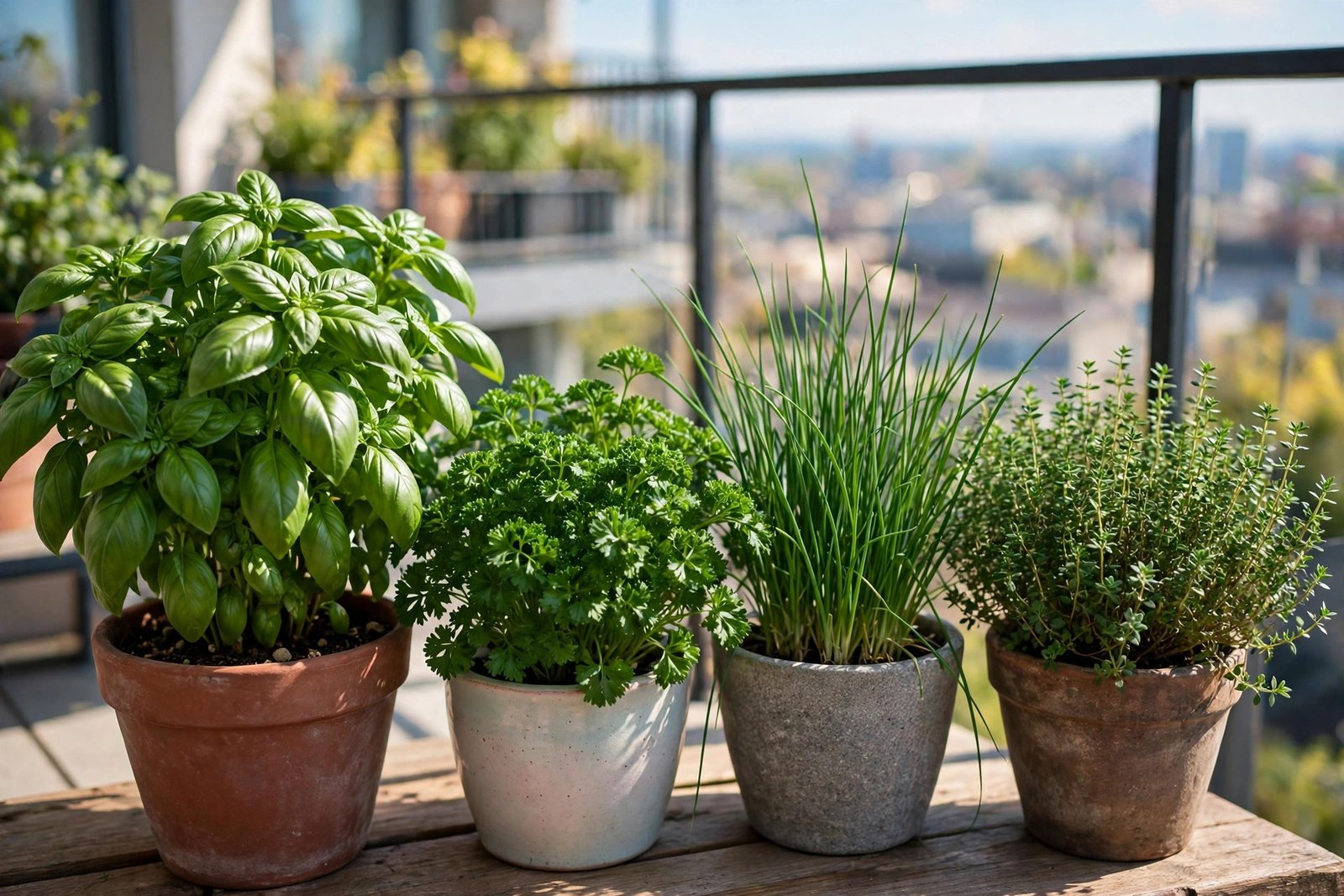
The fix costs nothing: move the pot to your brightest position. Outdoors in full sun is best in the growing season; indoors, a sun-facing window with the pot turned every few days so it grows evenly. Herbs that have been starved of light improve visibly within two weeks of a move. Choosing compact varieties bred for pots and windowsills also matters, since they are selected to stay productive in exactly these conditions.
Cause 2: The Pot Is Too Small — or Holds Too Many Plants
Roots that have filled every corner of a pot cannot support faster top growth, no matter how well you feed and water. Worse, many shop-bought herb pots are not one plant but twenty or thirty seedlings sown together for a full-looking pot. They compete for the same small ration of water, food, and root space, and every one of them grows slowly.
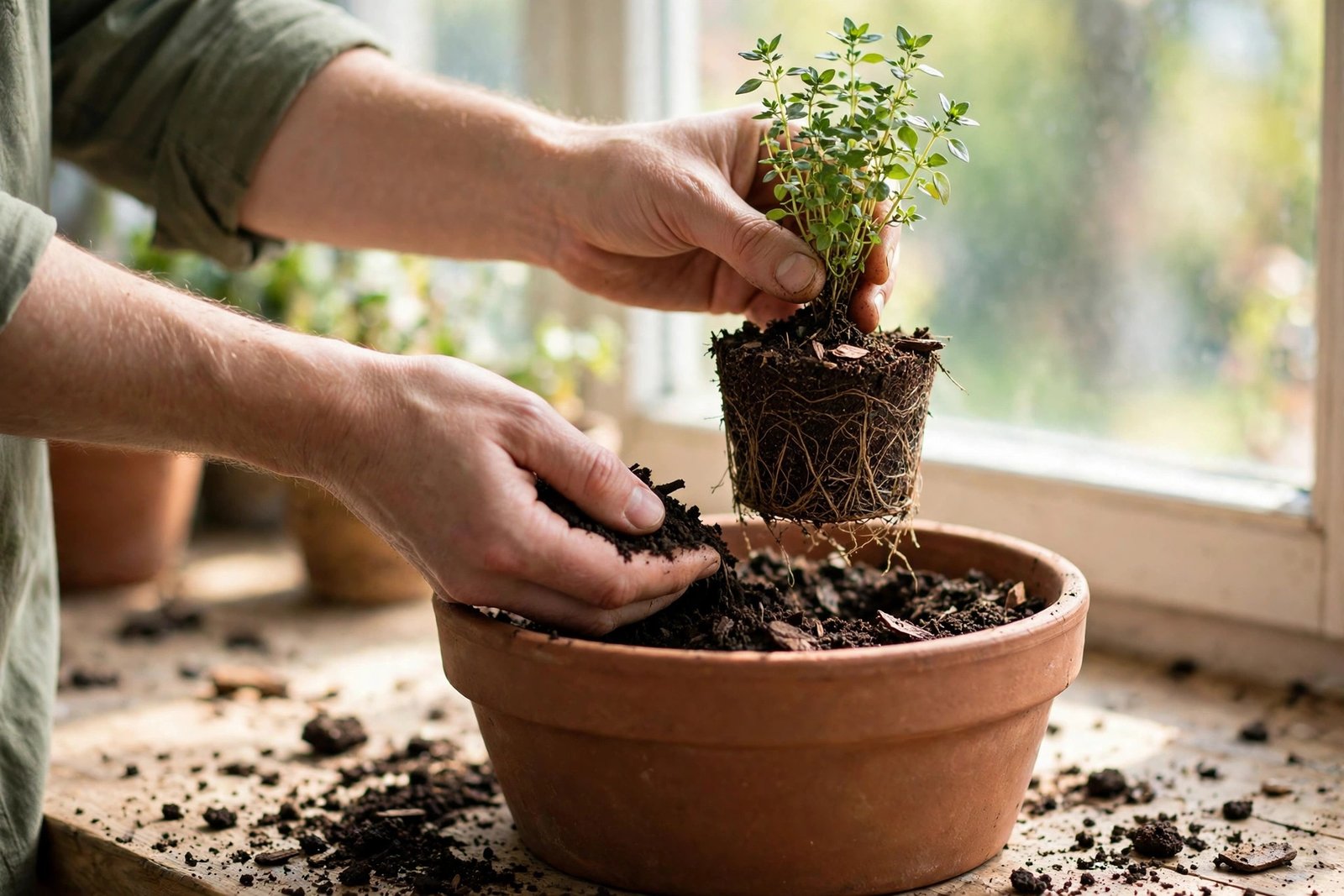
Check by sliding the plant out of its pot: a solid mat of circling roots means it is time to act. Either move a single plant into a pot one or two sizes larger, or gently tease a crowded clump apart and give each small group its own pot with room to grow. Divided herbs often double in size within a few weeks simply because the competition has ended.
Cause 3: Tired, Compacted, or Wrong Soil
Potting soil does not last forever. After a season it collapses, drains poorly, and holds little food. Herbs sitting in old, dense soil grow slowly because their roots struggle for air and the nutrients have long since washed away. Soil also needs to match the herb: Mediterranean types such as rosemary and thyme want sharp drainage, while leafy herbs such as basil and parsley prefer a richer mix that holds gentle moisture. Getting the blend right makes a measurable difference — our guide to the best soil mix for potted plants explains how to build one for each type of plant.
Repotting with fresh soil is the single most effective rescue for a slow herb: it renews food, restores drainage, and gives roots fresh space in one job.
Cause 4: Watering That Is Too Much, Too Little, or Too Irregular
Roots grow poorly at both extremes. Soil that swings between bone dry and soaked stresses the plant repeatedly, and growth stalls while it recovers. Permanently soggy soil is worse — roots suffocate and rot, and the plant sits still, yellowing slowly. Aim for steady, even moisture: water when the top couple of centimetres feel dry, water deeply, and let the pot drain completely. Make sure every pot actually has drainage holes, and empty saucers after watering.
Cause 5: Hungry Plants
Fast leaf production needs nitrogen, and a small pot holds only a small supply. Herbs fed nothing at all grow more and more slowly as the soil’s nutrients run out, with pale, small leaves as the giveaway. Feed little and often: a balanced liquid fertiliser at half the label strength every two weeks in the growing season is plenty for most herbs. Slow-release granules mixed into fresh soil at repotting time are a good low-effort alternative. Avoid strong feeding of Mediterranean herbs such as rosemary and lavender, which prefer leaner conditions and grow soft and flavourless when overfed.
Cause 6: Too Cold, Too Hot, or Too Crowded for Air
Herbs have temperature preferences. Basil sulks and nearly stops below about 15°C (59°F) and is damaged by real cold, while coriander and parsley slow down and rush to flower in heat. Check what your herb expects before blaming your care. Crowding matters too: pots packed tightly together in still air invite mildew and slow growth, so give plants a little space for air to move between them.
Nature-Friendly Ways to Speed Growth Up
- Pinch the tips. Regularly pinching out the growing tip of basil, mint, and other leafy herbs forces side shoots to grow, turning one slow stem into a bushy plant with far more leaves to harvest. Never taking a harvest actually slows leafy herbs down.
- Harvest correctly. Take the oldest, largest outer leaves and stems first, and never remove more than about a third of the plant at once, so it always keeps enough leaf to fuel regrowth.
- Remove flower heads. For herbs grown for their leaves, flowering signals the end of leafy growth. Pinch flower buds off basil, coriander, and parsley as soon as they appear to extend the harvest.
- Rotate the pots. A quarter turn every few days keeps growth even and makes full use of the light.
- Refresh the surface. Scrape off the top 2–3 cm of old soil each spring and replace it with fresh compost — a mini-feed and drainage boost without a full repot.
- Watch for recovery signs. New leaves emerging a deeper green and stems thickening mean your changes are working; allow two to three weeks before judging a fix. Slow growth with wilting and yellowing together points back to roots and water — the same combination covered in detail in our guide to basil wilting and turning yellow, and the diagnosis steps there apply to most leafy herbs.
Mistakes to Avoid
- Feeding a thirsty or root-bound plant harder. Fertiliser cannot fix a pot that is too small or soil that is spent. Repot first, then feed.
- Using garden soil in pots. It compacts, drains badly, and often carries weed seeds and disease. Always use potting mix in containers.
- Moving a shade-grown herb straight into blazing sun. Leaves unaccustomed to strong light scorch. Increase exposure over a week.
- Watering a little every day. Shallow daily watering keeps the surface wet and the roots dry. Water deeply and less often, guided by the soil.
- Expecting winter growth. Most herbs slow dramatically in low light and cool temperatures, whatever you do. Judge your fixes during the growing season.
- Never harvesting. Unharvested leafy herbs grow tall, woody, and slow. Regular pinching is a growth treatment, not just a harvest.
Frequently Asked Questions
How long should I wait before deciding a fix has worked?
Give any change two to three weeks. Herbs respond to better light, fresh soil, and feeding with visibly faster new growth in that window during the growing season. If nothing changes, work through the list again — slow growth often has two causes at once, such as low light plus a root-bound pot.
Is it normal for one herb in a mixed pot to grow much faster than the others?
Yes. Herbs differ in vigour and in what they need — mint, for example, will out-grow and out-compete almost anything planted with it. Mixed pots look lovely but usually disappoint; separate pots let you match light, water, and food to each herb and keep growth even.
Can I use coffee grounds or kitchen scraps to feed potted herbs?
Small amounts of well-rotted compost worked into the surface are fine, but raw kitchen scraps and heavy layers of coffee grounds can sour the soil, attract flies, and lock up drainage in a small pot. A simple liquid feed is more reliable and controllable; save scraps for the compost heap.
Why did my herbs grow fast at first, then slow down?
That pattern usually means the plant has used up what the pot provided: the soil’s nutrients are spent, the roots have filled the space, or both. It is the classic sign that repotting into fresh soil — not just extra feeding — is due.
Conclusion
Slow herbs are almost never a mystery once you check the basics in order: light first, then root space, soil, water, food, and temperature. Most struggling pots need only one or two of these corrected, and the response — bushier plants, bigger leaves, real harvests — comes quickly. For more step-by-step help with individual herbs and vegetables, explore our growing library of herbs and vegetables in pots guides.
1 thought on “Why Are My Herbs Growing Slowly in Pots? (Speed Up Growth Naturally)”