
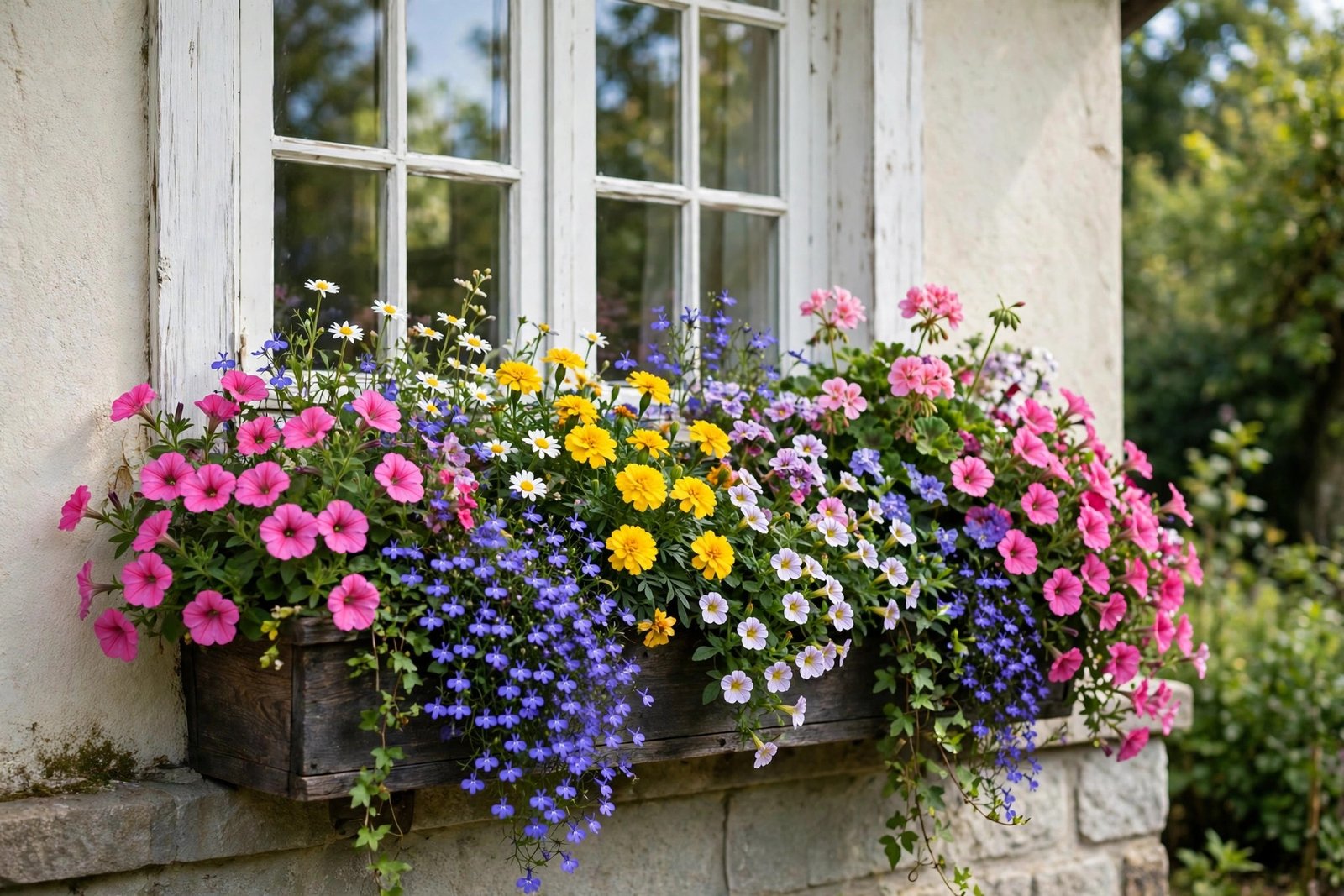
A window box is one of the simplest ways to add colour and life to a home. It sits right outside the window, so flowers, leaves and scent can be enjoyed from inside and outside. It also works where there is no garden at all, such as on a flat or a small house front. Best of all, the same box can change with the year: fresh bulbs in spring, bright flowers in summer, rich foliage in autumn and calm evergreens in winter.
This guide explains how to choose and fit a box safely, how to plant it, what to plant in each season, and how to water, feed and refresh it.
Quick Answer
Choose a deep, sturdy box with drainage holes, fix it securely, line it if needed, and fill it with good potting mix. Plant with a simple pattern: a taller plant at the back, bushy plants around it, and trailing plants at the front edge. Change the main plants each season — bulbs and pansies in spring, flowering colour in summer, foliage and berries in autumn, evergreens in winter — and water regularly, because a small box dries out fast.
Choosing and Fitting a Window Box
Start with size and strength. A deeper box holds more potting mix, and more mix holds more water and food for the roots. Choose a box as wide as the window allows and deep enough for roots to spread. A shallow box works for small plants, but needs watering much more often.
If making a box is an option, this guide on how to build a wooden planter box explains the basic steps and sizes.
Secure Fixings and Safety
A planted box is heavy, especially after watering, so fixings must hold the full, wet weight — not just the empty box.
- Fix brackets into a solid wall or strong frame, not into weak or rotten material.
- Use fixings that suit the wall type, and check every screw is tight.
- Keep a small gap between box and wall if possible, so air can move and the wall stays drier.
- Test the box before planting. It should not wobble, tip or slide.
Safety note: Above a path, door or walkway, secure mounting is essential — a falling box can cause serious injury. Check fixings at every seasonal change and replace rusty, loose or damaged parts straight away. If in doubt about fitting a box at height, get help from someone with the right tools and experience.
Drainage, Liner and Potting Mix
Roots need water and air. Without drainage, water sits at the bottom and roots can rot.
- Check the box has drainage holes in the base. If not, add holes where the material allows.
- Add a liner if needed. It protects a wooden box from damp mix and makes lifting the planting out easier.
- Cover the holes lightly so mix does not wash out, while water can still escape.
- Fill with fresh potting mix made for containers. Garden soil is too heavy, drains poorly and can carry weed seeds.
- Leave a small space at the top so water does not run over the edge.
Think about watering access before planting. Make sure the box can be watered safely, without leaning out too far or climbing on anything unstable.

The Thriller, Filler and Spiller Planting Pattern
One simple pattern makes any window box look well planned, using three kinds of plants:
- Thriller: the main plant — taller or bolder than the rest, in the middle or at the back.
- Filler: bushy, medium plants that fill space around the thriller and cover the mix.
- Spiller: trailing plants at the front and ends that soften the edge.
Plant in that order: thriller first, fillers around it, then spillers along the front edge. Water well after planting. Keep plants with similar needs together — sun-loving, dry-tolerant plants will not be happy next to thirsty, shade-loving ones.
Paired with planting at ground level, a window box can also be part of creating a cozy garden corner around a window or seating area.
Window Box Ideas for Spring
In spring, the aim is fresh growth and early colour.
- Thriller: small spring bulbs with upright flowers, such as daffodils or tulips, give height and a clear seasonal signal.
- Filler: pansies and violas are ideal. They flower for a long time in cool weather and come in many colours. Primroses also work well.
- Spiller: trailing ivy or other small trailing foliage softens the edge while the bulbs grow.
Plant bulbs a little deeper than bedding plants, between other plants so their leaves are less noticeable as they fade. Remove bulb leaves once they turn yellow, and keep watering while bulbs grow and flower — a sunny, windy box can dry out even in cool weather.
Window Box Ideas for Summer
In summer, a window box is at its fullest, with strong colour and trailing growth.
- Thriller: upright geraniums, small ornamental grasses or a compact flowering plant with height makes a good centre.
- Filler: petunias, marigolds, begonias and similar summer flowering plants give dense colour. Mixing two or three colours usually looks calmer than mixing many.
- Spiller: trailing petunias, lobelia, trailing verbena or ivy hang over the front and sides.
Summer boxes need the most care: check the mix often, remove faded flowers to encourage more blooms, and feed regularly. In hot or windy weather, a box could need water every day.

Window Box Ideas for Autumn
In autumn, flowers fade but colour does not end. Leaves, grasses and berries carry the display.
- Thriller: ornamental grasses add height, movement and soft, warm tones.
- Filler: plants grown for foliage, such as heuchera with coloured leaves, small heathers, or ornamental cabbage and kale, fill the box with rich colour.
- Spiller: ivy and other trailing evergreens keep the edge soft.
Plants with berries, such as wintergreen or skimmia where suitable, add bright points of colour. Remove finished summer plants, keep healthy trailers, and fill gaps with autumn plants. Check the fixings again before rougher weather arrives.
Window Box Ideas for Winter
In winter, structure matters more than flowers. Evergreens keep the box looking alive when other plants are resting.
- Thriller: small, slow-growing conifers give height and shape all winter.
- Filler: evergreen plants such as small box plants, heathers, skimmia and hardy foliage plants fill the middle.
- Spiller: trailing ivy is one of the most reliable winter spillers.
Where the climate allows, winter pansies and violas add small patches of colour on milder days. In very cold areas, rely on evergreens and berries, and choose plants that cope with frost in a container, where roots are colder than in the ground. Water less in winter, but do not let evergreens dry out completely.
Watering and Feeding Routine
A window box holds little mix, so it dries out much faster than a garden bed. A simple routine keeps plants healthy:
- Check before watering. Push a finger into the mix. If the top layer is dry, water. If still damp, wait.
- Water deeply. Water slowly until a little runs from the drainage holes.
- Water the mix, not the leaves. Aim at the base of the plants.
- Adjust to the season. Summer displays could need daily watering; spring and autumn need less, winter the least — but still check.
- Feed during growth. Mix holds only limited food. In the growing and flowering seasons, use a liquid feed as directed on its packaging, or a slow-release feed mixed in at planting. Reduce or stop feeding when growth slows in winter.
Remove faded flowers and yellow leaves regularly.
Refreshing the Box Each Season
Refreshing does not always mean starting again. At each change of season:
- Remove plants that have finished, look weak or no longer suit the display.
- Keep healthy plants that still fit — ivy, small conifers and some foliage plants can stay for several seasons.
- Replace the top layer of old mix with fresh mix. If it is very old, compacted or full of roots, replace most or all of it.
- Check drainage holes are clear, the liner is sound, and fixings have no rust, looseness or damage.
- Replant using the thriller, filler and spiller pattern, then water well.
Healthy removed perennials and small shrubs can be moved into a pot or garden bed to keep growing.
Mistakes to Avoid
- Weak fixings: hanging a heavy, wet box on small or loose screws is unsafe, especially above a walkway.
- No drainage: a box without drainage holes quickly becomes waterlogged and roots rot.
- Using garden soil: heavy soil compacts in a box, drains badly and starves roots of air.
- Overcrowding: plants planted too close soon compete for water and food and grow weak.
- Forgetting to water: a small box can dry out in a single hot, windy day. Regular checks matter more than a fixed timetable.
- Mixing mismatched plants: sun-loving, drought-tolerant plants and shade-loving, thirsty plants rarely thrive together.
- Never refreshing the mix: old mix holds less water and food, so each new display performs worse.
Frequently Asked Questions
How often should a window box be watered?
It depends on season, weather and box size. In summer, a box in sun could need water every day; in spring and autumn every few days could be enough, and in winter much less. Use the finger test: water when the top of the mix feels dry.
Can the same plants stay in a window box all year?
Some can. Evergreens such as ivy, small conifers and hardy foliage plants can stay through several seasons as the lasting structure. Seasonal flowers, bulbs and bedding plants are usually changed, as each flowers best in its own season.
What if a window gets very little sun?
Choose shade-tolerant plants. Many foliage plants, ferns, begonias, pansies and violas do well without strong sun. Avoid plants labelled for full sun, which grow weak and flower poorly in shade. The thriller, filler and spiller pattern still works with shade-loving plants.
How deep should a window box be?
Deeper is usually better: more mix means more water and food, and less frequent watering. A shallow box dries out fast and limits plant choice. If only a shallow box fits, choose small, compact plants and water more often.
Conclusion
A window box rewards a little planning. Fit it securely, give it drainage and good mix, and plant it with a thriller, fillers and spillers. Then follow the seasons: bulbs and pansies in spring, bright flowers in summer, foliage, grasses and berries in autumn, and evergreens in winter. With regular watering, feeding and a seasonal refresh, one small box can look good all year. For more ideas, explore the full Garden Decor, DIY and Outdoor Living category.
