A bird bath is one of the smallest changes you can make to a garden, and one of the most rewarding. Even in a tiny garden, on a balcony, or on a small patio, a shallow dish of clean water can bring birds close and make the space feel alive. You just need the right size, place, and routine to keep water safe.
Quick Answer
Choose a shallow bath with gently sloping sides and water only 2 to 5 centimetres (1 to 2 inches) deep. Good small-space options are a short pedestal, a hanging dish, a ground-level saucer, a wall-mounted bowl, or a DIY bath made from a large shallow bowl or pot saucer. Place it in light shade, near cover but with a clear view around it, away from cat ambush spots. Add a flat stone for perching, refresh the water every couple of days, and scrub the bowl regularly.
Why Birds Need Shallow Water
Birds need water for drinking and bathing. Bathing removes dust and helps keep feathers in good condition for flying and staying warm or cool. Drinking water matters all year, and it can be hard to find in dry or very hot weather, or when puddles freeze.
Most garden birds are small and do not swim. They like to stand in water, dip, splash, and shake. If water is too deep, or sides are steep and slippery, they may only drink from the edge or avoid the bath completely. A shallow bath with a rough surface they can grip feels safe, which is why a simple saucer often works better than a deep, glossy bowl.
The Best Styles for Small Spaces
Think first about cleaning. The best bath is one you can empty and scrub easily. If it is heavy or awkward, dirty water will stay in it for longer.
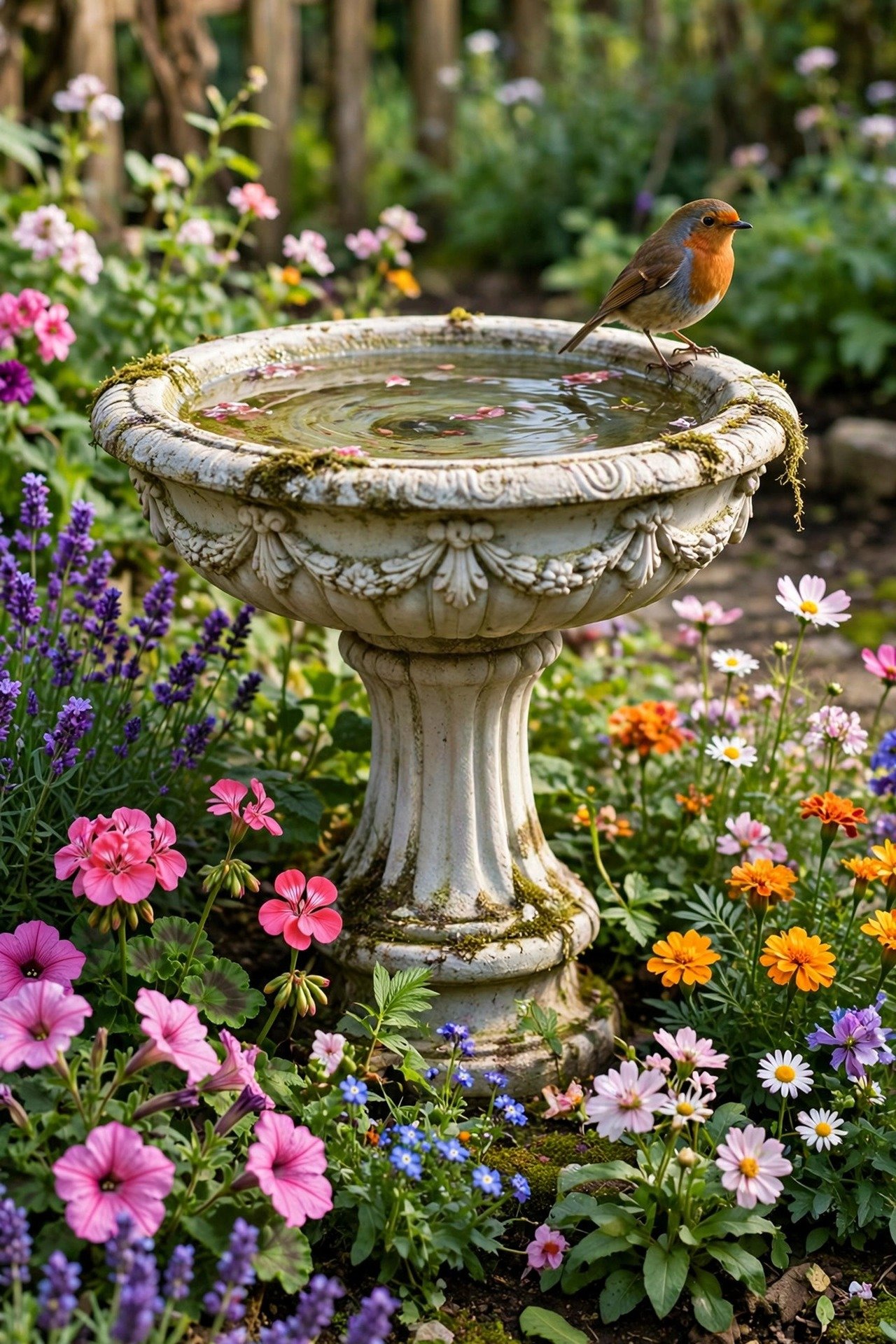
Pedestal bird bath
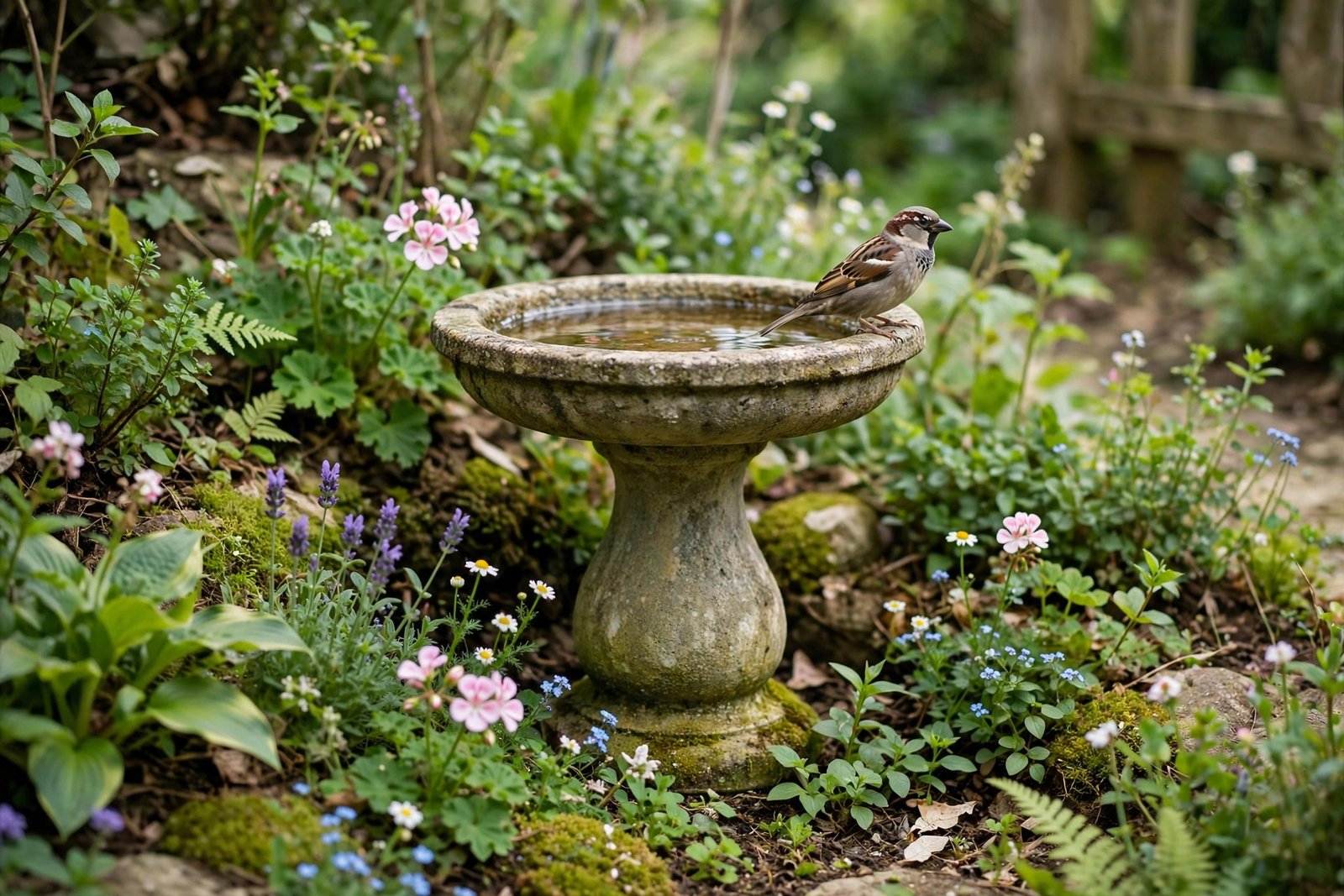
A short pedestal lifts water off the ground, helps birds see danger, and makes a pretty focal point. Choose a compact model with a wide, stable base and shallow bowl, set on a flat surface so it does not wobble or tip in wind.
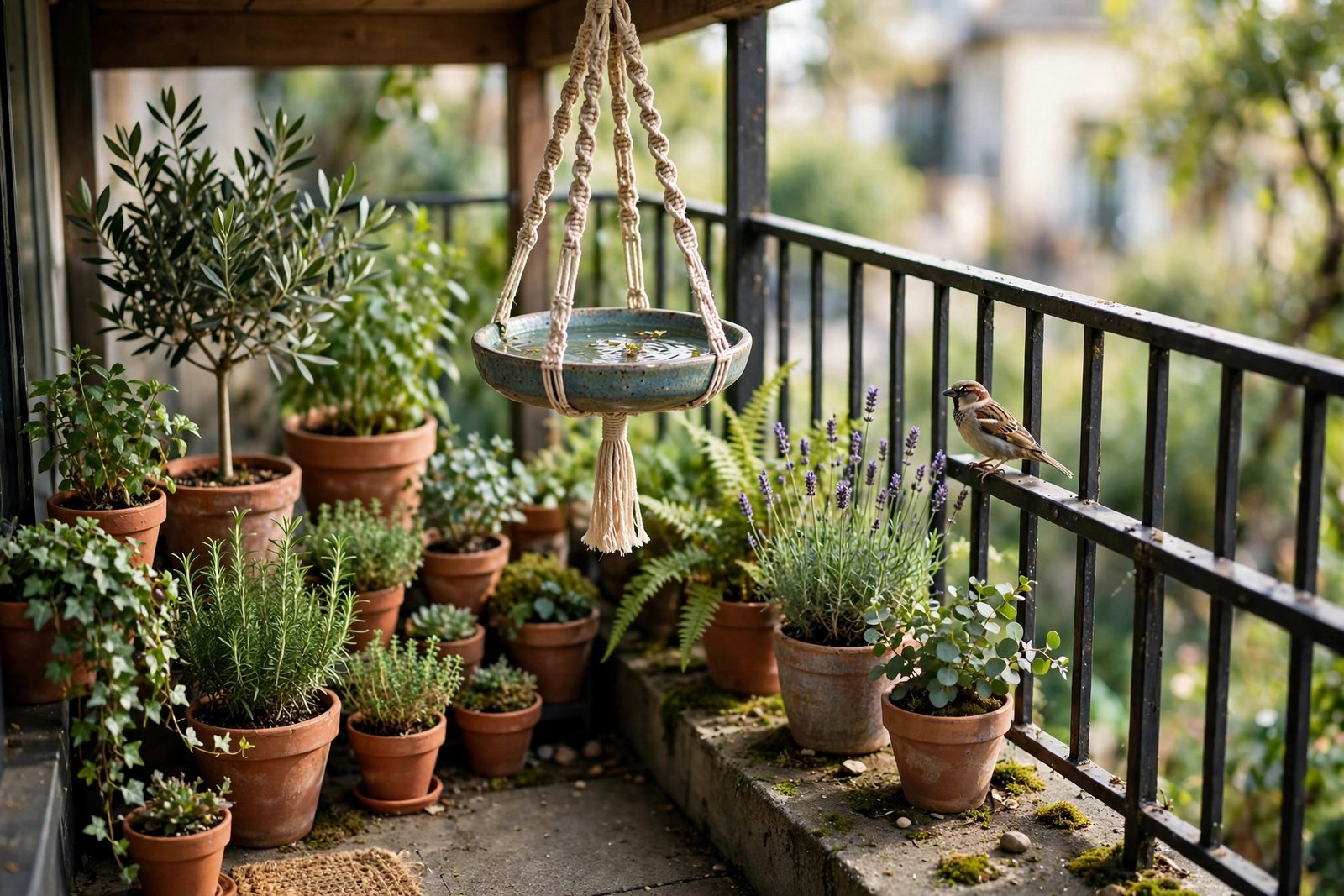
Hanging bird bath
Ideal when floor space is very limited, such as on a balcony. It hangs from a sturdy branch, bracket, or hook and uses no ground space. Pick one that hangs level, check the hook and chain regularly, and top it up often, as small hanging baths dry out quickly.
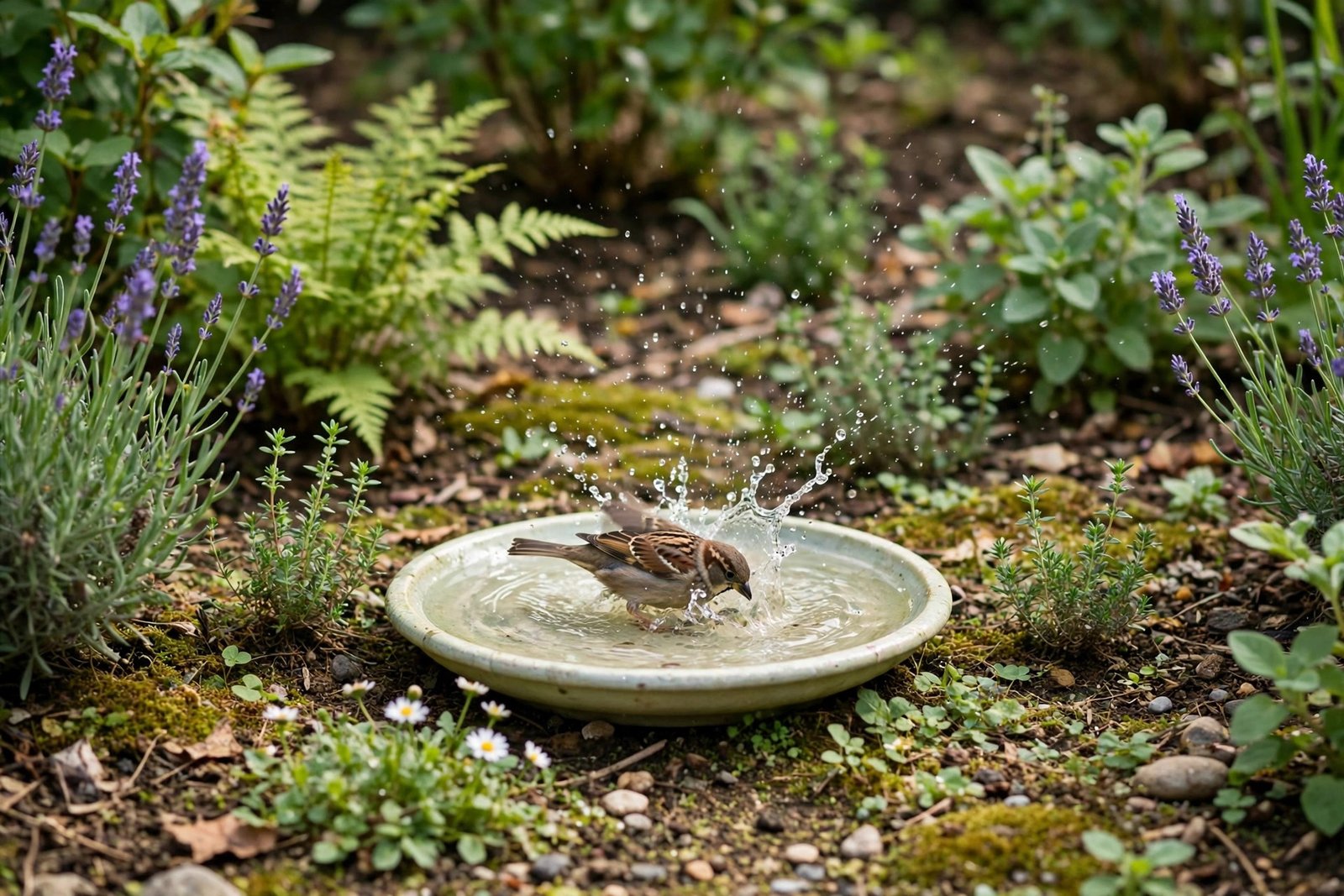
Ground-level dish
A shallow dish on the ground looks natural and suits birds that feed at ground level. Set it on a slab or flat stones so it sits level, and leave a small open area around it so birds can see around them.
Wall-mounted bird bath
A wall- or railing-mounted bowl saves space and keeps the bath away from ground predators. Use strong fixings in a spot with some shade, and choose a bowl that lifts off for scrubbing.
Simple DIY bird bath
A large shallow pot saucer or wide dish on an upturned pot, a stump, or a small stack of bricks can work very well. Keep it shallow with gently sloping sides, make the base stable and level, and choose a material that is easy to scrub. Avoid deep buckets and steep-sided bowls. If a dish is a little deep, add clean pebbles to reduce the depth and a flat stone as a perch.
Where to Place It
Position is often more important than style. Birds will not use a beautiful bath if they feel exposed or trapped.
Shade, cover, and clear sightlines
Light shade for part of the day is ideal. It keeps water cooler, slows algae, and stops a small bath drying out too fast. Full sun all day makes water warm and green quickly; deep shade all day can leave it cold and slimy. Morning sun with afternoon shade is a good balance. Birds also like cover nearby — shrubs or tall pots to escape to — but need a clear view while drinking. Place it about 2 to 3 metres from cover if you can; even 1 metre helps, as long as a cat cannot hide unseen there.
Away from ambush spots
Keep the bath away from low dense bushes, long grass, and corners where cats can wait and pounce. Keep it away from busy paths and doors, and not where falling seed from a feeder dirties the water quickly. A quiet corner you can see from a window is perfect. Set the bath level on a stable base so it does not tip when a larger bird lands on one side.
Safe Depth, Grip, and Perching
Keep water very shallow: about 2 centimetres at the edge and no more than about 5 centimetres in the centre. Larger birds will still use it happily.
- Add a flat stone in the centre, just above or below the surface, so birds can stand, drink, and judge the depth.
- Add grip. If the bowl is smooth, clean pebbles on the bottom give feet something to hold.
- Keep a wide rim. Birds often land on the edge first, look around, and only then step in.
If birds only cling to the edge, the bath is probably too deep or too slippery. Make it shallower and add a stone, and they will usually gain confidence.
Natural and Rustic Styling
Stone, terracotta, and weathered finishes blend well with leaves and flowers, and a simple dish among grasses can almost disappear until a bird lands. Stones and bark can decorate the area around the bath, but keep the inside of the bowl easy to scrub, and do not let leaves trail into the water. For more ideas in this style, see these garden decor ideas using natural materials.
Small-Space Charm: Balconies and Pots
In the smallest gardens, make the bath part of a container display: a hanging dish above pots, a saucer on an upturned pot among herbs, or a wall-mounted bowl above a window box. Grouped pots create shelter and a mini-garden feeling — if you enjoy that layered charm, you may also like learning how to make a fairy garden in a pot to sit nearby. Keep the bath itself plain and easy to clean, and keep decorative items out of the water.
Keeping the Water Clean and Fresh
Clean water is the most important part of this guide. Dirty water can spread disease among birds and quickly puts them off. A small bath is quick to care for:
- Refresh often. Refill every day in hot weather, and at least every couple of days at other times.
- Scrub regularly. Two or three times a week, scrub with a stiff brush kept only for this job — more often in hot weather or with many visitors.
- Rinse well with clean water before refilling, so no residue stays behind.
- Remove leaves, droppings, algae, and slime whenever you see them.
Use plain water and a brush for routine cleaning. If the bowl gets very slimy, wash it away from plants, rinse several times, and let it dry in the sun before refilling. Never add chemicals, detergents, or oils to water birds drink. Frequent scrubbing and fresh water work better and are safe.
How to Prevent Mosquitoes
Mosquitoes lay eggs in still water, and their young need water left undisturbed for several days. A well-kept bath should not breed them, because you change the water too often for that cycle to finish.
- Change water frequently — every couple of days removes eggs and young before they develop.
- Keep it shallow. Shallow water disturbed by bathing birds suits mosquitoes less.
- Keep water moving if you can. A small solar bubbler, as a general idea, creates ripples that discourage egg-laying and attract birds. It is optional; regular changes matter far more.
- Empty other containers nearby. Buckets and toys holding rainwater are a bigger problem than a cleaned bath.
Seasonal Notes
In hot periods, check the bath morning and evening, as small baths evaporate fast. When water may freeze, break thin ice gently and refill. Never add salt or chemicals, and avoid boiling water, which can damage the bowl. If the material can crack in frost, empty it on very cold nights. After heavy rain, tip out dirty overflow water and refill.
How to Attract More Birds
Be patient. Birds can take days or a couple of weeks to trust a new bath. Keep it in the same place with clean water. Moving water helps, so a gentle ripple or slow drip can draw attention. Offer food and shelter nearby, but not so close that seed falls into the water. Watch from a distance at first.
Mistakes to Avoid
- Water too deep — it scares small birds and can be dangerous.
- A steep, slippery bowl — birds need sloping sides and grip.
- A bath next to a cat hiding spot — dense cover right beside it puts birds at risk.
- Full sun all day — water heats up, algae grows, and the bath dries out.
- Stale water — green or smelly water can spread disease and drives birds away.
- Chemicals or oils in the water — add nothing except clean, fresh water.
- A bath you cannot clean easily — choose a simple dish you will actually scrub.
- Moving the bath often — birds learn a location, so keep it steady.
Frequently Asked Questions
How deep should a bird bath be?
About 2 centimetres at the edge and no more than about 5 centimetres in the centre, with a flat stone so small birds can stand safely.
How often should I change the water?
Every day in hot weather and at least every couple of days at other times. Scrub the bowl two or three times a week, rinse well, and refill. Frequent changes also prevent mosquitoes.
Will a bird bath attract mosquitoes?
Not if you maintain it. Mosquitoes need still water left for several days. A shallow bath refreshed every couple of days breaks their cycle, and moving water discourages them further.
Why are birds not using my new bath?
They may need time to trust it, or the spot may feel unsafe. Check the depth, grip, nearby cover, and quiet position, then leave it in place with clean water for at least two weeks.
Conclusion
A bird bath for a small garden does not need to be large or expensive. A shallow dish with sloping sides, a flat perching stone, a safe spot with some shade and nearby cover, and fresh water changed every couple of days will do the job well. For more small-space projects, explore the Garden Decor, DIY and Outdoor Living ideas and build your tiny garden one pretty, practical step at a time.