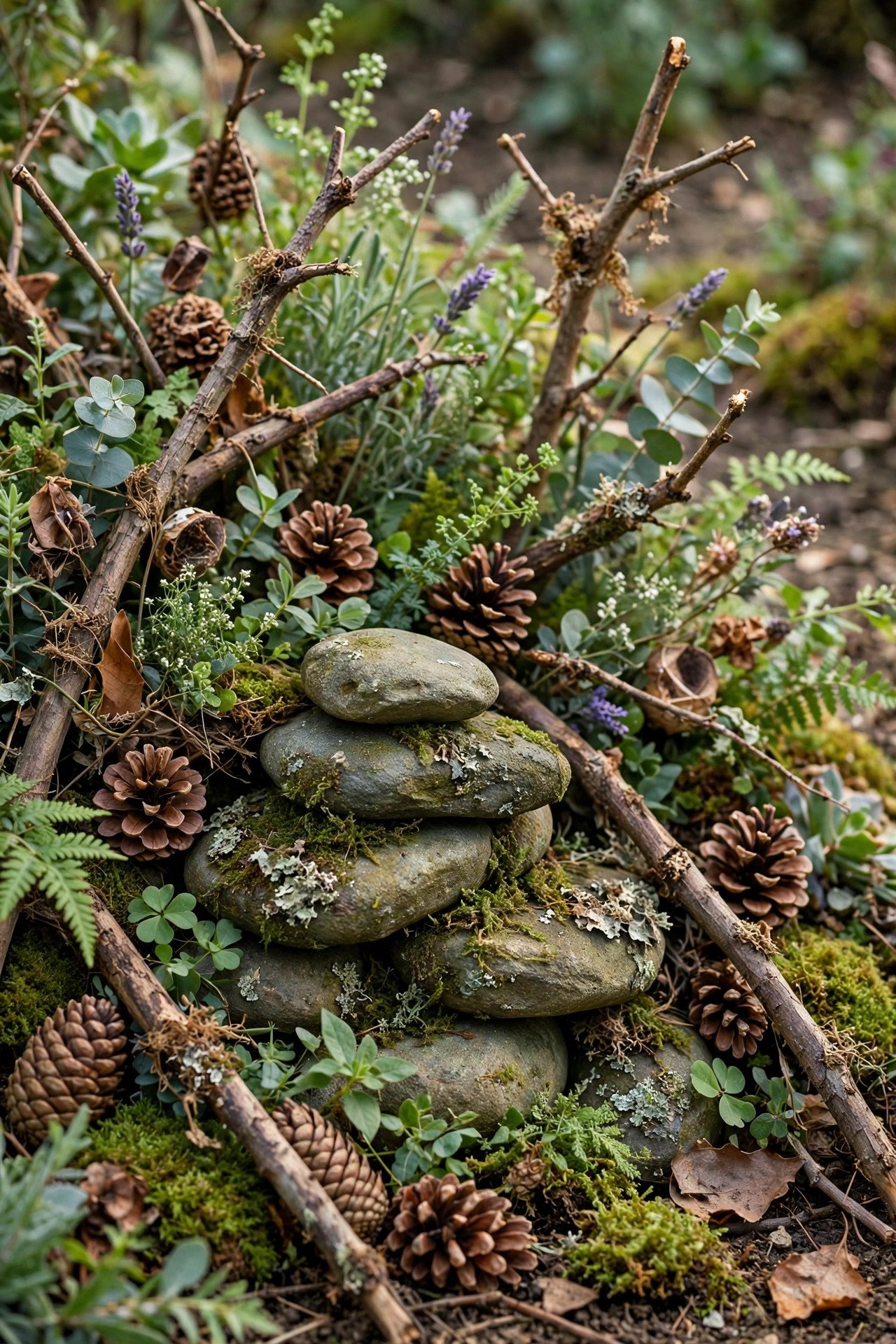
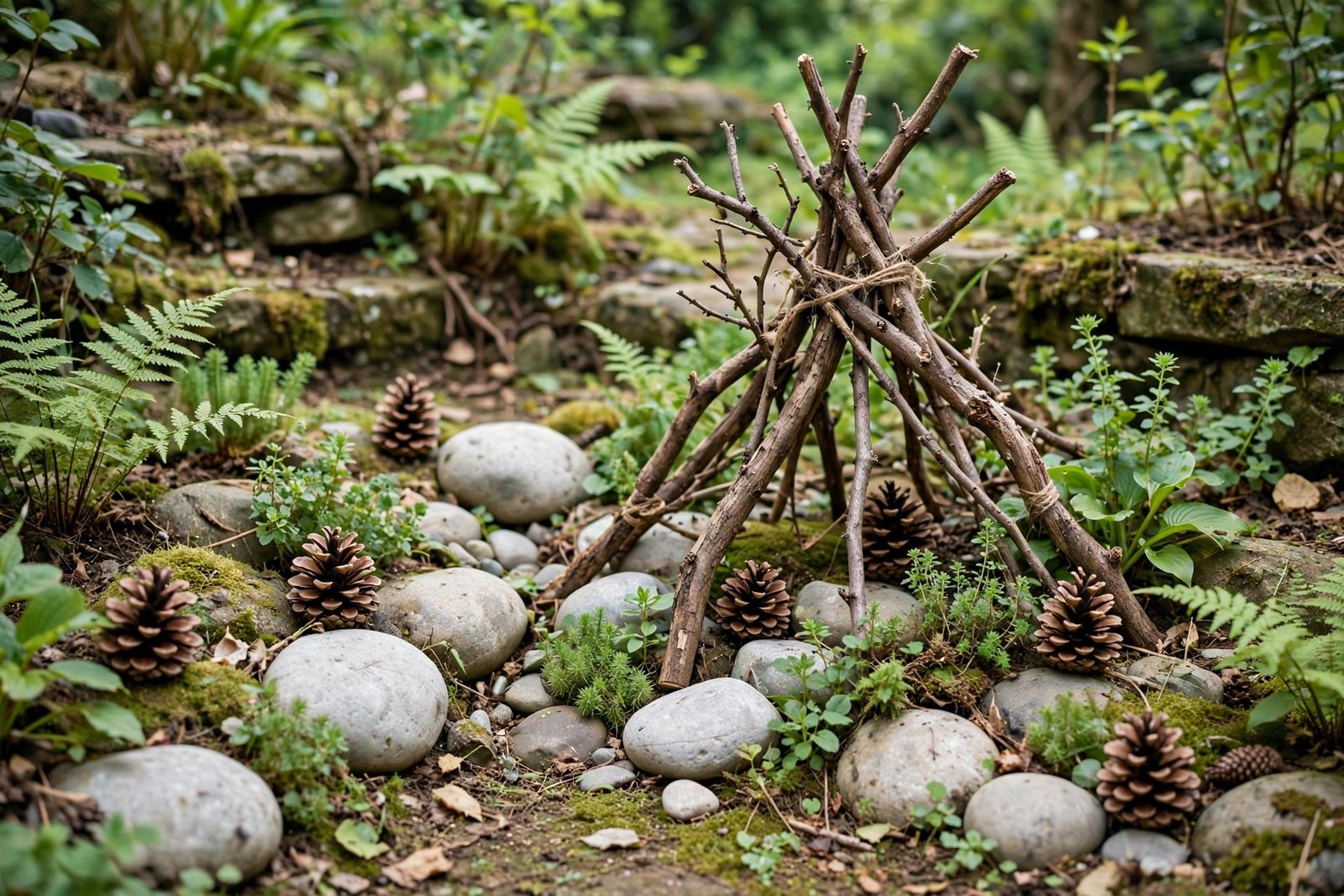
The most charming garden decor often costs nothing at all. Pinecones, smooth stones and fallen branches already have beautiful shapes, colours and textures. Used well, they make a garden feel calm and personal, and suit almost any style, from a neat patio to a wild corner.
This guide shows simple, practical ways to use these three free materials. You will find ideas for wreaths, paths, edging and displays, plus steps for collecting, cleaning and caring for everything so it lasts longer.
Quick Answer
Garden decor from nature means decorating with fallen pinecones, loose stones and fallen branches that you are allowed to collect. Clean and dry them first, then use pinecones for wreaths, garlands and table displays, stones for edging, paths and plant markers, and branches for trellises, frames and vase displays. Take only a few fallen pieces, leave plenty for wildlife, and never collect from protected areas or use treated or unknown materials near edible plants.
Collecting Natural Materials Safely and Kindly
Good natural decor starts with careful collecting. These rules protect wildlife and your own garden.
- Only collect fallen, loose materials. Pick up pieces already on the ground. Do not cut branches from living trees, pull cones from trees, or dig stones out of walls or banks.
- Only collect where it is allowed. Your own garden is safest. Elsewhere, collect only where you have permission, for example a friend’s garden. Check local rules if unsure.
- Never take material from protected areas. Do not collect from nature reserves, protected habitats or any place where signs say collecting is not allowed.
- Leave plenty behind for wildlife. Pinecones hold seeds that birds and animals eat, and logs and stone piles are homes for insects and other creatures. Take only a few pieces from any spot and leave the rest as you found it.
- Avoid treated, painted or unknown materials near food. Never use wood, cones or stones that smell of chemicals, look treated or painted, or come from an unknown origin near edible plants.
- Clean and dry everything before indoor use. Outdoor materials can carry soil, insects and moisture, so prepare them first, as explained below.
The same careful thinking helps when you repurpose old items as planters and turn things you already have into attractive garden features.
How to Clean and Prepare Pinecones, Stones and Branches
A little preparation makes natural decor look better and last much longer.
Drying pinecones so they open
Pinecones close when damp and open as they dry. Shake off dirt, brush the scales gently, and rinse quickly only if very muddy. Spread them on a tray in a warm, dry, airy place for several days until they open fully. Do not use closed, damp cones indoors, as trapped moisture can cause mould.
Cleaning stones
Brush off soil, wash stones in a bucket of plain water, scrub, rinse and leave them to dry completely. Clean, dry stones show their real colours and are nicer to handle for markers, edging and trays.
Preparing branches
Choose fallen branches that feel solid, not soft or crumbly. Brush off loose bark and dirt, trim rough ends, and let the wood dry in a sheltered, airy place before indoor use. Leave any branch that is an active home for creatures outside.
Pinecone Ideas
Pinecones are light, long-lasting and easy to join together, outdoors and, once dry, indoors too.
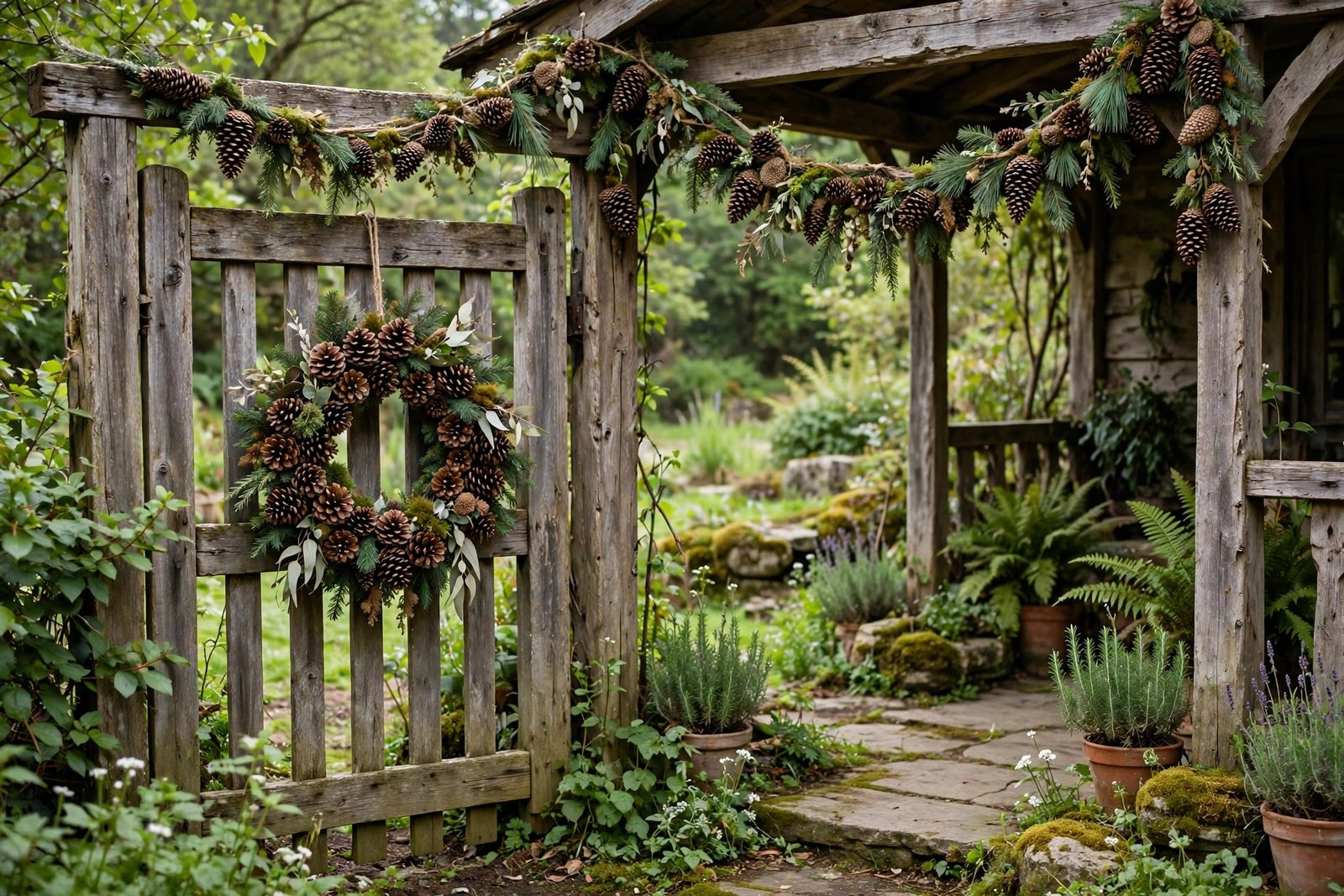
Pinecone wreath
- Make or reuse a simple round base, such as a ring of thick twigs tied together.
- Sort dry, open cones by size, using larger cones first.
- Tie or firmly attach cones around the ring, working in one direction and filling gaps with smaller cones.
- Add dried leaves or short twigs if you like, and hang it on a gate, door or porch wall in a sheltered spot.
Pinecone garland
Tie dry cones along strong string or twine, spacing them evenly and knotting after each cone so it stays in place. Hang the garland along a fence, shelf, gate or porch beam, under cover if possible, as repeated soaking shortens its life.
Table centrepiece and pot top dressing
Pile dry cones in a shallow bowl or tray with a few smooth stones and a short branch, and place it where it will stay dry. Outdoors, a layer of clean cones on the soil in a large pot works as decorative mulch or top dressing. Keep cones away from young soft stems and check water can still reach the soil.
Dry cones are also sometimes kept in a basket as fire kindling decor. Store them fully dry, and only burn plain, untreated cones from a known source. Never burn painted, treated or unknown material.
Stone Ideas
Stones add weight, calm and contrast. Even a few can change a bed or path.
Simple stone plant markers
Choose flat, smooth stones, wash and dry them, and write or paint a plant name on each in simple, clear letters if you wish. Plain stones also work as quiet markers showing where a plant or row begins. Place them at the front of a bed so they are easy to see.
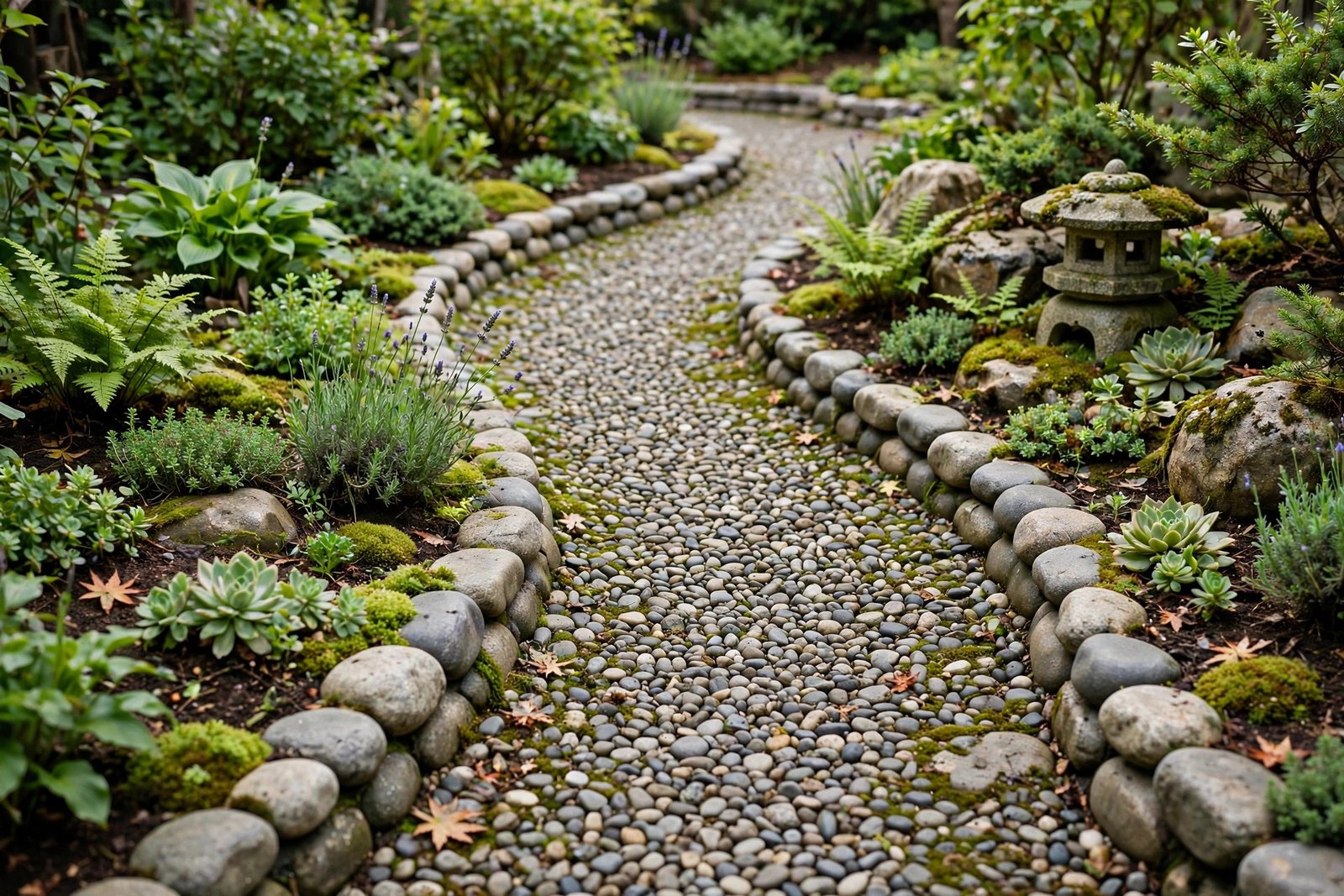
Stone edging
- Mark the edge of your bed or path with string.
- Dig a shallow trench along the line.
- Set stones of a similar size side by side in the trench, pressing each one firmly into the soil.
- Fill gaps with soil and press down again so the edging feels solid.
Pebble paths and mosaic-style trays
For a small pebble path, level the ground, lay pebbles close together in a simple pattern, and press them firmly into place. Start with a short section to test the feel. On a smaller scale, arrange clean pebbles in rings or patterns on a flat tray for a mosaic-style display for a table or doorstep.
Rock stacks as accents
Stack three to five flat, stable stones, largest at the bottom, beside a path or among plants. Keep stacks low and solid so they cannot topple onto feet, pets or delicate plants. Leave natural stone piles in the wider landscape alone, as they may be wildlife homes.
Branch Ideas
Branches bring height and gentle, natural lines that bought decor rarely matches.
Branch trellis and plant supports
Push three or four straight fallen branches into the soil in a pot or bed and tie them together near the top for a small cone-shaped trellis that climbers can grow up. Single sturdy branches also work as supports for tall stems, pushed in firmly and tied loosely.
Vase displays and hanging mobiles
A tall branch in a heavy vase makes a striking display on its own. For a hanging mobile, hang shorter twigs, dry cones and small stones securely at different lengths from a horizontal branch, and hang it from a porch beam or strong tree branch where it can move gently and cannot fall on anyone.
Rustic frames and miniature scenes
Four straight twigs tied at the corners make a rustic frame for a small picture or garden sign in a sheltered spot. Smaller twigs, pebbles and tiny pinecones are also perfect at a tiny scale. They make fences, paths and trees when you make a fairy garden in a pot, and the same ideas work in a shallow tray or wide planter.
Seasonal Displays and Combining Natural Decor With Plants
Natural decor is easy to refresh through the year. In cooler, wetter periods, focus on stone edging, pebble trays and sheltered wreaths, and bring damp items under cover to dry. In drier periods, add branch trellises, vase displays and garlands outdoors. Swap a centrepiece tray as you find new fallen pieces, and return worn cones and twigs to a quiet corner to break down and shelter insects.
Plants should stay the main feature. Use stones to set off leaf shapes, place a rock stack where a bed needs a focal point, and let a trellis disappear under green growth. Group items in odd numbers, such as three stones or five cones, repeat a material in two or three places, and leave space around displays so they feel calm.
Mistakes to Avoid
- Taking too much. Stripping one spot bare harms wildlife and looks wrong. Take a few fallen pieces and move on.
- Collecting where it is not allowed. Taking material from protected areas, reserves or other people’s land without permission is never acceptable.
- Using damp or dirty materials indoors. Uncleaned, undried cones and wood can bring in insects and mould. Clean and dry everything first.
- Using treated or unknown wood near edibles. If you do not know where a material came from or what is on it, keep it well away from food plants.
- Making unsafe stacks and hangings. Tall, loose rock stacks and weakly tied mobiles can fall. Keep them low, stable and secure.
- Blocking plants and paths. Decor should not shade young plants, stop water reaching soil, or make a path slippery.
FAQs
How long does natural garden decor last?
Stones last for years with almost no care. Dry pinecones in a sheltered spot can last a long time, while branches slowly weather and may need replacing after a season or two outdoors. Bringing pieces under cover in very wet periods helps.
How do I stop pinecones closing up again?
Pinecones close when they absorb moisture and open as they dry. This is natural and harmless. For indoor displays, start with fully dry, open cones and keep them away from steam and damp. If a cone closes, dry it again in a warm, airy place and it will reopen.
Can I use natural decor in a small balcony garden?
Yes. Try a pebble tray, a few stone markers in pots, one branch in a heavy vase, or a small cone centrepiece. Keep displays light and secure in wind, and avoid blocking walkways or railings.
Is it okay to return natural decor to the garden later?
Yes, plain untreated cones, twigs and branches can go to a quiet corner of your own garden to break down naturally. Dispose of painted stones or added materials responsibly, and never dump garden items in wild or protected places.
Conclusion
Pinecones, stones and branches can turn an ordinary corner into a calm, personal space at no cost. Collect only a few fallen pieces where allowed, clean and dry them well, and start with one simple project, such as a stone edge, cone garland or branch trellis. For more projects, explore the full Garden Decor, DIY and Outdoor Living ideas and build your collection slowly.