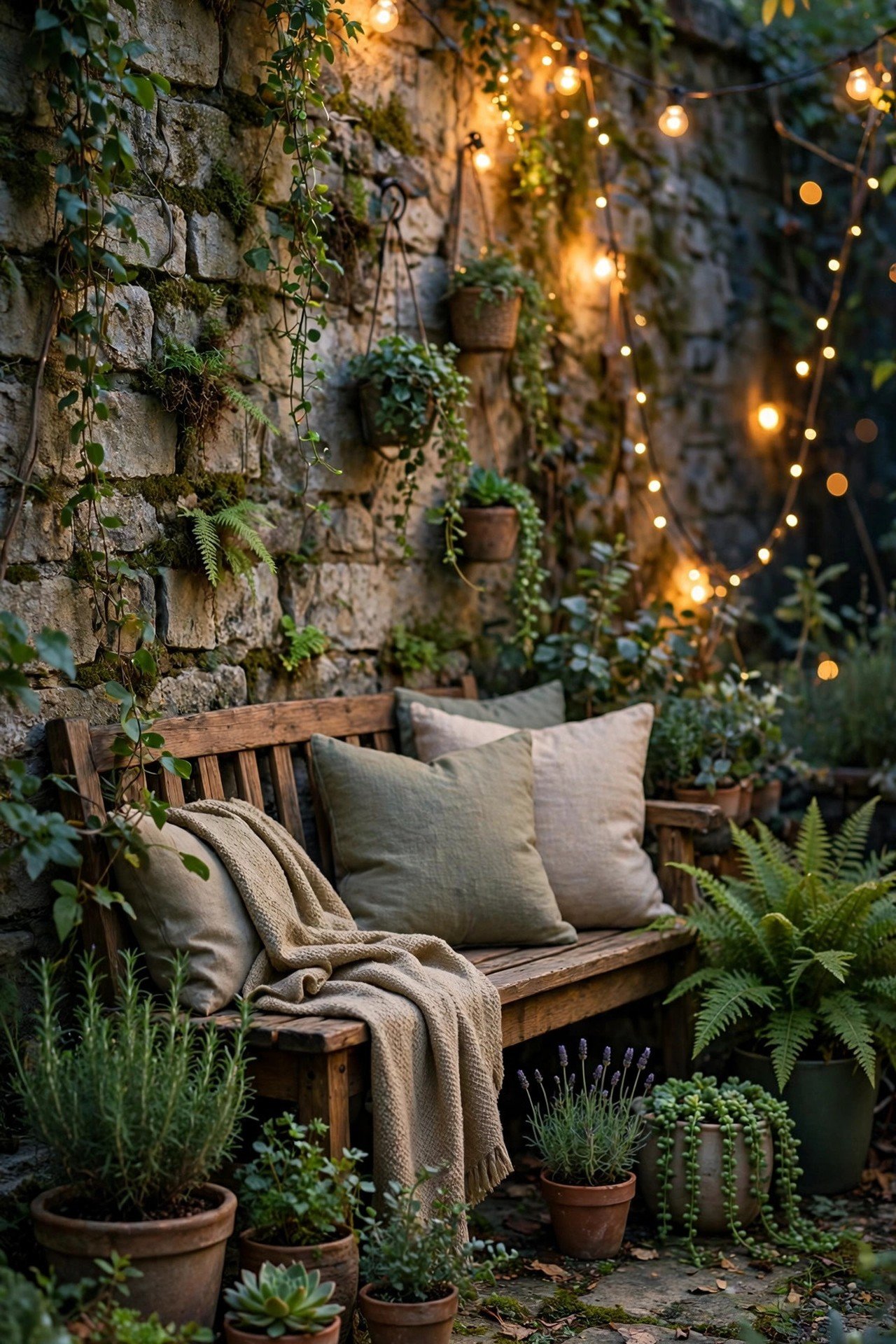
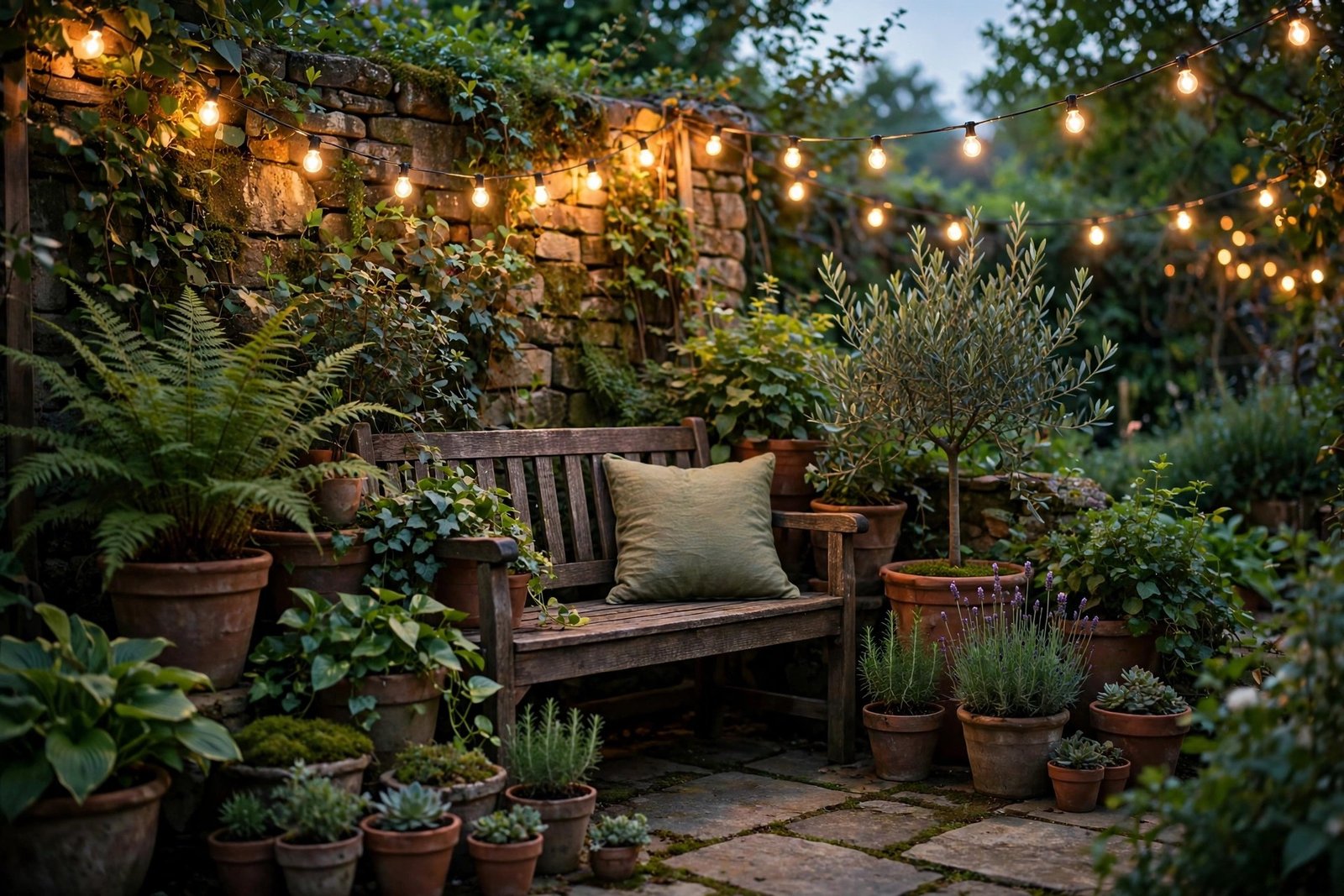
Almost every garden has one forgotten corner — the shady spot behind a shed, the bare patch at the end of a fence, or the place where old pots slowly pile up. That same corner can become the best place in the garden: a quiet, cozy spot to sit with a drink, read a book, or enjoy the plants around you.
You do not need a big budget or special skills. A cozy corner is built step by step: a clean space, a simple backdrop, layers of plants, one comfortable seat, and soft, warm light for the evening.
Quick Answer
To create a cozy garden corner, choose a sheltered, neglected spot and clear it completely. Add a backdrop such as a fence, wall, or trellis with climbing plants. Plant in layers — tall at the back, medium in the middle, low plants and pots at the front. Place a small bench or chair as the focal point, finish with warm solar, battery, or low-voltage lights, and keep up a simple weekly routine.
Step 1: Pick the Right Corner
The best corner is one you can see from the house or a path you use often — if you can see it, you will use it. Look for a spot sheltered from strong wind, with at least a few hours of gentle light each day. Full shade can also work with shade-loving plants.
Watch the space at different times of day. Where does the sun fall? Does water collect there after rain? A corner that stays wet suits moisture-loving plants and a raised seat area, while a dry, sunny corner suits herbs and flowering plants in pots.
Size does not matter much. A corner about 2 by 2 metres (roughly 6 by 6 feet) is enough for a bench and several pots. Even a smaller space can hold a single chair and a cluster of pots, as long as it feels a little private.
Step 2: Clear and Prepare the Space
Remove everything that does not belong there: weeds, dead plants, broken pots, stones, and rubbish. Cut back overgrown shrubs that block light, but keep healthy plants that give height or privacy — they are free structure.
Next, improve the ground. Loosen the soil with a fork, remove large roots and stones, and mix in compost or well-rotted organic matter. If the soil is very poor, most of your planting can go into pots instead.
Finally, decide what will go underfoot. Simple options include:
- Gravel or bark mulch — cheap, easy to lay, and good for drainage.
- Stepping stones or pavers — stable under a bench and easy to keep clean.
- Grass or ground-cover plants — soft and natural, but needs more care.
- A simple outdoor mat — adds instant colour and comfort under a seat.
A clean, level base makes everything that follows easier.
Step 3: Create a Backdrop
A backdrop turns an open patch into a true corner. It gives privacy, blocks wind, makes plants and lights stand out, and hides a plain fence or wall.
Simple backdrop ideas
- Fence or wall: Clean it, repair loose parts, and consider paint or wood stain in a calm, natural colour. Dark colours make green leaves look richer, while light colours make a shady corner feel brighter.
- Trellis or lattice panel: Fixed to a fence or set in the ground, it supports climbing plants such as jasmine, clematis, or climbing roses, depending on your climate.
- Tall plants as a living wall: A row of tall grasses, shrubs, or bamboo in large pots can screen the corner without building work. This is a good option for rented homes.
- Fabric or bamboo screening: Quick to install and useful while climbing plants are still growing.
Even one trellis panel with a young climber will quickly change how the corner feels, and planting will fill in over time.
Step 4: Plant in Layers
Layered planting is the secret to a full, cozy look. Arrange plants at different heights, like steps, instead of in a straight line.
Back layer — height and privacy
Place the tallest plants against the backdrop. Small shrubs, tall grasses, or a climbing plant on the trellis work well here. This layer gives shelter and makes the corner feel enclosed.
Middle layer — colour and texture
In front of the tall plants, add medium-sized plants with flowers or interesting leaves. Mix leaf shapes and colours, and repeat the same plant in two or three places so the corner looks planned rather than random.
Front layer — pots and soft edges
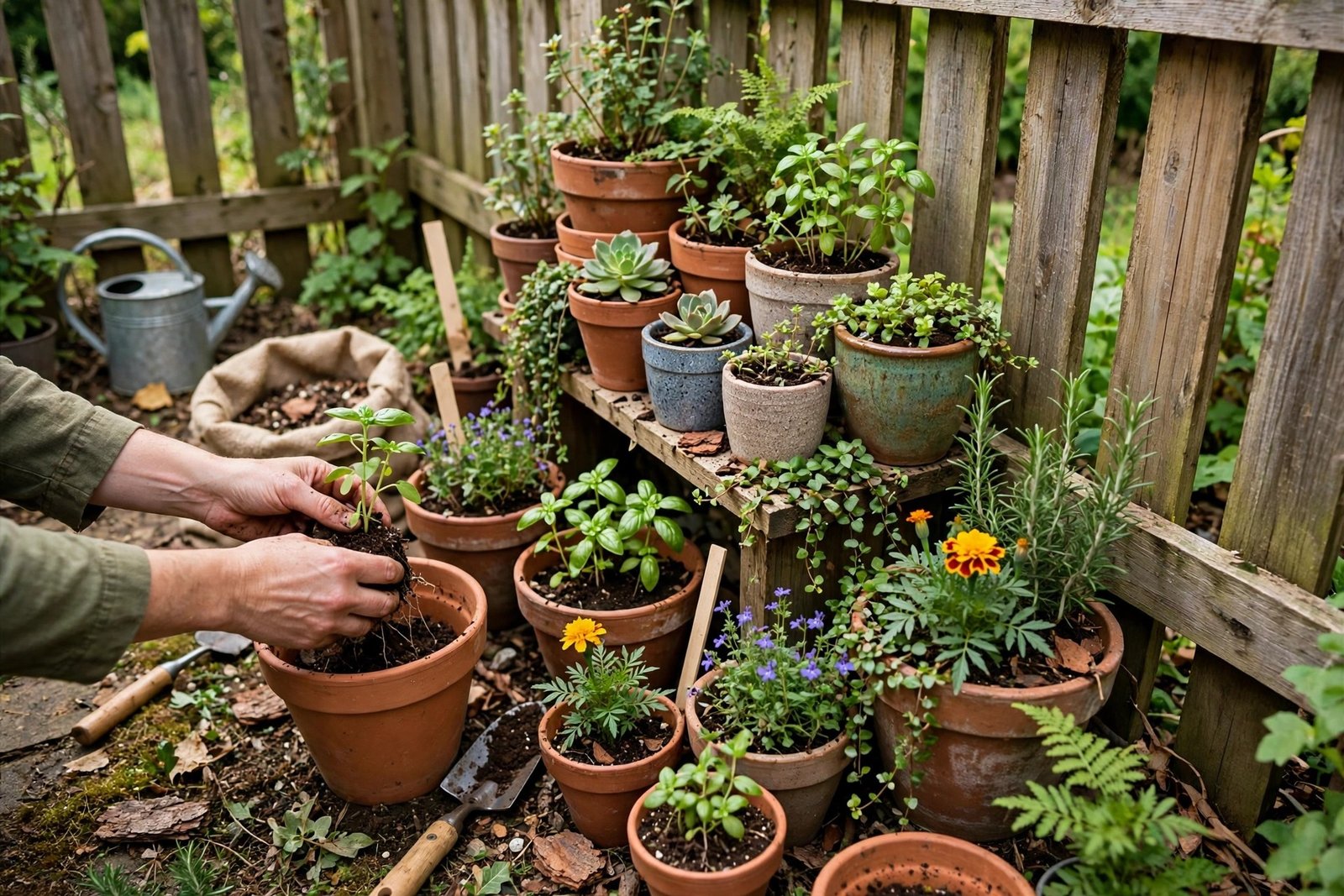
Use low plants, trailing plants, and pots along the front edge. Pots are especially useful because you can:
- Grow plants where the soil is poor or where there is only paving.
- Move plants in and out as seasons change.
- Try a plant in a new spot before planting it in the ground.
- Add height by placing a small pot on a stand, crate, or upturned larger pot.
Group pots in odd numbers — three or five together usually looks better than an even number — and vary the heights. Leave a small gap for air flow. Water pots more often than plants in the ground, as they dry out faster.
Step 5: Add a Focal Point Seat
Every cozy corner needs a reason to stay. A small bench or single chair is enough. Place it against the backdrop, facing the best view, so sitting there feels calm and private.
Choose a seat made for outdoor use, with one or two weather-resistant cushions. A small side table or upturned pot beside it gives you a place for a drink or a book. Keep the area in front clear so the corner never feels crowded. If space is tight, use a folding chair that can be stored in wet weather.

Step 6: Add Warm Lighting
Lighting is what makes the corner magical after sunset. Warm white light — soft and yellow-toned rather than bright blue-white — creates a relaxed mood and is gentle on the eyes.
Stick to safe, simple options: solar lights, battery lights, and low-voltage garden lights made for outdoor use. Solar string lights along the fence, a solar lantern on the table, and a few low stake lights are often all you need. Battery fairy lights in a jar add a soft glow without cables across the ground.
Place lights at different heights: high along the backdrop, at seat level, and low near the plants. Avoid pointing bright light straight at the seat. For more layout ideas, this guide to small garden lighting ideas covers simple options for compact spaces.
Important safety note: Only use lights rated for outdoor use, and follow the maker instructions. Mains-powered outdoor lighting must only be installed by a qualified electrician. This guide does not cover wiring, and no lighting effect is worth a safety risk.
Step 7: Finishing Touches
Small details turn a planted corner into a personal place. Add a few at a time, and stop before the space feels full:
- A watering can or small basket that is useful as well as decorative.
- Stones, driftwood, or pine cones arranged near the pots.
- A wind chime or a small bird feeder to add sound and life.
- A scented plant in a pot near the seat, such as lavender or a herb, where local conditions suit it.
- A cushion or throw in a colour that links the seat to the planting.
Natural materials often look best in a garden setting. For more low-cost inspiration using items from the garden itself, see these garden decor ideas from nature and adapt the ones that fit your corner.
Mistakes to Avoid
- Starting with decorations instead of structure: Lights and ornaments cannot fix a messy, unprepared space. Clear, prepare, and plant first.
- Choosing plants without checking light: A sun-loving plant in deep shade will struggle. Match every plant to the light and soil in your corner.
- Planting everything at the same height: Flat planting looks dull. Use back, middle, and front layers, plus pots at different heights.
- Overcrowding the seat area: Leave breathing room around the bench or chair, or the corner will feel cramped instead of cozy.
- Using indoor lights outdoors: Indoor string lights and lamps are not safe outside. Use only outdoor-rated solar, battery, or low-voltage lights.
- Forgetting about water: Pots far from a tap often get neglected. Group pots together to make watering quick and easy.
Simple Upkeep to Keep It Cozy
A cozy corner stays cozy with little and often care — about 15 minutes once a week is enough for most of the year:
- Water pots regularly, and check the soil with a finger before watering.
- Remove faded flowers and yellow leaves to keep plants tidy and healthy.
- Sweep the seating area and check cushions after wet weather.
- Wipe solar panels clean so lights charge well, and replace batteries when lights grow dim.
- Trim climbers and tall plants lightly so they do not take over the seat.
- Refresh mulch or gravel once or twice a year to keep weeds down.
In colder or very wet periods, store cushions under cover and move tender pots to a sheltered place if needed in your climate.
Frequently Asked Questions
How much does a cozy garden corner cost?
It can cost very little. Clearing is free, and you can use pots, plants, and a seat you already own. Spend first on compost, a few key plants, and one set of outdoor solar or battery lights, then add decorations slowly.
Can I make a cozy corner in full shade?
Yes. Choose shade-tolerant plants with interesting leaves, such as ferns and hostas suited to your area. Use a lighter backdrop colour, light-coloured pots and cushions, and warm solar or battery lights — shaded corners look especially good in the evening glow.
What if I rent my home?
Use pots, a freestanding trellis, damage-free screening, a folding chair, and solar or battery lights. Nothing is permanent, and you can take almost everything when you move.
How do I keep the corner cozy in every season?
Include plants with year-round leaves for structure, plus pots you can swap as flowers change. Evergreen structure, warm lights, and a weatherproof seat keep the corner inviting all year.
Conclusion
A cozy garden corner grows from simple layers: a clean space, a backdrop, plants at different heights, a comfortable seat, and warm, safe light. Start with the corner you already have, take it one step at a time, and let the planting fill in through the year.
For more ideas, explore the full Garden Decor, DIY and Outdoor Living category, pick one small idea to try next, and soon that forgotten corner may become the place everyone wants to sit.