

Mint is one of the easiest herbs to grow — and that is exactly the problem. Plant it in open ground, turn your back for a season or two, and it will quietly colonise your flower beds, creep into the lawn, pop up between paving stones, and smother slower-growing neighbours. Many gardeners end up digging out more mint than they ever harvest. If your mint is taking over, do not worry: it can be contained, and even escaped mint can be beaten back with a clear plan.
This guide explains how and why mint spreads so aggressively, the smartest ways to grow it without the invasion, and a step-by-step method for removing mint that has already escaped.
Quick Answer
Mint spreads through fast-growing underground stems called runners (rhizomes) that travel far beyond the parent plant and sprout new shoots along their length. The reliable way to stop it is physical separation: grow mint in its own pot, sink a solid root barrier at least 30–45 cm (12–18 inches) deep around bed-grown plants, or plant the pot itself into the ground with the rim above soil level. Cut flower heads before they set seed, pull stray runners as soon as you spot them, and never let a piece of root or stem reach the compost heap or open soil. Mint that has already escaped must be dug out root by root, then monitored for regrowth over a full season.
Why Mint Spreads So Fast
Underground Runners Do the Real Work
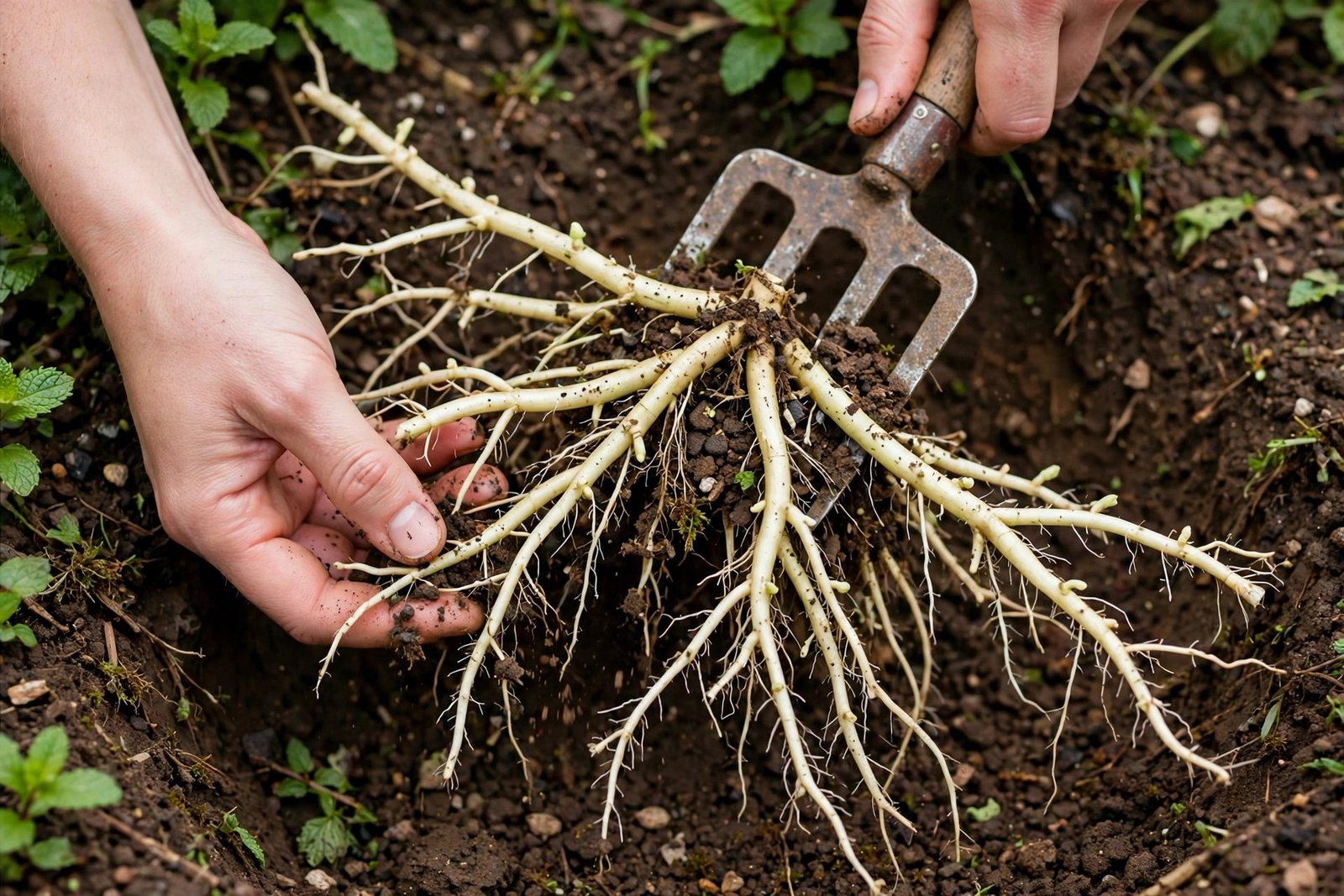
The spread you see above ground is only half the story. Below the surface, mint sends out long horizontal stems that can travel a metre or more in a single season in loose, moist soil. Every joint along those runners can root and push up a new shoot, which means one plant quietly becomes dozens. A single fragment of runner left in the soil after digging is enough to start the invasion again.
Seed Adds a Second Front
If mint is allowed to flower and set seed, seedlings can appear in odd corners of the garden too. Runner spread is the main problem, but cutting off flower heads before they mature removes the second route entirely.
It Thrives Where Other Herbs Struggle
Mint loves moisture and tolerates shade better than most herbs. Damp, partly shaded bed corners — exactly where other plants grow weakly — are where mint expands fastest and is hardest to evict.
Smart Ways to Grow Mint Without the Takeover
Option 1: Grow Mint in Its Own Pot (Best for Most Gardens)
The simplest and most reliable method is to never plant mint in open ground at all. A generously sized pot of 30 cm (12 inches) or more gives the plant room to produce plenty of leaves while the runners hit the pot wall and stop. Keep the pot on a hard surface — a patio, path, or stones — not on soil or grass, because runners can escape through drainage holes and root into the ground below. Raise the pot on feet or a stand and check underneath now and then. Growing mint this way is no handicap: potted mint is productive, easy to harvest, and easy to move into sun or shelter as needed. If you are setting up a container herb collection, the suggestions in our round-up of the best herbs and vegetables to grow on a small balcony show how well herbs perform in pots.
Option 2: The Sunk-Pot Method
If you like the look of mint growing in a bed, bury a large bottomless-looking barrier: plant the mint inside a big pot sunk into the soil so the rim sits about 5 cm (2 inches) above the surface. The pot walls block the runners, and the raised rim stops them creeping over the top and rooting outside. Use a sturdy pot at least 30 cm deep, and inspect the rim each season, trimming any runner that tries to cross it.
Option 3: A Proper Root Barrier
For mint that must grow directly in the ground, install a solid barrier — rigid plastic, metal sheet, or slate — in a circle around the planting area, at least 30–45 cm (12–18 inches) deep with a small lip above soil level. Barriers shallower than this simply get dived under. Even with a good barrier, walk the boundary a few times each season and pull anything that appears outside the line.
Habits That Keep Contained Mint Contained
- Deadhead the flowers. Cut flower heads off as they form so no seed is produced.
- Harvest hard and often. Regular cutting keeps the top growth in check and gives you plenty of leaves.
- Watch the edges. Runners always test the boundary first. A monthly look around the pot or barrier catches escapes while they are one shoot, not fifty.
- Divide and refresh potted mint. Every year or two, tip the pot out, cut the root ball into sections, and replant one healthy piece in fresh soil. This keeps the plant vigorous instead of root-bound and slowing down — a common hidden reason why potted herbs underperform, as explained in our guide to why herbs grow slowly in pots.
Mint Already Escaped? The Removal Plan
- Work after rain or watering. Moist soil releases roots far more easily than dry, baked ground.
- Dig wide, not just where the shoots are. Follow each runner outward with a fork, loosening the soil and lifting the whole white-to-green stem network. Assume runners extend well beyond the visible shoots.
- Sift the soil for fragments. Go through the dug area with your hands or a fork and remove every piece of root and stem thicker than a matchstick. Fragments regrow.
- Dispose of it properly. Bag mint roots and runners and throw them away with household waste, or dry them thoroughly in the sun on a hard surface until crisp before composting. Never put fresh mint roots in a home compost heap — it will happily grow there.
- Cover the cleared ground. A thick mulch or a sheet of cardboard weighted down for a few months starves out weak regrowth from any missed scraps.
- Patrol for a full season. Check the area every two to three weeks and pull new shoots while they are small, tracing each back to its root piece. Persistence beats force: regrowth gets weaker each time and usually stops within a season if you never let it rebuild.

Mistakes to Avoid
- Planting mint straight into a bed “just for one season”. One season is all it needs. The roots you leave behind become next year’s project.
- Using a shallow barrier. A 15 cm edging strip is a speed bump, not a barrier. Mint runners dive under anything less than about 30 cm deep.
- Standing a potted mint on soil or grass. Drainage holes are escape doors. Runners will find the ground below and root before you notice.
- Composting fresh roots and runners. Home compost rarely gets hot enough to kill them. You will be spreading mint with every barrow of compost.
- Pulling only the top growth. Snapping off shoots and leaving the runner network in place does nothing — the plant simply sends up more shoots from the same roots.
- Relying on mowing or strimming. Cutting escaped mint in a lawn just keeps it short; the roots continue spreading regardless.
Frequently Asked Questions
Will a root barrier really stop mint, or does it always escape?
A properly installed barrier works well: solid material, 30–45 cm deep, with the top edge slightly above soil level. Most escapes happen because the barrier was too shallow, had gaps at the joins, or runners crept over a rim that sat below the soil surface. A quick seasonal check of the boundary catches the rare escape early.
Can I grow different mint varieties together?
You can, but give each variety its own pot. Planted together, the strongest variety out-competes the others, and because mint cross-pollinates and spreads by runners, varieties quickly become a mixed tangle that is hard to separate.
How deep do mint roots and runners actually go?
Most of the runner network sits in the top 15–30 cm of soil, but individual runners can dive deeper in loose, rich soil — which is why barriers and sunk pots need to reach at least 30–45 cm to be trustworthy.
Is it safe to plant mint near vegetables?
Only in a pot placed among them, never in the shared soil. Mint will out-compete most vegetables for water and space within a season. A pot standing on a slab within the vegetable bed gives you the harvest without the competition.
Conclusion
Mint is not a bad plant — it is just a fast one with underground ambitions. Give it hard boundaries from day one: its own pot on a hard surface, a sunk pot, or a deep root barrier, plus a moment’s attention at the edges each month. If it has already escaped, dig thoroughly, dispose of roots safely, and patrol the ground for a season. Do that, and mint goes back to being what it should be: an easy, generous herb that stays exactly where you put it. For more practical herb-growing help, see our complete library of herbs and vegetables in pots guides.
