

Rosemary has a reputation as a tough, drought-proof herb that thrives on neglect — which makes it all the more confusing when the needles start turning brown, crisping at the tips, or dropping every time you brush past the pot. If your rosemary looks like it is slowly drying out even though you water it, you are dealing with one of the classic potted-rosemary problems, and the cause is usually underground, not in the leaves.
This troubleshooting guide works through every common reason rosemary leaves turn brown or drop, shows you how to tell them apart by the pattern of the damage, and gives you the fixes — including how to rescue a plant whose roots are already in trouble.
Quick Answer
The most common cause of brown, dropping rosemary leaves in pots is too much water: roots sitting in wet, airless soil begin to rot, and the plant responds by browning and shedding needles even though the soil is damp. Underwatering causes a similar-looking crisping, so check the soil before acting — dry soil means water deeply; wet soil means stop, improve drainage, and consider repotting into fresh, gritty soil. Other frequent causes are too little light, poor air circulation leading to powdery mildew, cold damage, and a pot that is too small or lacks drainage holes.
Read the Pattern: What the Damage Is Telling You
Browning Starts at the Tips and Needles Feel Crispy
Tip-first browning with dry, brittle needles usually means the roots cannot supply enough water — either because the soil is genuinely dry, or because the roots are damaged and can no longer drink. The soil check separates these two opposite problems.
Browning From the Inside of the Plant Outward
When the needles nearest the trunk and the lower, inner growth brown first while the tips stay green, suspect poor air circulation, low light reaching the centre of the plant, or roots in distress. Dense, unpruned rosemary with a stale, damp middle does this often.
Needles Drop at the Slightest Touch
A plant that sheds a shower of brown or grey needles when brushed has usually been struggling for a while — chronic overwatering, root rot, or a severe dry spell are the main candidates. Healthy rosemary holds its needles firmly.
White Powdery Coating With Yellowing Needles
A dusty white film on the needles, followed by yellowing and dropping, is powdery mildew, a fungal problem that loves still, humid air around the foliage.

The Causes and Their Fixes
1. Overwatering and Root Rot (Most Common in Pots)
Rosemary comes from dry, rocky Mediterranean hillsides. Its roots need air as much as water, and in a pot with heavy soil, no drainage, or a saucer that stays full, the roots suffocate and begin to rot. Rotting roots cannot absorb water, so the plant paradoxically dries out from the top while sitting in wet soil. To rescue it: stop watering, tip the plant out, and inspect the roots. Healthy roots are pale and firm; rotted roots are brown or black, soft, and may smell sour. Cut away rotted roots and dead stems, repot into fresh, very free-draining soil with plenty of grit or perlite, and water only lightly until new growth appears. The principles of drainage and airy mixes are the same ones covered in our guide to the best soil mix for potted plants — rosemary simply wants the grittiest end of that range.
2. Underwatering
Although rosemary tolerates drought once established in the ground, a plant in a small pot has only a cupful of soil to draw on, and a hot, windy week can dry it completely. The needles crisp from the tips, turn brown, and drop. Water deeply and slowly so the whole root ball re-wets — very dry soil can repel water at first, so water, wait ten minutes, and water again. Then set a better rhythm: water when the top few centimetres of soil are dry, not on a daily schedule.
3. Not Enough Light
Rosemary wants six to eight hours of direct sun. Indoors on a dim windowsill or in a shaded corner it weakens, the growth turns soft and sparse, and needles yellow, brown, and drop, starting with the shaded inner growth. Move it to the sunniest place you have — outdoors in full sun during the warm season if possible. It shares this non-negotiable need for strong light with lavender, another Mediterranean herb whose problems start in shade, as our guide to lavender not flowering or looking leggy explains.
4. Poor Air Circulation and Powdery Mildew
Still, humid air around a dense plant invites powdery mildew, which coats needles, weakens them, and makes them drop. Prune lightly to open the centre of the plant, space pots apart, avoid wetting the foliage when watering, and keep the plant where air moves. Remove badly affected stems and bin them rather than composting them.
5. Cold Damage
Many rosemary varieties tolerate light frost, but a hard freeze — especially in a pot, where roots are exposed to cold from all sides — browns whole sections of the plant. Damage often appears a week or two after the cold snap rather than immediately. Wait until growth restarts before pruning, then cut back to healthy green wood. In very cold climates, move potted rosemary to a sheltered, bright, frost-free place for the coldest months.
6. Pot and Soil Problems
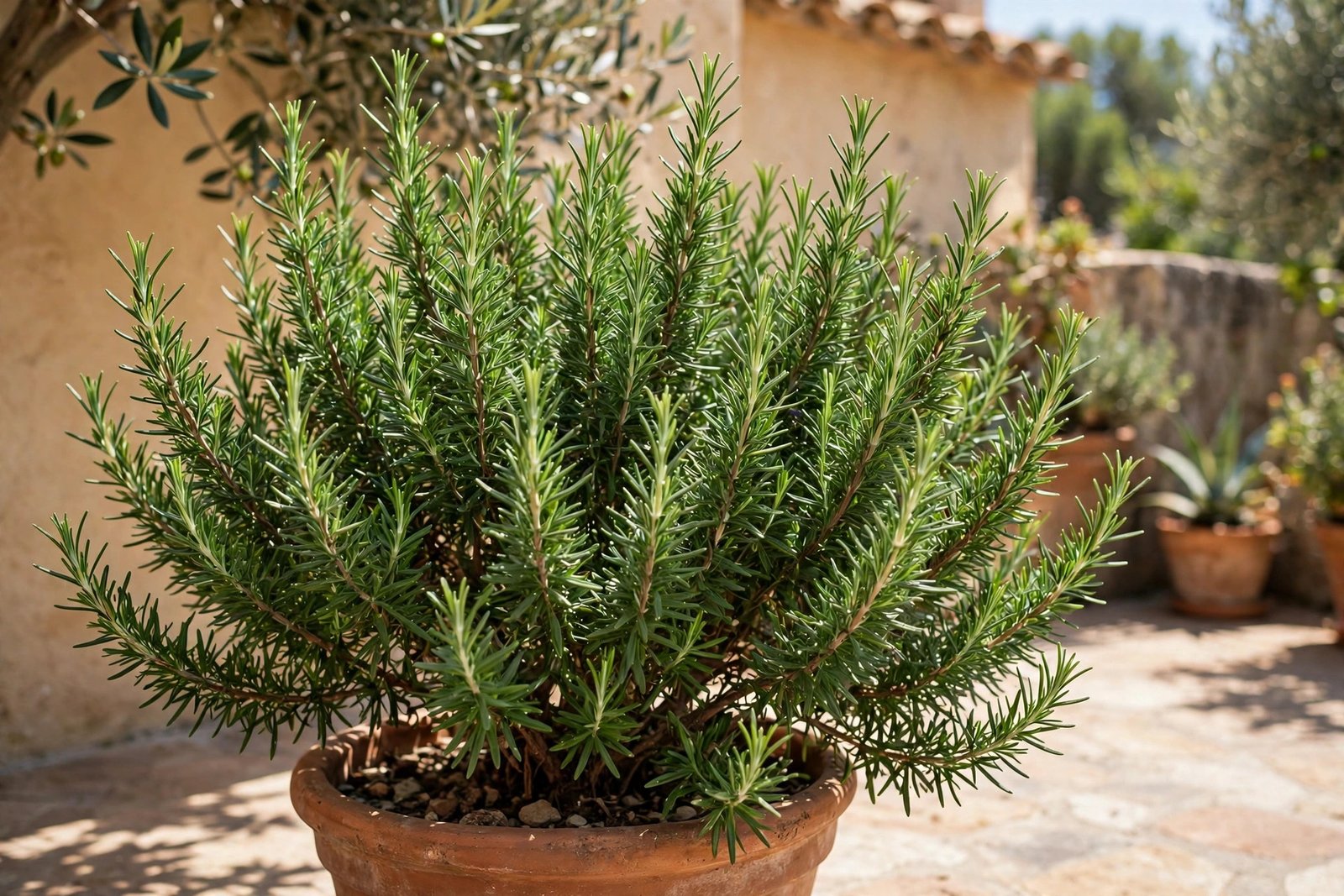
A pot without drainage holes is a slow sentence for rosemary. So is heavy, waterlogged garden soil in a container. Rosemary does best in a terracotta pot — porous clay helps the soil dry between waterings — filled with a gritty, free-draining mix. If roots are circling tightly or pushing out of the drainage holes, move up one pot size with fresh soil.
Rescue Routine: Step by Step
- Check the soil. Finger a few centimetres deep: bone dry means underwatering; wet and heavy means the roots are the problem.
- Inspect the roots if soil is wet. Slide the plant out. Trim brown, soft, rotted roots back to firm, pale tissue with clean scissors.
- Repot into gritty, fresh soil in a pot with drainage holes, ideally terracotta. Do not bury the plant deeper than it was before.
- Prune the dead. Cut stems that are brown and brittle all the way through back to living green wood. Scratch a stem lightly — green underneath means it is alive.
- Reset position and water. Full sun, moving air, and water only when the top of the soil has dried out.
- Be patient. A rescued rosemary may take several weeks to push new green tips. Judge it by new growth, not by the brown needles, which will drop and not return.
Mistakes to Avoid
- Watering more when you see browning. Browning from root rot looks like thirst. Extra water on rotted roots finishes the plant off. Always check the soil and, if wet, the roots.
- Using a pot without drainage holes. Rosemary in a sealed decorative pot sits in its own runoff. Drill holes, or keep the plant in a draining inner pot and empty the outer one after watering.
- Keeping rosemary in heavy, rich soil. Rosemary wants lean, sharp drainage. Rich, moisture-holding compost holds exactly the wetness its roots hate.
- Pruning dead-looking growth too early after cold. Frost damage takes time to show fully. Wait for new growth to reveal what is truly dead before cutting.
- Bringing a sun-grown plant straight indoors to a dark corner. The sudden drop in light sheds needles fast. Give indoor rosemary your brightest window and, if possible, a gradual transition.
- Misting the leaves to “help”. Wet needles in still air encourage mildew. Rosemary prefers dry foliage and moving air.
Frequently Asked Questions
Can rosemary recover after turning brown?
Yes, if living green wood and some healthy roots remain. Brown needles themselves never turn green again, but a plant with a sound root system and green stem bases will push fresh growth once the cause is fixed. If every stem is brown and brittle to the base and all roots are rotted, the plant is gone — take it as a lesson in drainage for the next one.
How often should potted rosemary be watered?
Only when the top few centimetres of soil feel dry. That may be once a week in mild weather, twice in a heatwave for a small pot, and far less in cool seasons. Rosemary would always rather be slightly too dry than slightly too wet.
Why is only one side or one branch of my rosemary browning?
Localised browning often traces to a single damaged root section, a stem cracked at the base, or one side of the plant sitting against a cold window or in permanent shade. Check the base of the brown branch and how the pot sits — the cause is usually physical and close to the damage.
Should I feed a rosemary that is losing leaves?
Not until it recovers. A stressed plant cannot use fertiliser, and feeding pushes soft growth the weak roots cannot support. Rosemary needs very little food in any case; fresh soil at repotting provides enough for a long time.
Conclusion
Brown, dropping rosemary needles are a root-zone message: too wet, too dry, too dark, or too cold. Check the soil first, look at the roots if it is wet, and fix drainage, light, and watering rhythm before anything else. Do that, and this famously tough herb usually proves its reputation after all. For more herb care and troubleshooting, browse our full range of herbs and vegetables in pots articles.
