

Your tomato plant was growing beautifully — tall, green, and full of promise. Then you notice the leaves have started to roll and curl in on themselves, and suddenly you are wondering whether the plant is thirsty, sick, or quietly giving up. If that sounds familiar, take a breath: tomato leaf curl is one of the most common tomato problems of all, and in most cases it is the plant’s way of protecting itself from stress, not a sign that it is dying.
Tomatoes curl their leaves for a short list of reasons, and the type of curl tells you a lot about which one you are dealing with. This guide explains how to read the curl, works through the common causes one by one, and gives you the quick fixes that get most plants back to normal growth.
Quick Answer
Most tomato leaf curl is caused by environmental stress — hot, dry, or windy weather, or watering that swings between too dry and too wet. This “physiological leaf roll” looks alarming but rarely harms the plant or the harvest. Other causes include too much nitrogen fertiliser, roots cramped in a small pot, sap-sucking pests such as aphids, and, less commonly, herbicide drift or a virus. Check the soil moisture and the weather first: steady watering, mulch, and a little shelter in extreme heat fix the majority of cases.
First, Read the Curl: What Your Plant Is Telling You
Not all curls mean the same thing, and a ten-second look at the pattern saves a lot of guesswork.
Leaves Rolling Upward Into Tubes
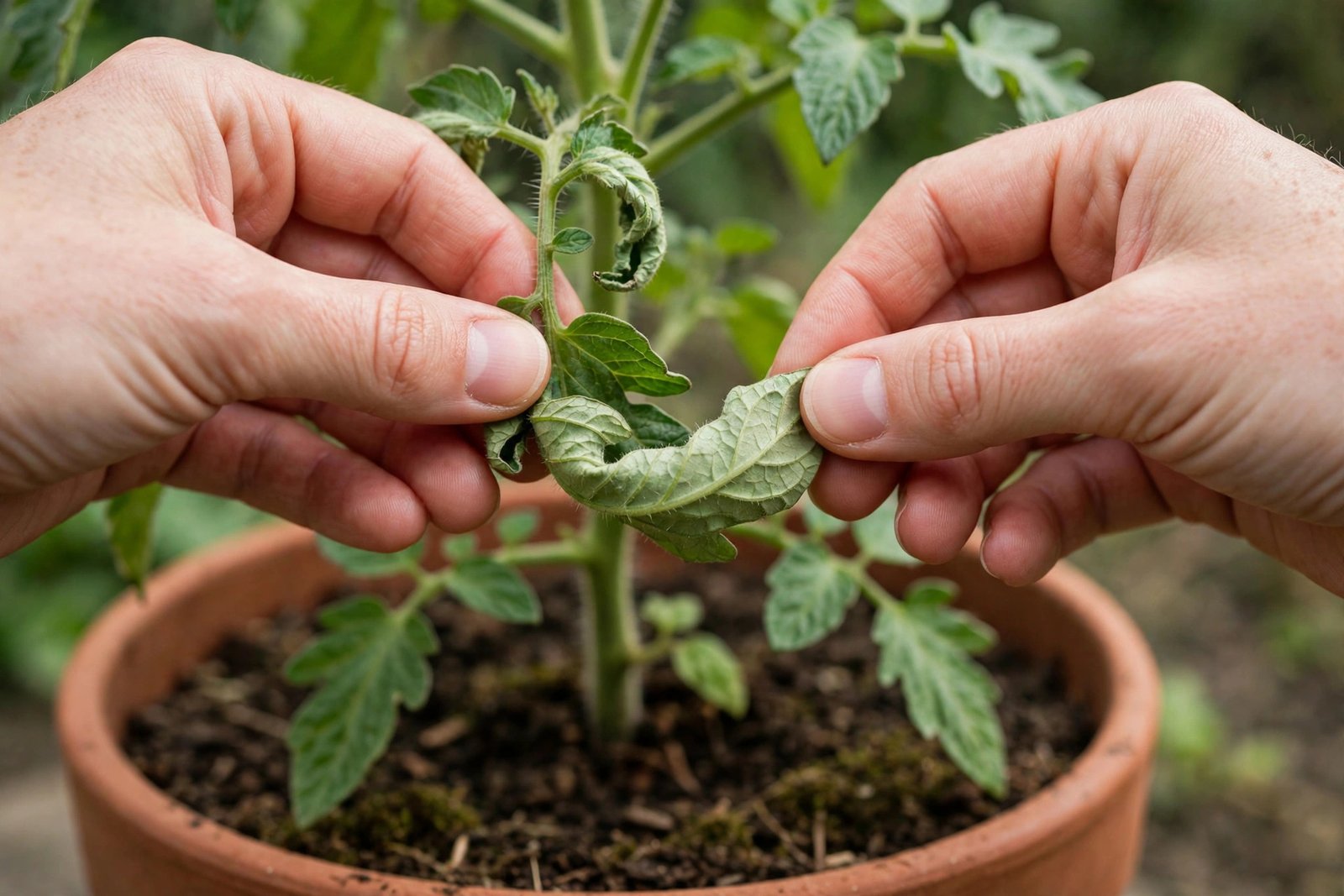
When the edges of the leaflets roll upward and inward, sometimes so tightly that the leaf looks like a green tube, the plant is almost always reducing water loss on a hot, dry, or windy day. The lower, older leaves usually curl first. This is the classic stress curl, and it is mostly harmless.
Soft Curling With Wilting
If the whole plant looks soft and droopy and the leaves curl loosely, water is usually involved — either the soil has dried out badly, or the roots are sitting in soggy soil and cannot work properly. The soil check described below settles which one it is.
Twisted, Distorted New Growth
New leaves that come out twisted, narrow, fern-like, or bubbled are a different story. That kind of distortion points to pests feeding on the young growth, herbicide drift, or a virus — causes that need a closer look and a different response.
The Common Causes, One by One
1. Hot, Dry, or Windy Weather
This is the number one cause. On a hot afternoon, a tomato plant loses water through its leaves faster than the roots can replace it, so it rolls its leaves to expose less surface to the sun and wind. The curl often appears in the afternoon and relaxes overnight or after a cooler day. Plants growing in pots on a sunny balcony or patio are especially prone, because their root zone heats up and dries out quickly — the same exposure described in our guide on how to grow tomatoes on a balcony, where steady moisture and shelter make all the difference.
2. Inconsistent Watering
Water that swings between drought and flood stresses tomatoes almost as much as constant dryness. A plant that dries out hard and is then soaked will often curl, and roots kept permanently wet can rot and fail, producing wilt and curl even though the soil is wet. Tomatoes in containers are thirsty plants and need a rhythm: deep watering whenever the top few centimetres of soil have dried, then complete drainage. Getting that rhythm right is much easier with the simple routine in our guide on how often to water potted vegetables.
3. Too Much Nitrogen
A tomato fed heavily — especially with a general fertiliser high in nitrogen — pours its energy into soft, leafy growth. The result is a very lush, dark green plant whose leaves curl and twist, and which is often slow to flower. If your plant looks like a jungle but produces few flowers, feeding is the first thing to question. Ease off the feed, and when you do feed, use a balanced fertiliser at the label rate rather than generous handfuls.
4. Cramped or Damaged Roots
A tomato in a pot that is too small runs out of water and food quickly, and curl is one of the early complaints. Root damage from rough transplanting can do the same. If the pot is under about 10 litres for a full-size plant, or roots are poking out of the drainage holes and circling the surface, moving up to a bigger pot with fresh soil usually settles the plant within a week or two.
5. Aphids and Other Sap-Sucking Pests
Aphids cluster on the undersides of leaves and on soft new growth, sucking sap and causing leaves to curl, pucker, and distort around them. Whitefly can do similar damage. Turn a curled leaf over before you treat anything else: if you find colonies of small insects, wash them off with a firm jet of water on a few consecutive days, and remove the worst-affected leaves.
6. Herbicide Drift or Virus (Less Common, More Serious)
Sometimes weedkiller sprayed nearby drifts onto tomatoes, which are extremely sensitive to it. The new growth comes out narrow, twisted, and fern-like, often on one side of the plant first. There is no cure except time — mild cases grow out of it. A virus is the other serious cause: leaves curl with mottled yellow-green patterns, growth is stunted, and the whole plant looks wrong rather than just stressed. There is no treatment for a virus; remove and bin an infected plant (do not compost it) so it does not spread to healthy plants.
A Simple Fix-It Plan for Curled Leaves
- Check the soil with your finger. Dry a few centimetres down means water deeply now. Wet and heavy means stop watering and let the pot drain and breathe.
- Steady the watering. From today, water deeply when the top of the soil dries — not a little every day, and never leave the pot standing in a saucer of water.
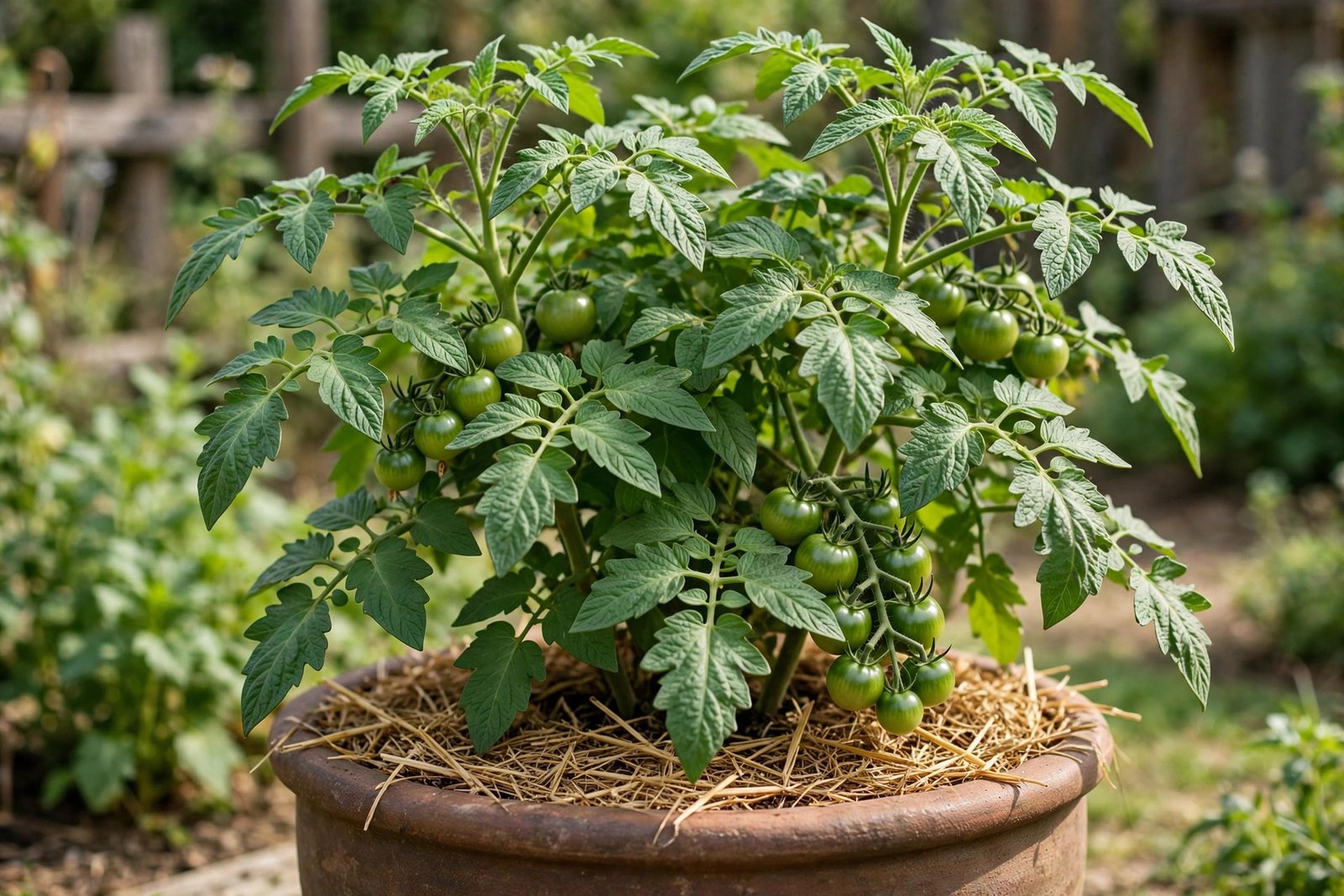
- Mulch the surface. A layer of straw, shredded bark, or compost over the soil keeps moisture even and the root zone cooler, which prevents most weather curl.
- Add shelter in harsh weather. A little afternoon shade or a windbreak during a hot, windy spell removes the stress that triggers rolling.
- Check for pests and ease off feeding. Inspect leaf undersides and wash pests off. Pause fertiliser for two weeks, then resume gently if the plant is growing well.
Mistakes to Avoid
- Watering more without checking the soil. A plant curling because its roots are rotting in wet soil will only get worse with extra water. Check first, every time.
- Cutting off all the curled leaves. Curled leaves still feed the plant. Remove only leaves that are dead, heavily pest-infested, or diseased.
- Feeding a stressed plant harder. Fertiliser does not fix weather stress, and extra nitrogen adds soft, curl-prone growth. Fix water and shelter first.
- Spraying for disease at the first curl. Most curl is environmental and needs no spray at all. Diagnose before you reach for any bottle.
- Ignoring distorted new growth. Twisted, fern-like tips are the one pattern that deserves prompt attention — check for pests and consider herbicide drift or a virus early.
Frequently Asked Questions
Will curled tomato leaves uncurl again?
Leaves curled by heat and water stress often relax once conditions improve, especially younger ones. Leaves that have been tightly rolled for a long time may stay partly curled, but that does not matter much: the plant keeps growing, and new leaves come out flat when the stress is gone.
Should I remove curled leaves from my tomato plant?
Usually no. A curled leaf is still a working leaf, and stripping the plant weakens it. Remove only leaves that are completely yellow or dead, covered in pests, or showing the mottled patterns of disease, and always bin diseased material rather than composting it.
Do curled leaves mean I will not get any tomatoes?
No. Environmental leaf roll rarely reduces the harvest in any serious way — plants with rolled leaves often fruit perfectly well. It is a stress signal worth answering, not a disaster. Only the rarer causes, like a virus or severe root rot, genuinely threaten the crop.
Why are only the lower leaves curling?
That is typical of physiological leaf roll: the older, lower leaves react first to heat and water stress, while the top of the plant stays flat. If the lower leaves are also yellowing heavily or spotted, check watering and remove the very worst leaves, but simple lower-leaf curl on its own is rarely a worry.
Conclusion
Tomato leaf curl is a message, not a mystery: the plant is short of steady moisture, exposed to harsh weather, overfed, cramped, or — occasionally — dealing with pests or something more serious. Read the curl, check the soil, steady the watering, and most plants settle down and crop happily. For more vegetable problem-solving and growing guides, browse our full collection of herbs and vegetables in pots articles.

1 thought on “Why Are My Tomato Leaves Curling? (Common Causes & Quick Fixes)”