
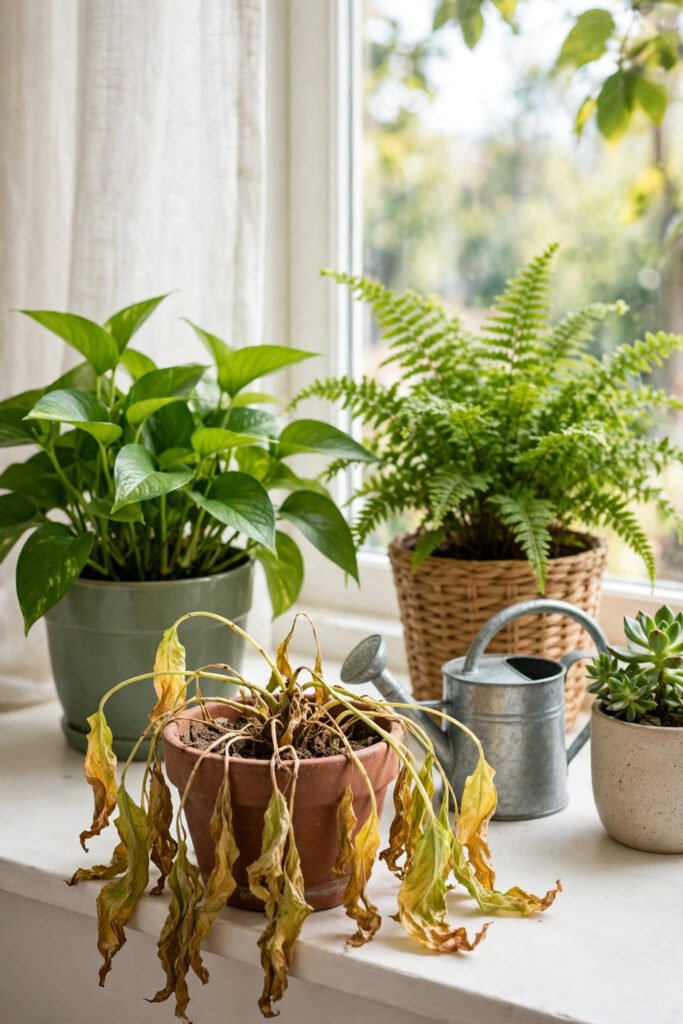
Another one gone. You watered it, you gave it a sunny spot, you even talked to it — and still the leaves turned yellow, drooped, and fell, one by one, until all that was left was a pot of soil and a vague sense of guilt. If your plants keep dying in pots, you are not alone — and you are probably not the problem. Most potted plants do not die because their owners are careless. They die because something about the container setup quietly worked against them.
A pot is not a patch of ground. It is a small, closed system where every mistake gets magnified: a little too much water has nowhere to go, a little too much sun cannot be escaped, and a pot that is too big or too small leaves roots with no good choices. The good news is that nearly all of these problems come from a short list of fixable habits. Learn them once, and the next plant will not stand a chance of dying — it will stand a chance of thriving. Here are the eight container mistakes behind most potted plant deaths, and what to do instead.
Quick Answer
Most potted plants die because of too much water in a pot that cannot drain, a pot that is the wrong size, or soil and light that do not match the plant’s needs. Check drainage holes, match the pot to the root ball, use fresh potting mix instead of garden soil, water only when the soil feels dry, and put the plant where its light needs are met. Fix the setup and most plants recover.
The 8 Container Mistakes That Kill Potted Plants
1. Using a Pot Without Drainage Holes
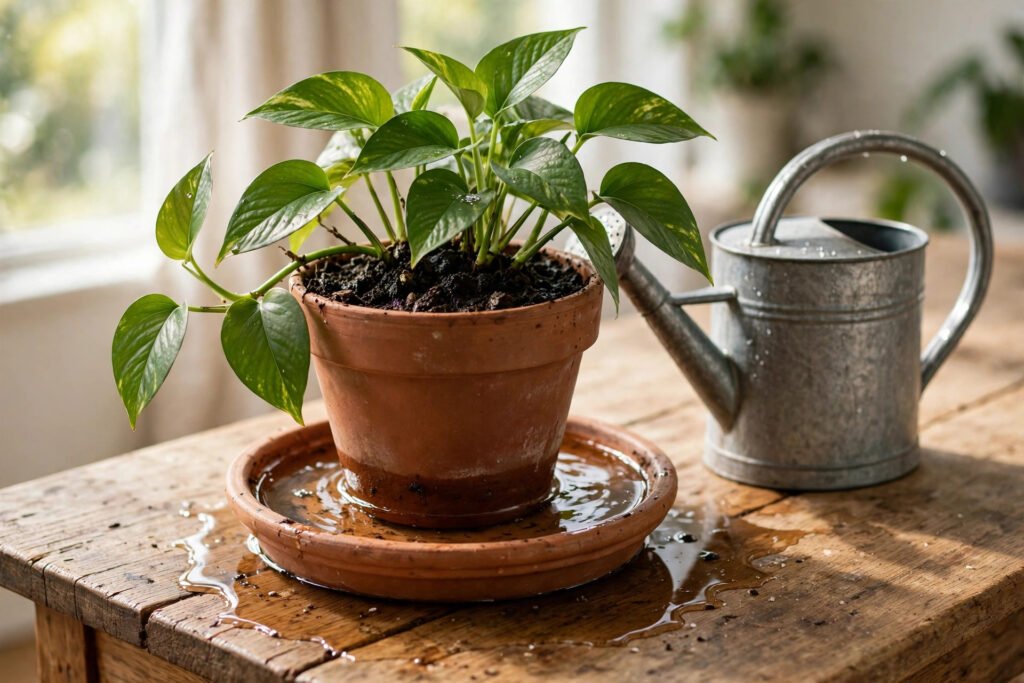
It is the number one killer of potted plants, and the most preventable. Without drainage holes, every watering adds to a pool at the bottom of the pot that you cannot see and the roots cannot escape. Roots sitting in water run out of oxygen and begin to rot. Leaves yellow, stems go soft, and the plant collapses even though the soil surface looks merely damp. Always choose pots with drainage holes — or drill them. And always empty the saucer after watering.
2. Choosing the Wrong Pot Size
A pot that is far too big is as bad as a pot that is far too small. Too much empty soil stays wet long after watering, and the plant’s roots rot in it. Too small a pot, and the plant dries out in a day and becomes root-bound. The sweet spot is a pot just 2–5 cm (1–2 inches) wider than the root ball. Our guide on how to choose the right pot size shows how to measure it in seconds.

3. Watering Too Often (and on a Schedule)
“Water every Tuesday” is a convenient rule — and a dangerous one. A plant in a small pot in a warm room dries out in three days; the same plant in a large pot in a cool room may stay moist for two weeks. Watering on a calendar ignores all of that. The right check is simple: push a finger 2–3 cm into the soil and water only when it feels dry at that depth. If you already have a plant sitting in permanently soggy mix, see our guide on how to fix an overwatered houseplant before it is too late.
4. Planting in Garden Soil Instead of Potting Mix
Garden soil seems like a free, sensible choice. In a pot, it is a trap. Garden soil is heavy, compacts easily, and holds water in a way that suffocates roots. It also brings weed seeds, fungi, and insects indoors. Potting mix, by contrast, is built for containers: light, free-draining, and rich in the organic material that keeps roots fed. It costs a little more, but it is the cheapest insurance a potted plant has.
5. Putting the Plant Where It Looks Good, Not Where It Grows Well
That dark shelf by the sofa suits the room, not the plant. And that sun-drenched south-facing windowsill suits a cactus, not a shade-loving fern. Light needs are not a suggestion — they are the difference between a plant that feeds itself and one that slowly starves. Before you place a plant, check its light needs and be honest about what your windows actually offer. A plant in the wrong light will not thrive no matter how carefully you water it.
6. Never Cleaning or Refreshing the Setup
Over time, salt and mineral deposits build up on the soil surface and inside the pot, drainage holes clog with roots and debris, and potting mix breaks down into a dense, airless mass. A plant left in the same tired mix for years slowly suffocates. Once or twice a year, scrape off the top layer of soil, refresh it with fresh mix, and check the drainage holes are clear. Every year or two, repot properly.
7. Feeding Wrong — Too Much or Never
Fertiliser is food, not medicine, and more is not better. Overfeeding burns roots and salts the soil — leaves brown at the tips and growth stalls. Never feeding, meanwhile, slowly starves a plant that has long since used up the nutrients in its small pot of mix. Feed lightly and only in the growing season, following the packet — half strength is often plenty. And never feed a sick, dry, or freshly repotted plant.
8. Leaving the Pot in a Hostile Spot
Next to a radiator, in the blast of an air conditioner, by a draughty door, or in a cold draught from a window — all are slow killers. Extreme heat dries the soil in hours and scorches leaves. Cold draughts shock tropical plants. Heating vents push dry air over leaves until they crisp. Move pots away from heating and cooling vents, and keep them off cold windowsills in winter.
The Simple Routine That Prevents Most of These
The eight mistakes above look like a long list, but the routine that avoids nearly all of them fits on one hand. Check before you water: feel the soil, and water only when it has dried to the right depth for that plant. Drain completely: let every drop escape and empty the saucer, every time. Look at the plant weekly: thirty seconds spent checking leaves, soil surface, and drainage holes catches rot, pests, and thirst while they are still small problems. Match the spot to the plant: if a plant sulks for weeks in one place, move it rather than medicating it. And repot on evidence, not on anniversaries: when roots circle, water rushes through, or growth stalls, give the plant fresh mix and one size more room. None of this needs talent or expensive tools — it is observation, repeated calmly, and it is what actually separates thriving pots from the bin.
Mistakes to Avoid When a Plant Starts Dying
- Changing everything at once. New pot, new spot, new watering routine and a dose of fertiliser in the same week makes it impossible to know what helped — or what made things worse. Change one thing, then watch for a week.
- Giving up too early. A plant that has lost leaves but has firm stems and healthy roots can often recover. Check the roots before you bin it: pale and firm means there is hope.
- Watering a wilted plant without checking. Wilting can mean thirst — or roots rotting in wet soil. Feel the soil first; adding water to a soggy pot finishes the job.
- Buying a replacement for the same spot. If the position killed the last plant, it will probably kill the next one too. Fix the spot or choose a plant that suits it.
Frequently Asked Questions
Can I save a plant that is already dying?
Sometimes — and it is worth trying. Tip the plant out, check the roots, and trim anything black and mushy. Repot into fresh potting mix in a pot with drainage, and water only when the soil feels dry. Cut away dead leaves, give the plant bright, indirect light, and wait. New growth within a few weeks is the sign it has turned a corner.
Is the “black thumb” a real thing?
No — it is almost always a few unlearned habits rather than a lack of ability. Nearly every struggling potted plant traces back to drainage, pot size, soil, light, or watering. Learn to check those five things and the “curse” lifts remarkably quickly.
How long should a potted plant last?
There is no set lifespan — it depends on the plant and the care it gets. Many houseplants live for many years, even decades, in the right pot. A plant that dies every few months is telling you something about its setup, not its species.
Should I repot a plant I just bought?
Usually not straight away — give it a week or two to settle into your home first. But do check the pot: if there are no drainage holes, or the roots are circling out of the bottom, move it into a suitable pot with fresh mix sooner rather than later.
Your Next Plant Can Live
If your plants keep dying in pots, it is almost never a personal failing — it is a setup that needs adjusting. Drainage, pot size, soil, light, and watering are the five things that decide whether a potted plant lives or dies, and all five are in your control. Fix them one by one, and the plant you bring home next will have a real chance to become the thriving plant you wanted all along. For more practical help, browse our container gardening and planter guides.
2 thoughts on “Why Do Plants Keep Dying in Pots? 8 Container Mistakes to Avoid”