
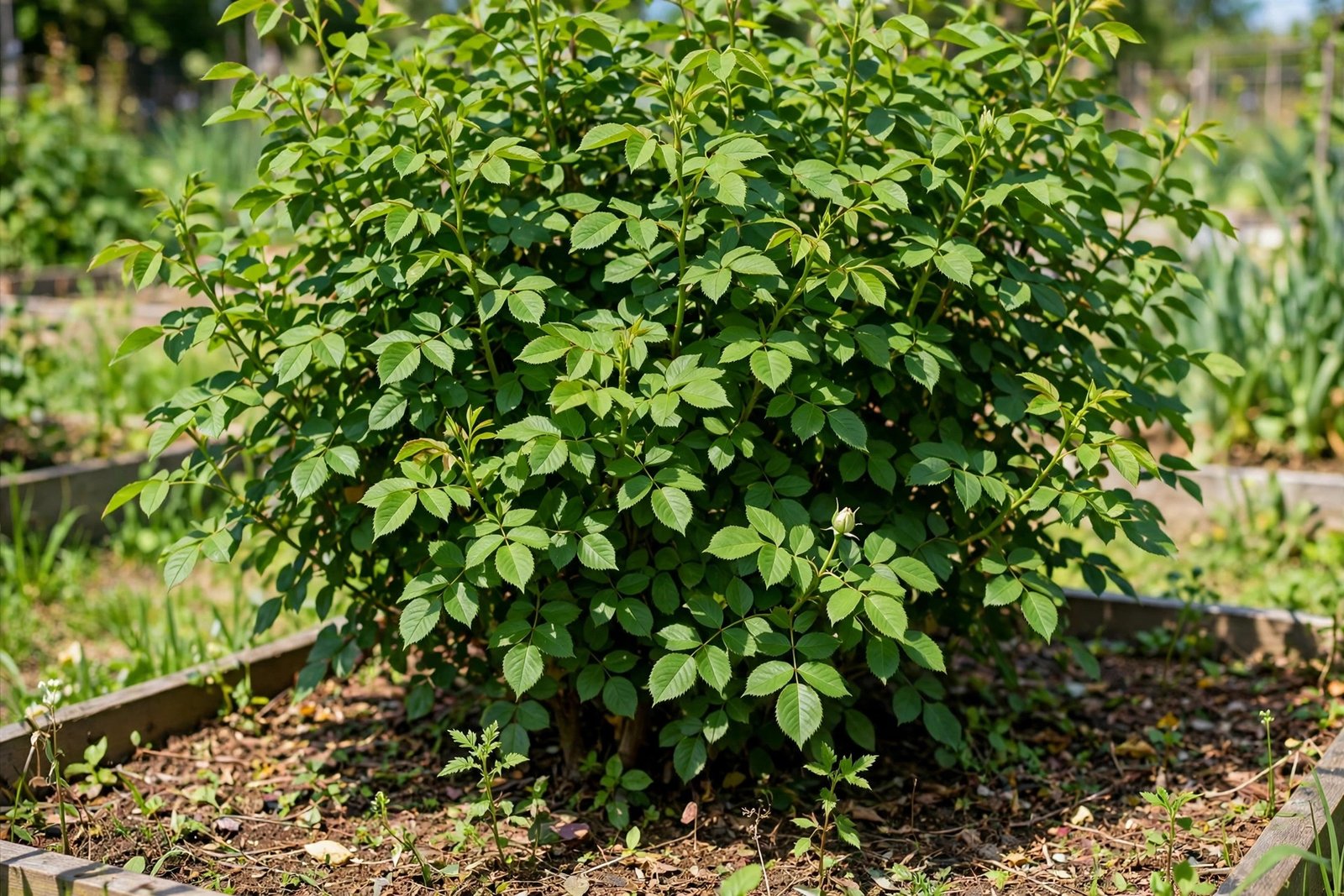
A rose bush covered in healthy green leaves but not a single flower is one of the most frustrating sights in gardening. The plant looks alive — it may even be growing vigorously — yet the whole point of growing roses, the blooms, never arrive. If this sounds familiar, take heart: a rose that refuses to flower is almost never dying. It is telling you that one specific part of its care is off, and once you find which one, the fix is usually simple.
Roses bloom when their needs for light, food, water, and pruning all line up, and stop blooming when even one of them goes wrong in the wrong direction. Work through the eight causes below in order — starting with the most common — and you will almost certainly find your answer.
Quick Answer
The most common reasons roses do not bloom are too little sunlight, the wrong fertiliser (too much nitrogen grows leaves instead of flowers), pruning at the wrong time, and leaving faded flowers on the plant instead of deadheading. Other causes include irregular watering, blind shoots that never form buds, pests or disease damaging the buds, and simple impatience — a young or once-flowering rose may be behaving completely normally. Check light first: most roses need at least six hours of direct sun to flower well.

The 8 Causes and Fixes
1. Not Enough Sunlight
This is the number one cause. Roses are sun plants: they build flower buds using energy from strong light, and in shade they spend that energy on leaves and stems instead. A rose needs roughly six or more hours of direct sunlight a day to bloom reliably. If yours gets less — because a fence, tree, or building shades it for much of the day — weak growth and no flowers are the predictable result. The fix is to move a potted rose to the sunniest spot you have, or, for a rose in the ground, to accept fewer blooms or eventually move it during its dormant season.
2. Pruning at the Wrong Time — or Barely at All
Pruning mistakes cut both ways. Pruning too late in spring can remove the stems that were about to flower, especially on roses that bloom on wood grown the previous year. Pruning too little, or not at all, leaves a tangle of weak, thin stems that cannot support buds. The safe rhythm for most garden roses is one main prune in late winter or early spring, just as buds begin to swell: remove dead, damaged, and crossing wood, and shorten healthy stems to an outward-facing bud. If you are unsure of your rose’s type, prune lightly rather than hard — you can always tidy more later, but you cannot put wood back.
3. Too Much Nitrogen in the Feed
A rose fed with a general lawn-style fertiliser, fresh manure, or too much of any high-nitrogen feed does exactly what that feed instructs: it grows leaves. The result is a lush, dark green, flower-free bush. Roses need a balanced feed, or one made for roses and flowering plants, which supplies relatively more potassium — the nutrient that supports flowers and fruit. Feed according to the product’s schedule during the growing season, and never be tempted to double the dose “to help it along.” More feed is not more flowers; often it is the opposite.
4. Faded Flowers Left on the Plant
Once a rose flower fades, the plant’s instinct is to spend its energy making seeds (rose hips) instead of new blooms. Removing spent flowers — deadheading — interrupts that signal and pushes most repeat-flowering roses to produce another flush of buds. On a rose that seems to flower once and stop, this is very often the whole problem. Our full guide on how often you should deadhead flowers explains the technique and timing plant by plant, roses included.
5. Irregular Watering
Roses forming buds need steady moisture. Long dry spells — very common for roses in pots, which can dry out alarmingly fast in warm weather — make the plant abandon flower buds to protect itself, and buds that do form may stay small or drop. Water deeply and consistently, aiming to keep the soil evenly moist rather than swinging between dry and soaked. Mulch around the plant to slow evaporation. The practical tricks in our guide on how to stop pots from drying out so fast apply directly to potted roses, which are among the thirstiest plants on a patio or balcony.
6. Blind Shoots
Sometimes a healthy stem grows leaves, reaches a good length — and simply ends, with no bud at the tip. Gardeners call this a blind shoot. Blind shoots happen after cold snaps during bud formation, in low light, or on weakened plants. One or two are nothing to worry about, but a bush producing mostly blind shoots is pointing back to causes 1, 3, or 5: light, feed balance, or water. The fix for a blind shoot is simple — prune it back by about half, to a strong outward-facing leaf joint, which encourages a new, flowering shoot to grow from below.
7. Pests and Disease Eating the Budget
Flower buds are soft, sweet, and attractive to pests. Aphids cluster on buds and can distort or stall them; thrips damage petals before they open; and fungal diseases such as powdery mildew and black spot weaken the whole plant and strip its leaves, leaving it with no energy to spare for flowers. Check buds and leaf undersides weekly. A strong jet of water dislodges most aphids, badly diseased leaves should be picked off and binned (never composted), and improving air flow around the plant reduces fungal pressure. A rose fighting for its leaves cannot be expected to flower.
8. Wrong Expectations: Age and Type
Sometimes nothing is wrong at all. A newly planted rose spends its first season building roots and often flowers lightly or not at all. A very young plant from a small pot may need a year to settle. And some beloved old roses are once-flowering types: they produce one glorious flush on the previous year’s wood and then no more until next year — deadheading and feeding will not change that rhythm, and pruning them in spring removes the flowering wood entirely. Before blaming your care, check what type your rose actually is.

A Simple Routine That Brings Blooms Back
Put the fixes together and the routine is short. Place the rose in the sunniest position available. Water deeply whenever the top of the soil feels dry, and mulch the surface. Feed with a balanced or rose-specific feed at the recommended rate during the growing season — no more. Prune once, at the right time, removing dead and weak wood. Deadhead faded flowers promptly through the season. Check weekly for pests and diseased leaves. Most roses respond within one flush cycle: new buds form roughly four to six weeks after conditions improve.
Mistakes to Avoid
- Feeding more to “encourage” flowers. Extra high-nitrogen feed produces extra leaves. It is the most common self-inflicted cause of a flowerless rose.
- Pruning hard without knowing the type. On once-flowering and climbing roses, spring pruning removes the very wood that would have bloomed.
- Watering little and often. Shallow watering keeps roots at the surface and stresses the plant. Water deeply, then let the surface dry slightly.
- Giving up after one quiet season. A newly planted or recently moved rose often needs a season to settle before it performs.
- Composting diseased leaves. Black spot and mildew survive in compost heaps and return. Bin diseased material instead.
Frequently Asked Questions
How long after fixing the problem will my rose bloom again?
For repeat-flowering roses in the growing season, expect new buds within about four to six weeks of consistent light, water, and feeding. If the season is nearly over, the improvement may show as strong growth now and a proper flush next season instead — the plant remembers good care.
My rose grew long stems from below the graft that never flower. What are they?
Those are suckers — growth from the rootstock rather than the rose variety grafted on top. They look slightly different (often paler, with different leaf counts) and rarely produce the flowers you want. Trace each sucker back to where it emerges below the graft and remove it cleanly at its base; left alone, suckers can take over the plant.
Should I stop feeding a rose that is not blooming?
Stop only the high-nitrogen feeding. A rose still needs balanced nutrition to build buds; switching to a rose or flowering-plant feed at the normal rate is the correct move. Starving the plant entirely makes flowering less likely, not more.
Can a rose in a pot bloom as well as one in the ground?
Yes, if the pot is large enough, the soil stays evenly moist, and feeding is regular — pots lose nutrients faster than beds. Most potted rose failures trace back to the pot being too small and drying out, not to the pot itself.
Conclusion
A flowerless rose is a puzzle with a short list of suspects: light, pruning, feed balance, deadheading, water, blind shoots, pests, or simple patience. Work through them in order and you will find yours — and the blooms will follow. For more flower care, plant problem-solving, and seasonal guides, browse our flower gardening and bloom problems category.

1 thought on “Why Are My Roses Not Blooming? 8 Causes and Fixes”