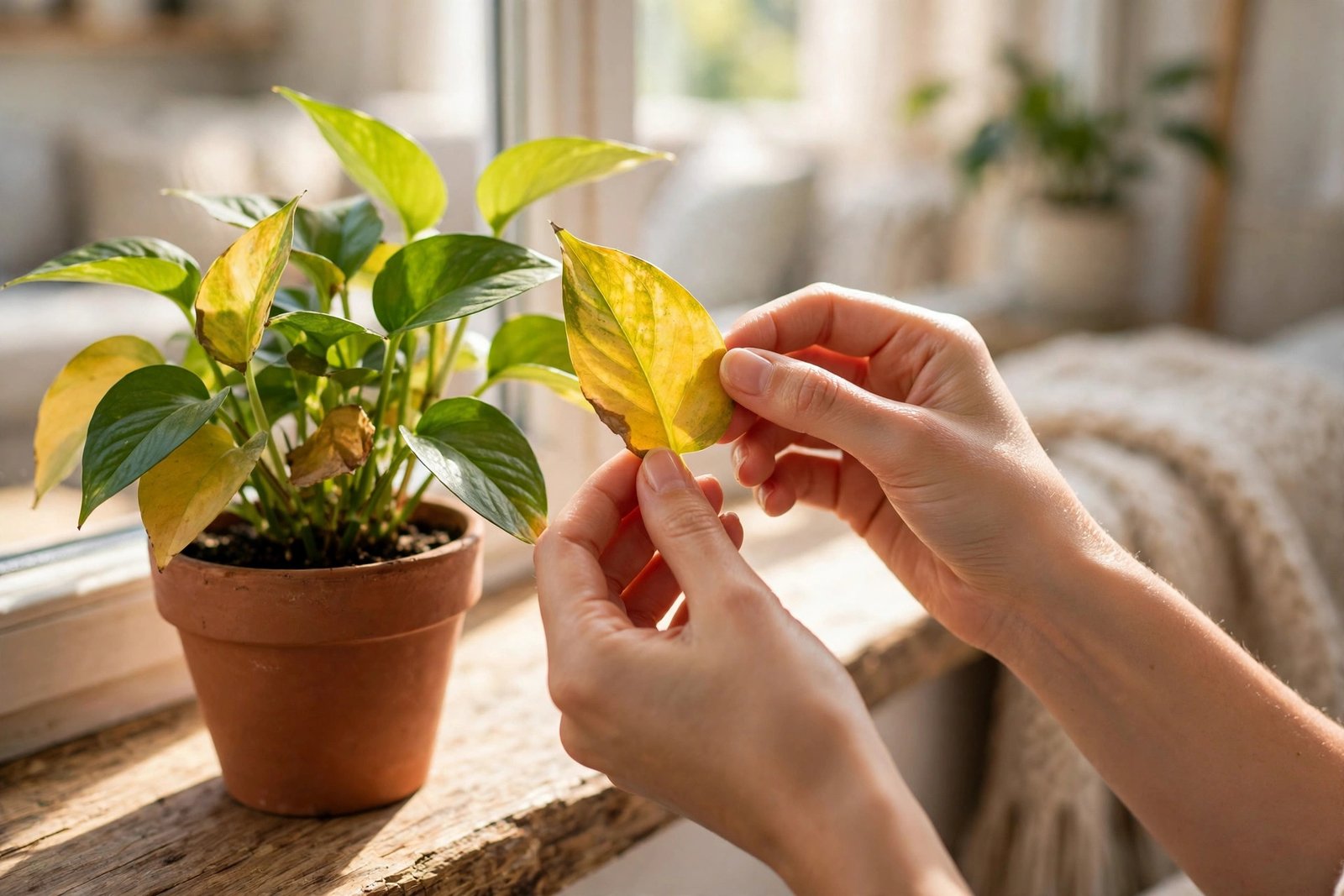
Few things are more worrying for a plant lover than walking past a favourite houseplant and spotting a yellow leaf. Yesterday it looked perfectly green, and today it seems to be sending you a message. The good news is that yellowing leaves are one of the most common houseplant problems, and in most cases the plant is not dying. It is simply asking for a small change in its care.
Yellow leaves are a symptom, not a disease. Your job is to play detective: look at which leaves are yellow, how the soil feels, and where the plant sits. Once you match the pattern to the cause, the fix is usually simple. This guide walks you through the nine most common causes, how to tell them apart, and exactly what to do for each one.
Quick Answer
Houseplant leaves turn yellow most often because of watering problems — usually too much water, sometimes too little. The next most common causes are not enough light, a lack of nutrients, roots that have outgrown the pot, pests, and simple old age of the leaf. Start by checking the soil with your finger. If it feels wet and soggy, overwatering is the likely cause. If it feels bone dry and the plant looks droopy, it needs a drink. Fix the cause, remove badly yellowed leaves, and new growth should come back green.

How to Diagnose the Problem in Two Minutes
Before you change anything, take a calm look at the whole plant. A few simple checks will point you to the right cause and save you from treating the wrong problem.
- Feel the soil. Push a finger about 2–3 cm (about an inch) into the soil. Is it wet, lightly moist, or completely dry?
- Look at which leaves are yellow. Only the oldest leaves at the bottom, or new leaves at the top as well? One leaf or many at once?
- Check the pattern. Is the whole leaf evenly yellow, yellow between green veins, or yellow with brown edges and spots?
- Look under the leaves. Tiny webs, small insects, or sticky patches point to pests.
- Check the pot. Are roots circling out of the drainage holes or pushing the plant up out of the soil?
With those answers in mind, go through the nine causes below and find the one that matches your plant best.
The 9 Most Common Causes and Fixes
1. Overwatering
This is the number one cause of yellow leaves. When soil stays wet for too long, roots cannot breathe and begin to rot. Damaged roots cannot feed the plant, so leaves turn yellow, soft, and sometimes translucent, and the soil may smell sour. Leaves often feel limp rather than crispy. If this sounds like your plant, follow a rescue routine for soaked roots — our guide on how to fix an overwatered houseplant takes you through every step. For now, stop watering, empty any water sitting in the saucer or decorative pot, and move the plant to bright, indirect light while the soil dries.
2. Underwatering
A thirsty plant also turns yellow, but the picture looks different. Leaves usually turn yellow starting at the edges, feel dry and crispy, and may curl or drop. The soil pulls away from the sides of the pot and feels dry all the way down. The fix is a slow, thorough drink: water until it runs out of the drainage holes, let the pot drain fully, and then return to a regular routine of checking the soil before each watering.
3. Not Enough Light
Light is food for a plant. In a dim spot, a houseplant cannot make enough energy, so leaves slowly lose their rich green colour and turn pale yellow-green. Growth becomes weak and leggy, and older leaves may drop. This yellowing usually happens gradually and affects the whole plant. Move it closer to a bright window, a step at a time over a week so the leaves do not scorch. To learn the other warning signs, read about the signs your indoor plant is not getting enough light.
4. Lack of Nutrients
Soil in a pot holds only a limited supply of food. After many months of growth, nutrients run low and leaves — often the older ones first — turn pale or yellow because the plant moves what little food it has to new growth. A classic pattern is yellow leaves with green veins, which often points to a shortage of iron or magnesium. Feed with a balanced liquid houseplant fertiliser at half the strength suggested on the label during the growing period, and never feed a plant that is dry, sick, or freshly repotted.
5. The Plant Has Outgrown Its Pot
When roots fill the whole pot, there is little soil left to hold water and food. The plant dries out very quickly after watering, growth slows, and lower leaves yellow and drop. Roots growing out of the drainage holes or circling on the surface are a clear sign. Move the plant into a pot only 2–5 cm (1–2 inches) wider than the old one, with fresh soil, and water it in well.
6. Pests
Sap-sucking pests such as spider mites, aphids, mealybugs, and scale insects slowly drain a plant, leaving yellow, speckled, or sticky leaves. Look closely at the undersides of leaves and along the stems. Wipe leaves with a damp cloth, shower the plant gently, and treat affected areas with a mild insecticidal soap solution, repeating weekly until no pests remain. Keep the plant away from your other plants while you treat it.
7. Natural Ageing of Old Leaves
Sometimes a yellow leaf is simply an old leaf. Most houseplants shed their lowest, oldest leaves from time to time to make room for new growth. If only one or two bottom leaves yellow while the rest of the plant looks healthy and is growing well, there is nothing to fix. Trim the yellow leaf off cleanly and carry on with your normal care.
8. Fertiliser Burn or Salty Tap Water
Too much fertiliser, or salts building up in the soil from regular tap water, can damage roots and turn leaf edges yellow and brown. A white crust on the soil surface or pot rim is a clue. Flush the soil with plenty of plain water, letting it drain completely, and always measure fertiliser carefully — weak and occasional is safer than strong and frequent.
9. Cold Drafts and Sudden Changes
Houseplants dislike sudden change. A cold draft from a window or door, hot dry air from a heater, or a sudden move to a very different spot can shock a plant into dropping yellow leaves. Keep plants away from radiators, air-conditioning vents, and frequently opened doors, and give a new plant a week or two to settle before judging its health.

Mistakes to Avoid
- Watering more “just in case.” If the soil is already wet, extra water makes root problems worse, not better.
- Changing everything at once. If you repot, move, and feed on the same day, you will never know what helped — and you may stress the plant further.
- Removing every yellow leaf in a panic. A leaf that is only slightly yellow can still feed the plant. Remove leaves that are fully yellow or mushy.
- Feeding a sick plant. Fertiliser is food for healthy growth, not medicine. Fix water and light first.
- Ignoring the drainage hole. A pot without drainage, or a plant sitting in standing water, is the fastest route to yellow leaves.
When Yellow Leaves Are Nothing to Worry About
One yellow leaf on an otherwise happy, growing plant is rarely an emergency. Plants renew themselves constantly, and a single older leaf fading is part of that rhythm. Worry instead when yellowing spreads quickly, when many leaves change at once, when leaves feel mushy, or when you also see black spots, pests, or a sour smell from the soil. Those are signs to act promptly using the causes above.
Frequently Asked Questions
Should I cut off yellow leaves?
Yes, once a leaf is fully yellow it will not turn green again. Cut it off at the base with clean scissors so the plant can put its energy into new, healthy growth. Leaves that are only partly yellow can stay a little longer.
Can a yellow leaf turn green again?
No. Yellowing caused by a lack of chlorophyll does not reverse. The goal of fixing the cause is to protect the remaining green leaves and make sure new growth comes out healthy and green.
How long does it take for a plant to recover?
Once the cause is fixed, most houseplants stop yellowing within one to two weeks and show fresh green growth within a few weeks. Be patient and keep the care routine steady while it recovers.
Why are only the bottom leaves turning yellow?
Bottom leaves are the oldest, so they are the first to show natural ageing, low nutrients, and early signs of overwatering. If the rest of the plant looks healthy and is growing, a few yellow bottom leaves are normal.
The Bottom Line
Yellow leaves are your plant’s way of asking for help, and most of the time the answer lies in water, light, or food. Diagnose before you act, fix one cause at a time, and give the plant a little patience. For more step-by-step help with everyday plant problems, explore our indoor plant care and problems guides — your plants will thank you with fresh, green growth.
3 thoughts on “Why Are My Houseplant Leaves Turning Yellow? 9 Causes and Fixes”