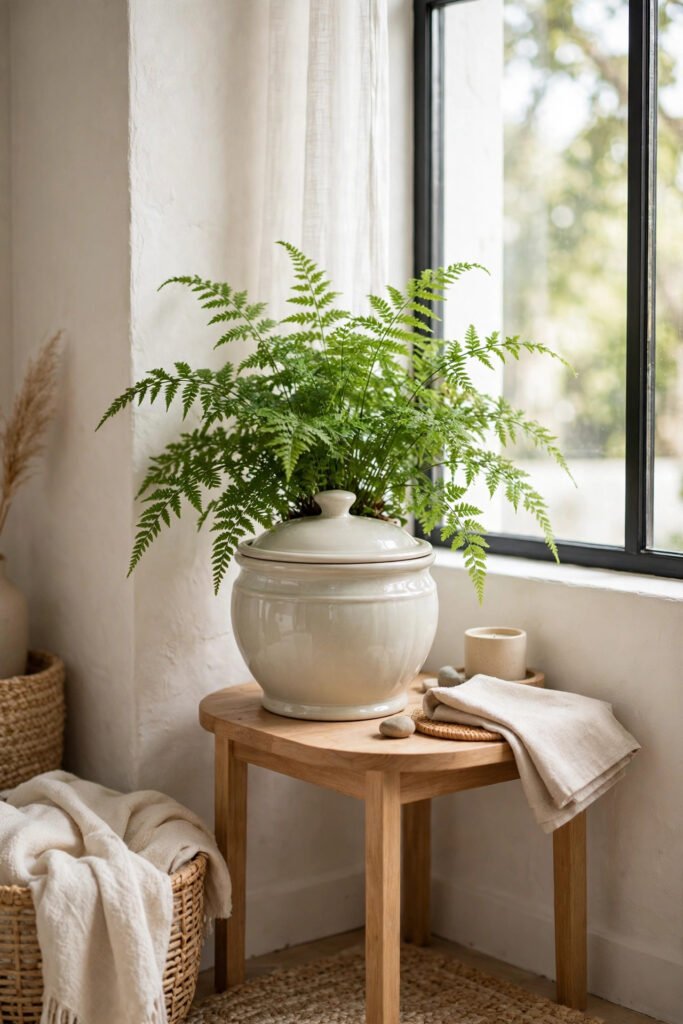

It happens to almost everyone. You spot a beautiful pot — the perfect colour, the perfect shape, exactly right for that corner of the room — and only when you get it home do you turn it over and realise: there is no hole in the bottom. Or perhaps a well-meaning friend gifts you a plant already sitting in a sealed decorative pot, and you do not want to offend anyone by repotting it. Either way, you are now the owner of a pot that cannot drain, and of a quiet worry: will watering it slowly kill the plant inside?
The honest answer is that a pot without drainage holes is a risk, but it is a manageable one. Plenty of plants live happily in holeless pots for years — not by luck, but because their owners water them in a completely different way. This guide explains exactly how: how much water to give, how to check whether it is too much, and the simple setups that make a sealed pot far safer.
Quick Answer
You can keep a plant in a pot without drainage holes if you water far less, far more carefully. The safest method is to use the pretty pot as a cover pot, keeping the plant in a plain drainage pot inside it. If you plant directly into the sealed pot, add a layer of gravel at the bottom, water in small measured amounts only when the soil has dried well down, and tip out any excess. The golden rule: in a holeless pot, roots must never sit in a hidden puddle.
Why Drainage Holes Matter So Much
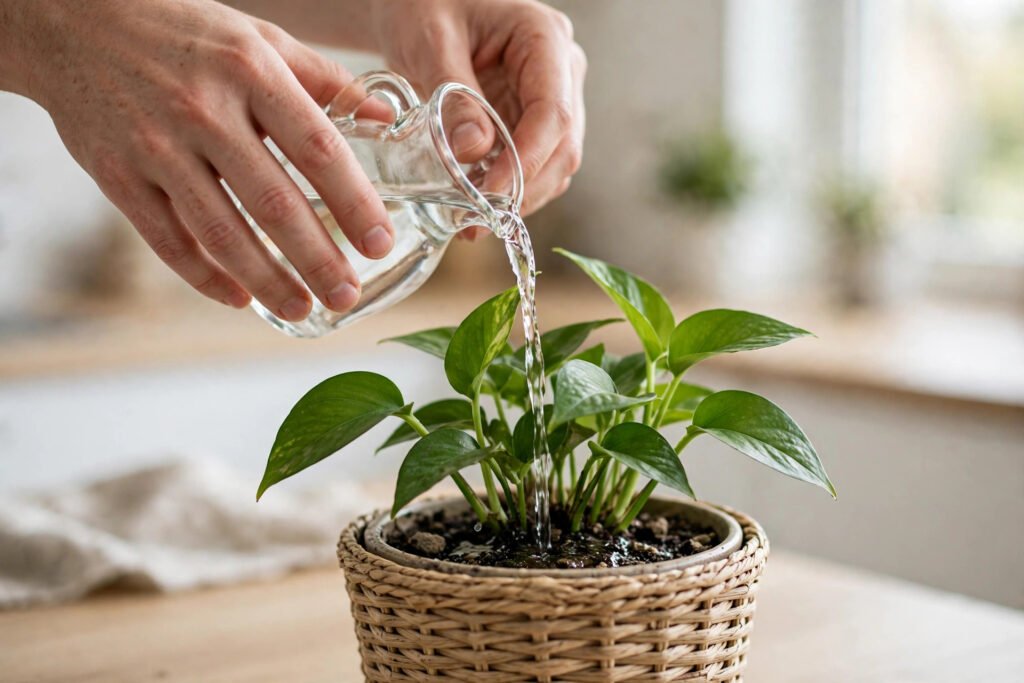
A drainage hole does two jobs at once. First, it lets surplus water escape, so no matter how generously you water, the pot can never hold more than the soil can absorb. Second, it lets air move into the bottom of the pot, and roots need air just as much as they need water. When roots sit in waterlogged, airless soil, they begin to rot — often silently, while the top of the soil looks completely normal.
In a pot with holes, an accidental heavy watering fixes itself within minutes. In a sealed pot, that same watering leaves a puddle at the bottom that can linger for weeks. The plant’s lowest roots drown in it while the upper roots may actually be dry, which is why plants in holeless pots can wilt and yellow at the same time. Understanding that hidden puddle is the key to everything that follows: every technique below is simply a way of making sure it never forms, or of knowing when it has.
The Safest Option: Use the Pot as a Cover Pot
Before learning to water a sealed pot, it is worth knowing the method experienced growers almost always choose: do not plant in it at all. Keep the plant in an ordinary, inexpensive pot with drainage holes, and simply stand that pot inside your beautiful one. The decorative pot hides the plain one completely, and watering becomes safe and simple.
- Choose a plain inner pot that slips comfortably inside the decorative pot, with a small gap around the sides.
- When the plant needs water, lift the inner pot out and water it at a sink or outdoors.
- Let it drain fully — ten minutes is enough — until no more drips fall.
- Set it back into the decorative pot only once draining has finished.
- Once a month, check inside the decorative pot and pour away any water that has collected there.
This one habit removes nearly all the risk while keeping the look you loved. If you do decide to plant directly into the sealed pot, though, the rest of this guide will keep that plant safe.
If You Plant Directly: Set the Pot Up Properly
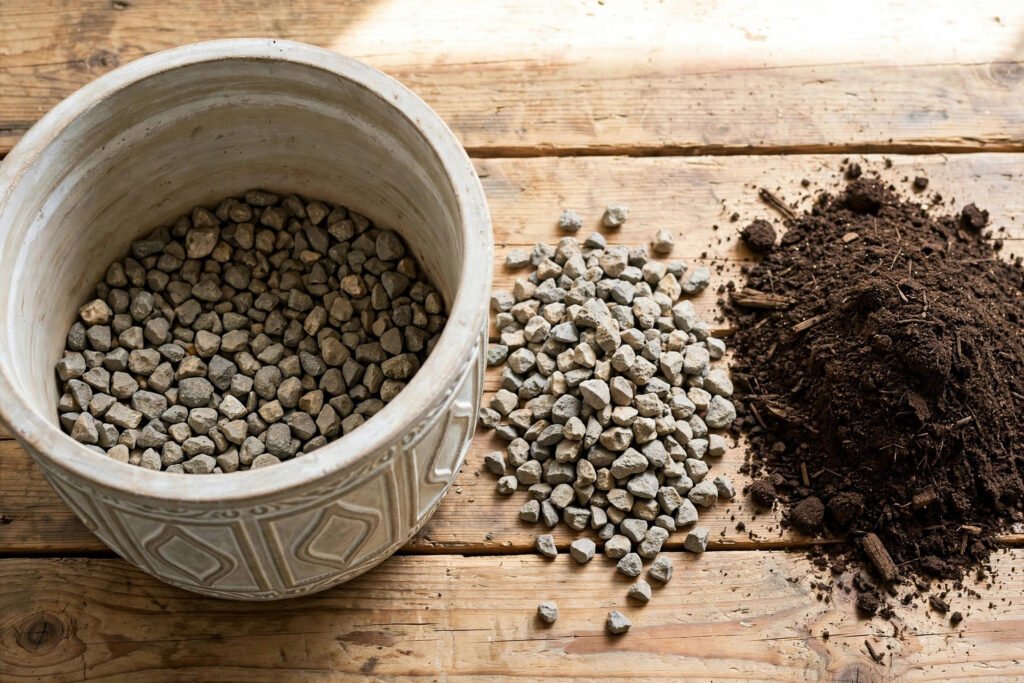
A layer of coarse gravel or small stones, about 2–3 cm (an inch) deep, at the bottom of a holeless pot gives surplus water a place to gather below the soil, away from most of the roots. It is not a magic solution — water can still collect there — but it buys the roots a buffer zone and makes small watering mistakes far less dangerous. A small piece of mesh or an old coffee filter over the gravel stops soil from washing down into it.
Soil choice matters even more here than usual. Use a light, airy potting mix that holds some air even when damp, rather than dense garden soil, which turns to sludge in a sealed pot. Fill the pot, plant as normal, and leave at least 2 cm between the soil surface and the rim so water has room to soak in rather than spill over the edge.
How to Water a Pot With No Drainage Holes, Step by Step
Watering a holeless pot is a different skill from watering a normal one. Forget the drench-and-drain method completely. Instead, think in small, measured drinks.
- Check deep, not just the surface. Push a finger or a wooden skewer 5 cm (2 inches) into the soil. Water only if it feels dry at that depth — in a sealed pot, the bottom stays damp long after the top looks dry, so check deeper than you normally would.
- Measure the water. Use a small jug or cup so you know exactly how much you are giving. A useful starting point is roughly one tenth of the pot’s volume — for a 1-litre pot, about 100 ml (half a cup) of water.
- Pour slowly, all over the surface. Give the soil time to absorb each splash rather than flooding one spot.
- Wait and watch. After ten minutes, tilt the pot gently. If water has pooled at the bottom — you may see it through the soil line or feel the pot is surprisingly heavy — carefully tip the pot sideways over a sink and pour the excess away.
- Keep a simple record. Note the date and amount on your phone. Within a few weeks you will know exactly how much your plant drinks, and watering stops being guesswork.
Because the margin for error is thinner, it also helps to understand your plant’s overall rhythm; our guide on how often you should water indoor plants explains the check-before-you-water habit in more depth. And if a plant in a sealed pot is already yellowing and soggy, treat it quickly — the rescue steps in our guide on how to fix an overwatered houseplant apply exactly here.
Signs a Holeless Pot Is Holding Too Much Water
- The pot feels heavy days after watering. A dry pot is noticeably lighter; heaviness that never lifts means water is trapped below.
- Lower leaves yellow and drop while the soil surface still feels damp.
- A sour or swampy smell when you get close to the soil — an early sign of roots beginning to rot.
- Tiny fungus gnats hovering around the pot, which breed in constantly wet soil.
- Mould or green algae on the soil surface, showing the top layer never dries out.
Caught early, most of these reverse simply by stopping watering, tipping out any pooled water, and letting the soil dry properly. Caught late, the kindest fix is to lift the plant out, trim any black, mushy roots, and repot it — ideally into a pot with holes this time.
Which Plants Cope Best in Holeless Pots?
Thirsty, moisture-tolerant plants forgive the occasional hidden puddle far better than dry-loving ones. Ferns, peace lilies, and many tropical foliage plants manage reasonably well with careful watering. Succulents, cacti, lavender, and other plants that demand sharp drainage and dry periods are genuinely poor candidates: in a sealed pot they are living against their nature, and cover-pot treatment is the only sensible way to display them in a holeless container.
Mistakes to Avoid
- Watering on a fixed schedule. A sealed pot dries at an unpredictable rate; only a soil check tells the truth.
- Giving “a good soak” to be kind. In a holeless pot there is no such thing as a safe soak — excess water has nowhere to go.
- Assuming the gravel layer solves everything. It helps, but pooled water still sits beneath the roots; careful amounts still matter.
- Ignoring a persistently heavy pot. Weight is your simplest warning signal — act on it by tipping out the excess.
- Planting dry-loving plants directly into sealed pots. Some combinations fail no matter how carefully you water.
Frequently Asked Questions
Can I drill a hole in a pot that does not have one?
Often, yes. Ceramic and terracotta pots can be drilled slowly with a masonry bit and a little water to cool the surface; plastic pots are easy with a standard bit. Go gently, support the base, and wear eye protection. If the pot is valuable or very thick, the cover-pot method is the safer choice.
How much water should I give a plant in a pot with no holes?
Start with about one tenth of the pot’s volume, poured slowly, and only when the soil feels dry several centimetres down. Adjust by watching the plant and the pot’s weight over a few weeks — every plant and room is slightly different, which is why measuring beats guessing.
Does the gravel layer at the bottom really work?
It helps a little by giving surplus water somewhere to collect below most roots, but it does not replace drainage. Think of it as a small safety buffer, not a solution: careful watering is still what keeps the plant alive.
How long can a plant survive in a pot without drainage?
With the cover-pot method, indefinitely — the plant is effectively in a normal pot. Planted directly and watered in small measured amounts, moisture-tolerant plants can also live for years. The plants that die are usually killed by one or two heavy waterings, not by the pot itself.
A Pretty Pot Does Not Have to Be a Risky One
A pot without drainage holes asks for a different watering style, not a different level of talent. Use it as a cover pot where you can; where you cannot, water little, water slowly, check deep, and never let a hidden puddle form. Do that, and the beautiful pot and the plant inside it can both thrive. For more calm, practical help with growing plants in containers, explore our container gardening and planter guides.