
Climbing plants can turn a plain fence, bare wall, or empty corner into the most beautiful part of the garden. They add height, flowers, scent, and shade without taking up much ground space. Most climbers only need something to climb. A trellis supports stems, keeps growth tidy, improves air flow, and lifts flowers and fruit where they are easy to see and pick. You do not need an expensive structure. With simple materials, basic tools, and a free afternoon, you can build a strong, attractive trellis at home. This guide shares four easy weekend projects, explains how to match the support to the plant, and shows how to fix and train climbers so they grow well from the start.
Quick Answer
The easiest DIY trellis is a bamboo cane tripod or obelisk pushed into the soil and tied at the top. For a flat wall or fence, build a wooden fan or lattice panel or fix a wire or netting panel with a small gap behind it for stems and tendrils. For a free, characterful option, reuse an old ladder or sturdy branches. Choose a support taller and stronger than the mature plant will need, fix it firmly before planting, and tie young stems in loosely as they grow. Always wear gloves, use eye protection when cutting, and check for buried pipes or cables before digging or driving posts into the ground.
Choosing the Right Support for Different Climbing Plants
Not all climbers climb in the same way, so the best trellis depends on how the plant holds on. Matching the support to the climbing method saves a lot of tying, flopping, and disappointment later.
Twining stems, such as sweet peas, beans, and many flowering vines, wrap around thin poles and canes. They suit tripods, obelisks, and netting with slim uprights.
Tendril climbers, such as clematis and passion flowers, grip with small curling tendrils that need thin wires, netting, and narrow lattice. They struggle on thick posts unless you add wire or mesh.
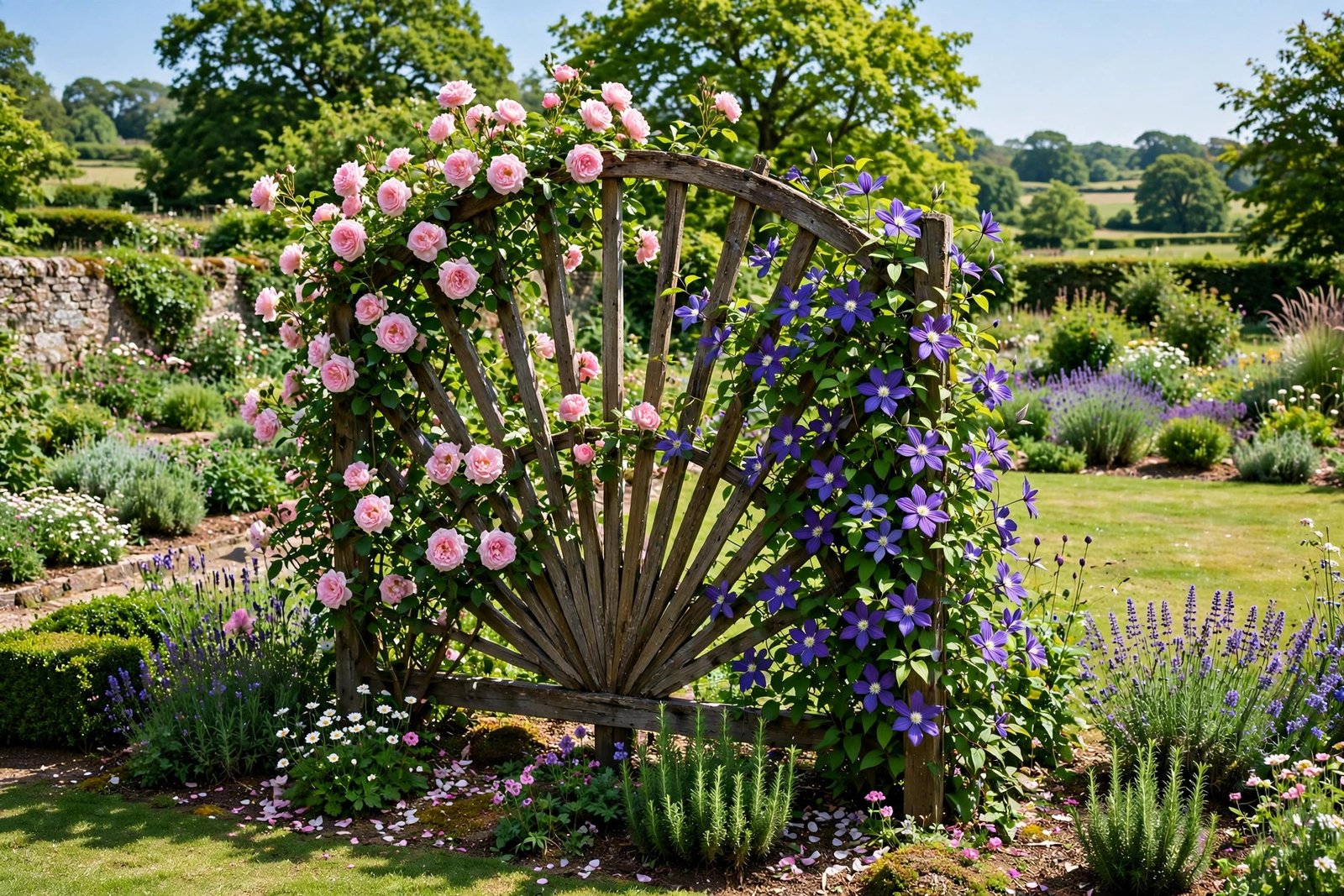
Scrambling plants, such as climbing roses, do not truly climb. Tie their long stems in by hand to a fan, lattice, or horizontal wires, spread out like the ribs of a fan. Stems trained more horizontally usually flower more.
Heavy and vigorous climbers need the strongest supports of all. A light cane structure perfect for sweet peas will snap under a large, woody plant in wind. Think about the plant’s final size and weight, not its size on planting day. In a pot, choose a compact support that fits firmly and will not make the container top-heavy.
Four Easy Trellis Ideas You Can Build in a Weekend
Each idea below uses a simple, beginner-friendly method. Work slowly, measure before you cut, and check that the finished structure feels firm before a plant goes near it.
1. Bamboo Cane Tripod or Obelisk
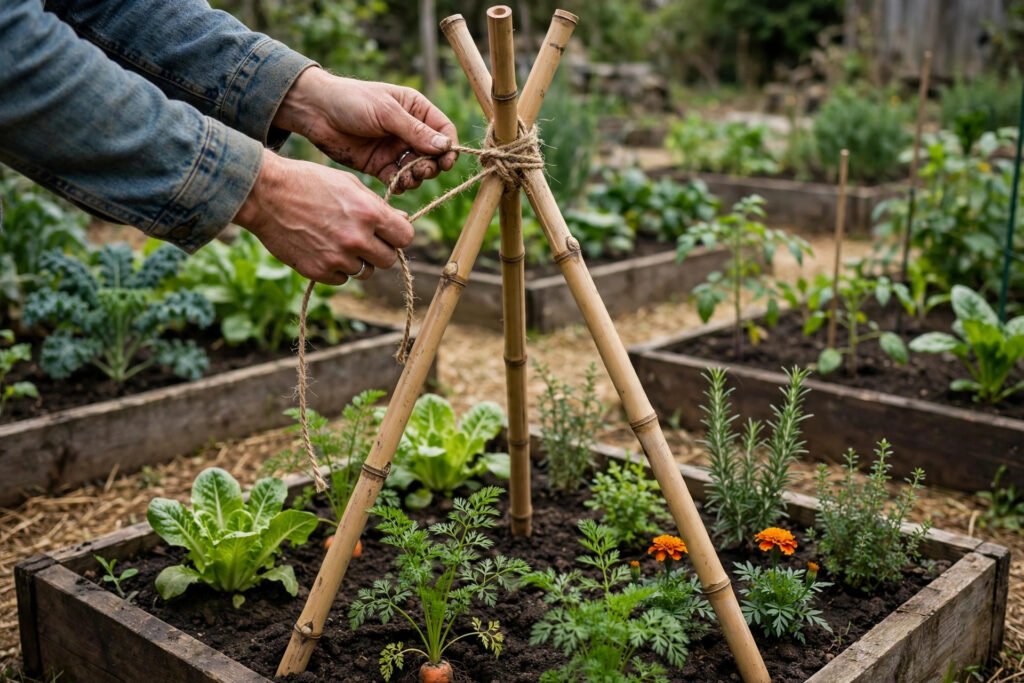
This is the fastest trellis to make. Push three to five tall canes into the soil in a circle, leaning them in so the tops meet, and tie the tops firmly with garden twine. For extra strength, weave one or two horizontal rings of twine around the uprights, one third and two thirds of the way up. The rings stop the canes spreading and give stems more to hold.
A tripod works beautifully in a vegetable bed for beans and peas, in a border for sweet peas, or in a large pot. It takes minutes to build and can be taken down and stored at the end of the season. If the soil is hard, make starter holes first rather than forcing the canes and splitting them.
2. Wooden Fan or Lattice Trellis
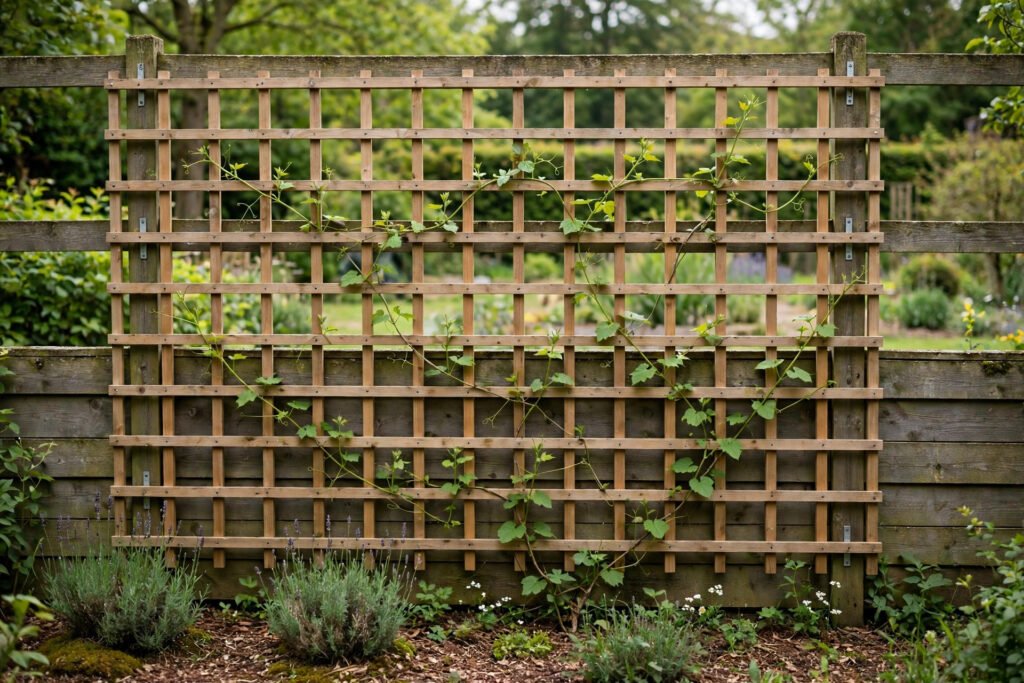
A fan or lattice panel gives flat, elegant support for roses and clematis against a wall or fence. For a fan, fix lengths of wood so they spread from a single low point, like fingers from a hand. For a lattice, cross thinner strips in a square or diamond pattern and fix them at the crossings and to a simple frame.
Keep the panel a hand’s width away from the wall or fence. That gap lets air move behind the leaves, which helps keep foliage healthy, and leaves room to tuck stems in and tie them. It also makes pruning much easier.
3. Wire or Netting Panel on a Fence or Wall
A wire or netting panel is the most discreet option. Fix horizontal wires or a sheet of sturdy netting or mesh against a fence or wall, leaving a small gap behind it so tendrils and ties can pass through. Stretch the material tight and fix it at regular intervals so it does not sag when the plant gets heavy.
This style suits coverage without a bulky frame. It is also a clever living privacy screen: cover the panel with a fast-growing climber and leaves soon hide an overlooked spot. If that is your goal, plan planting and spacing carefully, as explained in this guide on how to add privacy to a balcony with plants.
4. Repurposed Ladder or Branch Trellis
An old wooden ladder, leaned securely against a wall or fixed upright, makes an instant, charming trellis. The rungs are ready-made levels for tying in stems. Make sure the ladder is sound, not rotten, and fixed so it cannot slip.
Sturdy fallen branches work in a similar rustic way. Push one strong branch deep into the ground, or lash several together into a tripod or flat panel with twine. They suit peas, beans, sweet peas, and light flowering vines. Trim sharp points smooth, and replace the structure when the wood softens.
Growing Climbers Vertically in Small Spaces
A trellis is one of the best tricks for a small garden, balcony, or patio, because it grows upwards instead of outwards. A single panel on a sunny wall can hold more flowers than a wide bed, and a tripod in one large pot can give height, scent, and even a small crop of beans in a wasted corner. Climbers in pots need a support fixed to the pot, a rail, or the wall, so the whole thing does not blow over.
If space is tight, start with one well-placed panel and one healthy plant rather than crowding in several weak ones. For more ways to use walls, rails, and corners, see these vertical gardening ideas for small balconies.
Fixing, Securing and Training Plants Onto the Support
Fix the trellis before you plant. It is much harder to install a support once roots and stems are in the way. Push or bury free-standing legs deep enough that the trellis does not wobble when you push the top. Near walls and fences, check first for buried services, and stop if you meet unexpected resistance.
Plant with space to grow. Set wall-trained plants a small distance out from the wall or fence, where soil is less dry, and lean stems gently back towards the support. Water well and keep soil moist while roots settle.
Train little and often. Young stems are soft and easy to guide. Each week, weave twining stems around their poles, and tie scrambling stems with soft twine in a loose figure-of-eight loop, which holds the stem but leaves room for it to thicken. Never pull a stem tight or force a sharp bend. Spread stems evenly rather than letting them bunch in the middle.
Check through the season. After strong wind, check ties and fixings and re-tie anything loose. As stems thicken, loosen or replace old ties. At the end of the season, clear dead annual climbers off the structure so it lasts longer.
Mistakes to Avoid
- Building too small or too weak. A support that suits a young plant may collapse under its mature weight, especially in wind.
- Fixing the panel flat to the wall. Without a gap behind it, stems cannot be tied in and air cannot circulate around the leaves.
- Planting first and adding the trellis later. You will damage roots and stems trying to install the support around a growing plant.
- Tying stems too tightly. Tight ties cut into growing stems. Use soft twine and loose figure-of-eight loops instead.
- Letting all the growth bunch at the top. Untrained climbers tangle, shade their own lower leaves, and flower poorly. Guide stems sideways as well as up.
- Digging without checking. Always check for buried pipes and cables before digging holes or driving in posts, and wear gloves and eye protection when cutting materials.
- Forgetting pots can topple. A tall trellis in a small, light pot acts like a sail. Use a large, heavy container and fix the support firmly.
Frequently Asked Questions
What is the easiest trellis for a complete beginner?
A bamboo cane tripod is the easiest. It needs no cutting or wall fixings, only canes and twine. Push the canes in, tie the tops, add one twine ring, and it is ready for sweet peas, peas, or beans the same day.
How tall should a garden trellis be?
Match the trellis to the plant’s expected final height, and go a little taller if you can. Most annual climbers and vegetables do well on a support around head height. If a plant outgrows a short support, stems flop, tangle, and become hard to pick or prune.
Can I put a trellis in a pot?
Yes. Use a large, stable pot, push a small tripod, obelisk, or fan deep into the compost, and place the pot somewhere sheltered from strong wind. Water regularly, because climbers in pots dry out faster than plants in the ground.
When should I start training a climbing plant?
Start as soon as young stems are long enough to reach the support. Early training is easy, because stems are soft and flexible. Waiting until growth is tangled means more handling, more breakage, and a less tidy result.
Conclusion
A good trellis does not need to be bought, complicated, or perfect. Canes, a simple wooden panel, netting, or an old ladder can each carry a season of flowers and harvests, as long as the support suits the way the plant climbs, is fixed firmly before planting, and stems are tied in little and often. Start with one project this weekend and enjoy watching your garden grow upwards. For more projects, browse the Garden Decor, DIY and Outdoor Living ideas and pick your next build.
