

A balcony should feel like your own small piece of the outdoors. But when the neighbours’ balcony is an arm’s length away, or your seating area faces straight into another building, relaxing outside can feel like sitting on a stage. Curtains defeat the purpose, fences and fixed screens often break rental rules — and construction on a balcony you do not own is usually out of the question entirely.
The good news: plants solve this problem better than any screen. A living barrier filters views instead of blocking light, moves gently, cools the air, and turns an overlooked balcony into a green hideaway. And because everything stands in pots, nothing is permanent — you can rearrange it in an afternoon and take it with you when you move. This guide shows the most effective ways to build privacy with plants, with no drilling, no building, and no permission slips.
Quick Answer
To add privacy to a balcony with plants and no construction: place tall, dense plants in pots along the exposed edge — clumping bamboo, tall ornamental grasses, or bushy shrubs — add a freestanding trellis with climbing plants where you need height, and layer hanging and trailing plants at railing level to close the gaps. Focus your screening at seated eye height (roughly 1–1.5 metres), because that is where privacy is actually felt. Everything in pots or freestanding frames means zero drilling and zero permanent changes.
First, Understand Where Privacy Is Actually Needed
Before buying a single plant, sit in your usual chair and look around slowly. Privacy is about sight lines, not total enclosure. You probably do not need to screen the whole balcony — only the angles where people can actually see you, and usually only at the height of a seated or standing person.
Mark the exposed spots: the section of railing facing the neighbouring balcony, the end overlooked by the building opposite, the gap beside a divider. Screening those specific lines with well-placed plants uses far fewer plants — and looks far better — than walling off every side. Leave the rest open for light, air, and your own view.
Method 1: Tall Plants in Pots Along the Edge
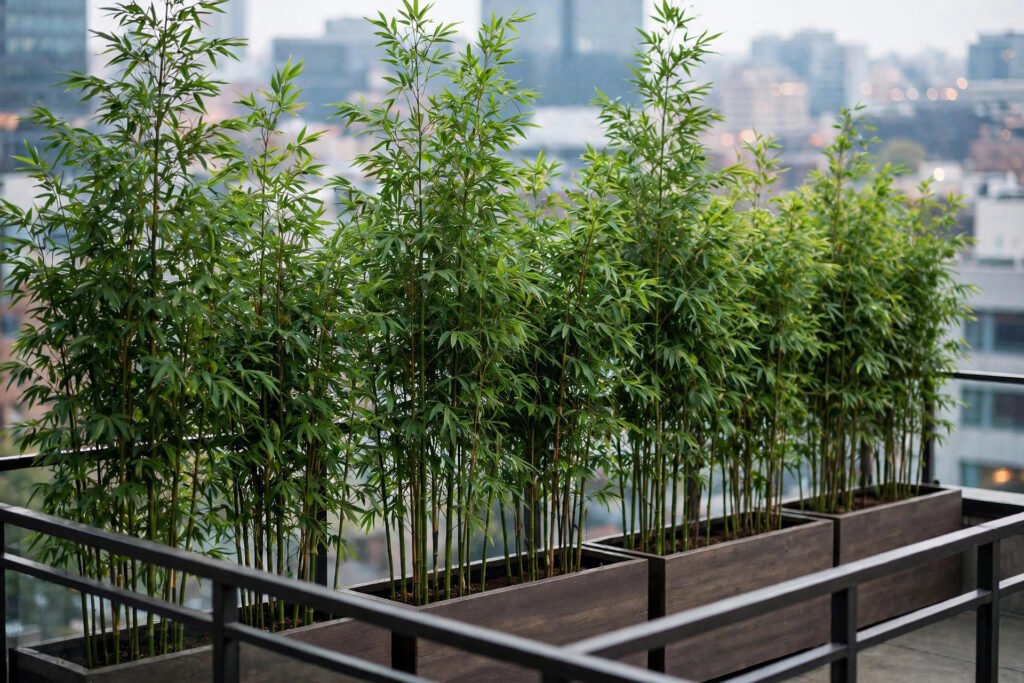
This is the backbone of balcony privacy. A row of tall, bushy plants in pots along the exposed railing works like a hedge you can move.
- Clumping bamboo is the privacy champion: it grows tall and dense quickly, rustles softly, and clumping types (not running types) behave well in large pots. Choose the biggest pots you can manage — bamboo is thirsty and root-hungry.
- Tall ornamental grasses give a softer, see-through-lightly screen that moves in the breeze. They are light, forgiving, and create privacy that feels airy rather than walled-in.
- Bushy evergreen shrubs in pots provide year-round cover where winters are mild, and structure everywhere else.
- Small trees in large pots — such as olive or citrus where climate allows, or hardy small trees elsewhere — screen higher sight lines from buildings above.
Line the pots up shoulder to shoulder for a continuous screen, or cluster them only where your sight-line check showed gaps. Long rectangular planters create the neatest hedge effect and use edge space efficiently. If you are building your balcony garden from the beginning, the setup basics in our guide on how to start a balcony garden in a small apartment will help you plan the whole layout around your privacy plants.
Method 2: A Freestanding Trellis With Climbing Plants
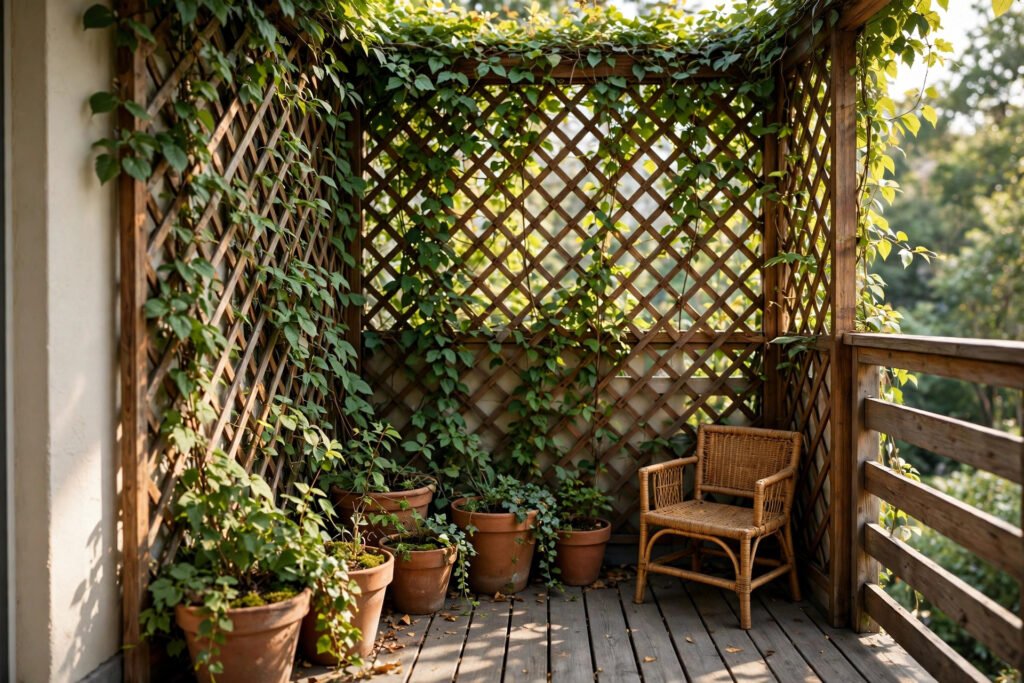
When you need privacy higher than a pot plant can reach — overlooked from above, or a tall gap between buildings — climbers on a freestanding trellis are the answer. Stand a trellis panel inside a heavy planter box (sold as combined units, or make the pairing yourself with a sturdy box and the panel slotted behind the plants), and let climbing plants do the vertical work. No wall fixings, no drilling.
Fast annual climbers cover a trellis in a single growing season: sweet peas for fragrance, black-eyed Susan vine for flowers, or morning glory for sheer speed (check local rules, as it self-seeds freely in some regions). For a longer-term screen, climbing roses, jasmine, or ivy on a strong trellis build denser cover year after year. Train the stems sideways along the trellis as they grow, not just upward — horizontal training fills the middle of the panel, which is exactly where your privacy needs to be.
Method 3: Railing Planters and Hanging Plants for the Gaps
Tall plants screen the big views, but lines of sight sneak through at railing height and between pots. Close those gaps with:
- Railing planters filled with bushy, trailing plants that spill both ways and soften the railing line.
- Hanging baskets at eye level along the exposed side — a row of them reads as a green curtain from outside.
- Trailing plants on shelves or stands just inside the railing, adding a second, lower layer behind the tall pots.
This layering is also where vertical thinking pays off: combining tall pots, a trellis, hangers, and shelves builds a screen with real depth. Our guide to vertical gardening ideas for balconies shows how to stack these layers safely in very little floor space.
Rules, Weight, and Wind: The Practical Checks
Three quick checks keep a privacy garden problem-free. First, rules: many buildings restrict items on the outside of railings — keep everything inside the railing line and plant-based screens rarely trouble anyone. Second, weight: privacy means big pots, and big pots full of wet soil are heavy. Use the largest pots along load-bearing edges, consider lighter fibreglass or plastic planters for the biggest plants, and spread the load rather than clustering it in one corner. Third, wind: tall plants act like sails. On exposed, high balconies choose sturdy, low-centred pots, group tall plants in corners where they support each other, and expect a trellis screen to need a genuinely heavy base.
Watering deserves a thought, too: big privacy plants in full sun can be very thirsty. A watering can routine works for a few pots; for a full screen, grouping pots together makes the job faster, and clustering keeps roots cooler and moister for longer.
Mistakes to Avoid
- Screening every side completely. You lose light, air, and your own view. Screen only the sight lines that actually overlook you.
- Choosing running bamboo. Running types escape and overwhelm pots. Always choose clumping bamboo for containers.
- Buying small plants and expecting instant privacy. Young plants need a season to fill in. Buy the largest specimens your budget allows for the key positions, or accept a trellis with fast annual climbers for the first year.
- Forgetting the view from above. If higher buildings overlook you, add height with a trellis or a small tree in a pot, not just railing-level plants.
- Ignoring wind. A tall, top-heavy pot on a windy balcony will fall. Weight the base, group pots, and choose sturdy shapes.
- Blocking your own light. A full-height screen on the sunny side can darken your rooms. Use grasses or lighter, airier plants where you still want sunlight to pass.
Frequently Asked Questions
What is the fastest plant for balcony privacy?
Clumping bamboo is the fastest woody option, often reaching useful screening height within a season or two from a decent-sized plant. For same-season results, annual climbers like morning glory or black-eyed Susan vine on a freestanding trellis cover the quickest — they race up several metres in one growing season.
Will plant privacy work in winter too?
Partly. Evergreen plants — bamboo, ivy, and evergreen shrubs — keep screening all year in most climates. Deciduous climbers and grasses lose their leaves or are cut back, so if winter privacy matters and your climate allows evergreens in pots, weight your planting toward them.
Is it allowed to add privacy plants on a rented balcony?
Almost always, yes — that is the beauty of this method. Everything stands in pots or freestanding frames inside your railing, so there is no construction, no drilling, and nothing permanent to remove when you leave. If your building has specific balcony rules, a quick check of your lease or a chat with the landlord removes any doubt.
How tall do privacy plants need to be?
Taller than the sight line, not taller than the balcony. For privacy while seated, foliage covering roughly 1–1.5 metres from the floor does most of the work. Add a trellis or taller plants only where you are overlooked from standing height or from above.
Conclusion
Privacy made of plants is softer, cooler, and far more beautiful than any fixed screen — and it asks for nothing more than pots, a freestanding trellis, and the right plants in the right sight lines. Start with one row of tall pots along your most exposed edge, and you may find that single change is enough to reclaim your balcony. For more balcony projects, plant guides, and small-space inspiration, browse our balcony and small space gardening category.
1 thought on “How to Add Privacy to a Balcony With Plants (No Construction Needed)”