
Standing in the pot aisle, it is easy to feel stuck. The terracotta pots look warm and classic, the plastic ones are light and cheap, and the glazed ceramic pots are so pretty they practically call your name. But the pot you choose does much more than decorate a shelf. It changes how fast the soil dries, how heavy the plant is to move, and even how healthy the roots stay. Choosing the wrong material is one of the quiet reasons a plant struggles even when the light and water seem right.
The good news is that there is no single “best” pot material. There is only the best match for your plant, your home, and your watering habits. This guide walks through how terracotta, plastic, and ceramic really behave day to day, so you can choose with confidence instead of guessing.
Quick Answer
Choose terracotta if you tend to overwater or your plant hates wet roots, because it breathes and dries soil quickly. Choose plastic if you forget to water, want something light, or are growing moisture-loving plants, because it holds water longest. Choose glazed ceramic if you want beauty plus decent moisture retention, and you do not mind extra weight and cost. Whatever you pick, a drainage hole matters more than the material itself — and pairing the right material with the right size helps too, as explained in this guide on how to choose the right pot size.
How Pot Material Changes Your Plant’s Life
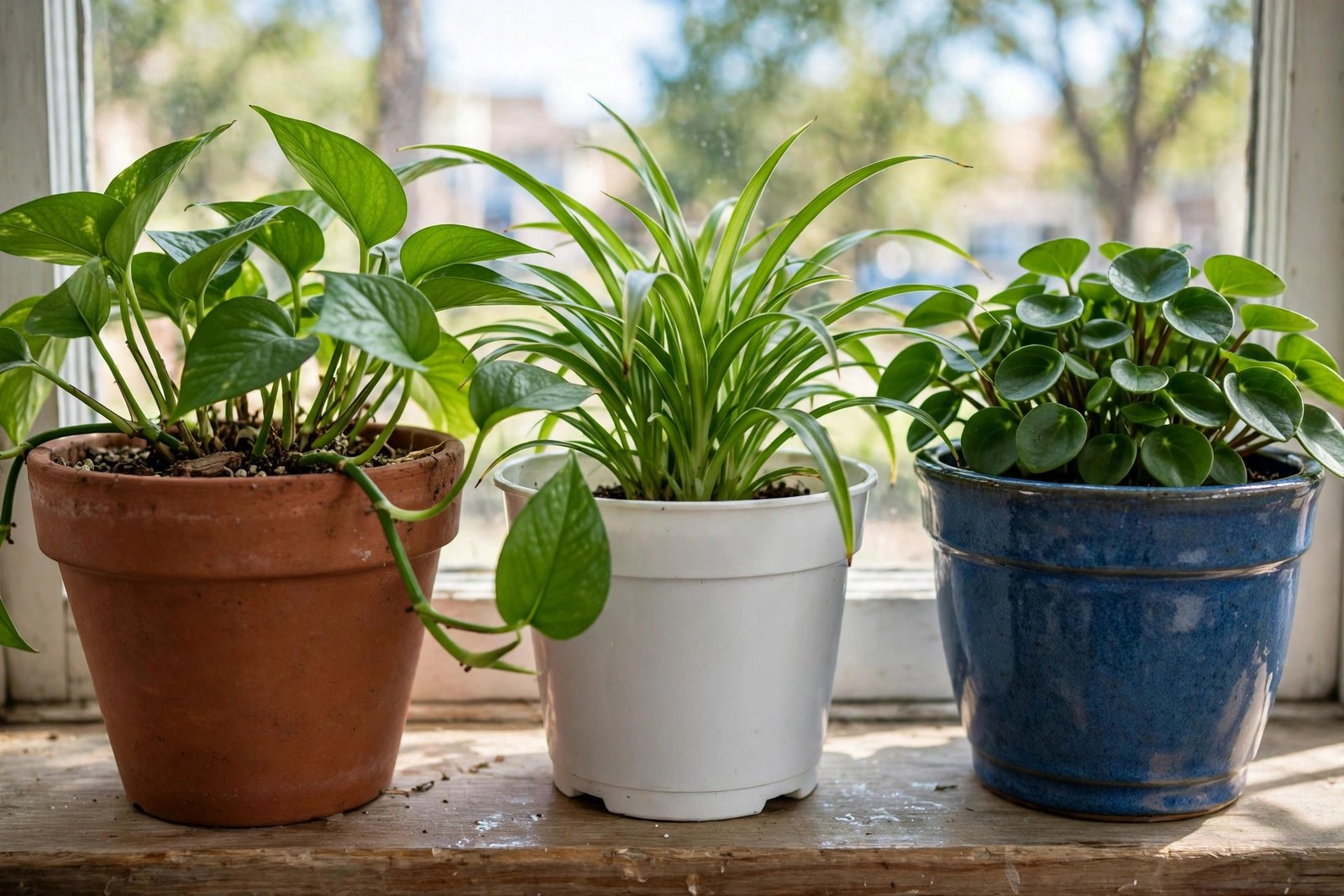
A pot is not just a container. Its walls decide how quickly water leaves the soil, how much air reaches the roots, and how much the temperature around the roots swings during the day. Porous materials let water and air pass through the walls. Sealed materials keep everything inside until it drains from the bottom or evaporates from the surface.
That one difference explains most of what follows. A plant in terracotta may need water twice as often as the same plant in plastic. Neither is wrong — they simply create two different homes for the roots. Your job is to match the home to the plant and to the person doing the watering.
Terracotta Pots: The Breathable Classic
Terracotta is unglazed, baked clay. Anyone who has lifted a dry terracotta pot and then a freshly watered one knows how much water those walls can absorb. That sponge-like quality is its main strength and its main weakness.
What Terracotta Does Well
- Prevents soggy soil. Water escapes through the walls as well as the drainage hole, so roots are far less likely to sit in wet soil and rot.
- Lets roots breathe. Air moves through the clay, which many plants — especially succulents, cacti, herbs, and snake plants — clearly prefer.
- Stays stable. Terracotta has real weight, so tall or top-heavy plants are less likely to tip over.
- Shows you the water level. The clay darkens when wet and lightens as it dries, giving a rough visual clue about moisture.
Where Terracotta Falls Short
- Dries out fast. In warm, bright spots, small terracotta pots can need watering every few days. Thirsty plants can suffer.
- Can crack in frost. Water absorbed into the clay expands when it freezes, which can split the pot outdoors in cold weather.
- Builds up white crusts. Mineral salts migrate through the walls and leave white marks. They are mostly harmless and can be scrubbed off, but some people dislike the look.
- Breaks when dropped. One knock on a hard floor can end the pot’s life.
Plastic Pots: Light, Cheap, and Thirst-Friendly
Plastic is the material most plants arrive in from the shop, and it deserves more respect than it gets. Modern plastic pots come in decent colours and finishes, and for many plants they are simply the most practical choice.
What Plastic Does Well
- Holds moisture longest. Nothing escapes through the walls, so soil stays damp much longer. This suits ferns, calatheas, and anyone who waters a little less often than they should.
- Very light. Large plants stay movable, and hanging plants put far less strain on hooks and brackets.
- Affordable and durable. Plastic rarely cracks, survives drops, and costs little, which helps when you need many pots at once.
- Easy to clean. A quick wash makes plastic pots simple to reuse for the next plant.
Where Plastic Falls Short
- Overwatering risk. Because water only leaves from the top and the drainage hole, heavy-handed watering can quietly drown roots.
- Can tip over. Tall plants in light plastic pots are wobbly, especially outdoors in wind.
- Heats up in strong sun. Thin dark plastic can get hot and stress roots on a very sunny windowsill or balcony.
- Sun damage over time. Cheap plastic can become brittle after long exposure to strong sunlight.
Glazed Ceramic Pots: Beauty With a Bit of Balance
Ceramic pots are clay pots sealed with a glaze. That shiny coating changes everything: the walls no longer breathe, so a glazed ceramic pot behaves more like plastic for water, while keeping the weight and beauty of clay.
What Ceramic Does Well
- Looks beautiful. Colours, patterns, and finishes make ceramic the decorator’s favourite, and a lovely pot genuinely makes a plant corner feel finished.
- Retains moisture well. Soil dries slower than in terracotta, so watering is less frequent.
- Stable and solid. The weight anchors tall plants nicely.
- Protects the surface underneath less than you would hope — always use a saucer, because the base can still mark furniture.
Where Ceramic Falls Short
- Often has no drainage hole. Many decorative ceramic pots are sold as cachepots with no hole at all. Growing directly in them is risky unless you water very carefully — this guide on pots without drainage holes explains how to manage them safely.
- Heavy. A large ceramic pot full of wet soil is genuinely hard to move for cleaning or rearranging.
- Costs more. Pretty glazes come with a higher price tag than plastic or basic terracotta.
- Can chip or crack. The glaze can chip if knocked, and frost can damage ceramic left outside in freezing weather.

Side-by-Side Comparison
- Drying speed: Terracotta dries fastest, ceramic is in the middle, plastic dries slowest.
- Weight: Plastic is lightest, terracotta is medium-heavy, ceramic is usually heaviest.
- Best for forgetful waterers: Plastic or glazed ceramic.
- Best for heavy-handed waterers: Terracotta.
- Best for succulents and cacti: Terracotta, almost always.
- Best for thirsty tropical plants: Plastic or glazed ceramic.
- Best for hanging plants: Plastic, because of the low weight.
- Best for frost-prone outdoor spots: Thick plastic; bring terracotta and ceramic under cover in freezing weather.
- Price: Plastic is cheapest, terracotta is usually affordable, glazed ceramic is the premium option.
Matching the Pot to the Plant
Start with the plant’s roots, not the colour of the pot. Dry-loving plants with thick leaves or stems — succulents, cacti, snake plants, and many herbs like rosemary — store their own water and fear wet soil, so terracotta’s fast drying protects them. Soft, leafy plants from humid places — ferns, peace lilies, calatheas, and most tropical houseplants — wilt quickly when soil dries out, so plastic or glazed ceramic gives them a steadier drink.
Then think about yourself. Honest watering habits matter more than ideal ones. If plants at home regularly get watered a day late, do not put a thirsty fern in a small terracotta pot on a sunny shelf; that is three drying forces stacked together. If you love watering and check your plants daily with a can in hand, terracotta forgives your enthusiasm far better than plastic does.
Finally, consider the spot. Heavy ceramic suits a floor plant that will not move for a year. Light plastic suits shelves, hanging baskets, and any plant you carry to the sink to water. Outdoors, weight can be a benefit in wind and a problem in frost, so the same garden may honestly need two different materials in two different corners. For more help weighing up choices like these, browse the full container gardening and planters category.
Mistakes to Avoid
- Choosing by looks alone. A beautiful pot that fights your plant’s water needs will cause months of quiet struggle.
- Ignoring the drainage hole. Material debates mean little if water cannot escape. No hole means extra care, whatever the pot is made of.
- Assuming one material suits every plant. A mixed collection usually does best with mixed pots.
- Forgetting weight when wet. A pot that feels fine empty can be surprisingly heavy filled with damp soil.
- Leaving terracotta or ceramic out in hard frost. Bring them under cover before freezing nights to avoid cracks.
- Blaming the plant when the pot is the problem. If a plant is always too wet or always too dry, changing the pot material often fixes it faster than changing anything else.
Frequently Asked Questions
Is terracotta really better for succulents?
Usually, yes. Succulents store water in their leaves and are quick to rot in soil that stays wet. Terracotta pulls moisture out through its walls, so the soil dries at a pace that suits them. Just remember that small terracotta pots in bright sun may still need a drink a little more often than expected.
Can I use a ceramic pot without a drainage hole?
Yes, with care. Either keep the plant in a plain plastic nursery pot and set it inside the ceramic pot as a cover, removing it to water, or add a layer of gravel and water very sparingly. The nursery-pot method is far safer and makes watering simple.
Do plastic pots harm plants?
No. Plants grow perfectly well in plastic for years. The only real risk is human: because plastic holds water longer, it is easier to overwater. Check the soil before watering and the material will not be a problem.
Why does my terracotta pot have white patches?
Those are mineral salts from water and fertiliser that travel through the porous clay and dry on the outside. They do not harm the plant. If you dislike them, scrub them off with a stiff brush and water, and flush the soil with plain water now and then.
Conclusion
Terracotta breathes and forgives overwatering, plastic holds moisture and keeps things light and affordable, and glazed ceramic offers beauty with steady moisture in between. None of them wins in every situation. Match the material to the plant’s thirst, the spot it will live in, and your own watering habits, and the humble pot quietly becomes one of the best care tools you own.

1 thought on “Terracotta vs Plastic vs Ceramic Pots: Which Is Best for Your Plant?”