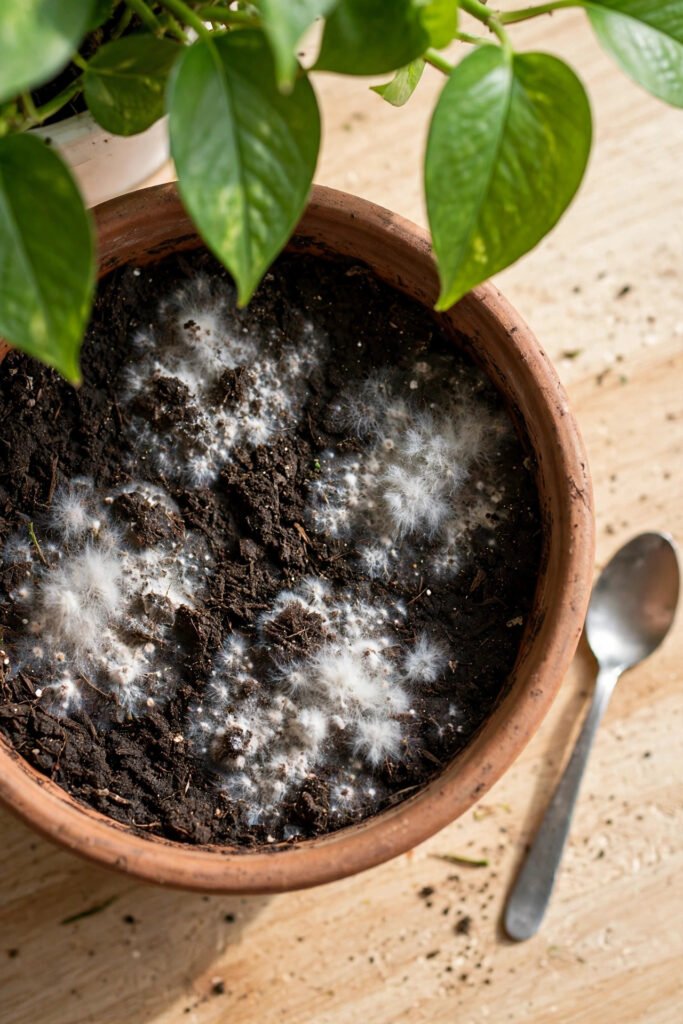
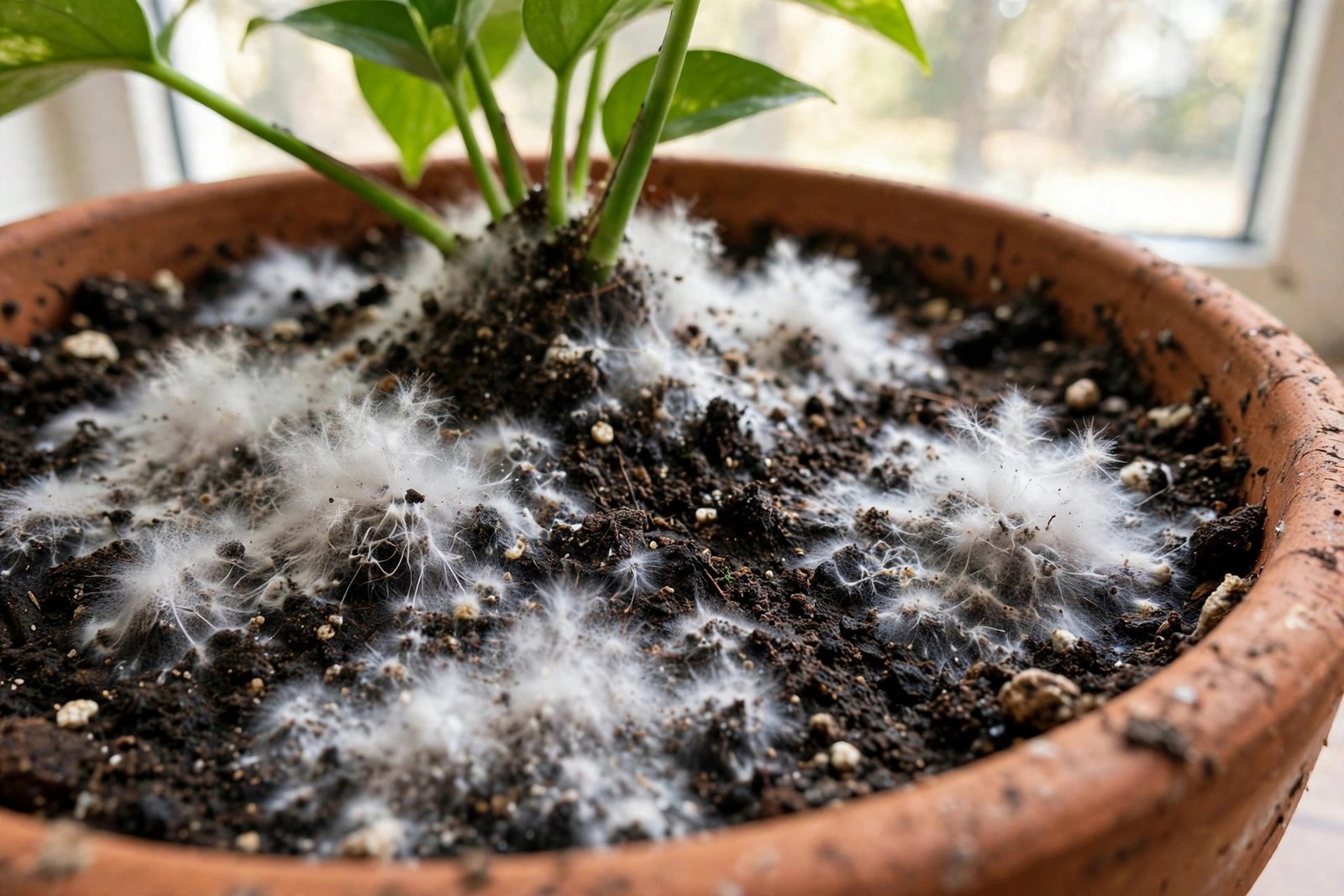
You go to water your favourite houseplant and stop mid-pour: the soil is covered in a soft white fuzz, like a thin layer of cotton wool creeping around the base of the plant. It looks alarming — and vaguely unhygienic — and the first question is always the same: is this hurting my plant, and do I need to throw the whole pot away? Take a breath. In the great majority of cases, white mold on soil is a cosmetic nuisance rather than a plant emergency, and it is easy to remove in a few minutes.
This guide explains what that white growth actually is, why it appeared, whether it is dangerous for your plant (and for you), the simple steps to get rid of it, and how to stop it coming back.
Quick Answer
White mold on plant soil is usually a harmless fungus that feeds on decaying organic matter in the potting mix. It rarely damages a healthy plant, but it is a useful warning sign that the soil is staying too wet and the air around the plant is too still. To remove it: scrape off the top 2 cm of soil, replace it with fresh mix, let the soil dry out more between waterings, and move the plant somewhere with better light and airflow.
What Is the White Mold on Plant Soil?
Potting soil is full of life. It contains tiny pieces of bark, compost, and other organic material, and it naturally hosts fungi and bacteria that break that material down. Most of the time this hidden workforce stays invisible. But when conditions suit it — constant moisture, warmth, still air, and plenty of organic matter on the surface — the fungi grow boldly enough to show themselves as a white, grey, or slightly yellow fuzzy layer on top of the soil.
In other words, the mold is not usually an invader that arrived to attack your plant. It is a normal soil organism having a very good week. The plant itself is rarely on its menu; decaying matter in the mix is.
Why Does White Mold Appear?
- The soil stays wet for too long. This is the number one cause. Watering too often, a pot that drains poorly, or a saucer that keeps the pot sitting in water all keep the surface damp — exactly what mold loves.
- Poor airflow. A plant tucked in a still, humid corner dries out far more slowly than one with gentle air movement around it.
- Low light. Dark spots stay cooler and damper, and the soil surface takes much longer to dry between waterings.
- Organic matter on the surface. Fallen leaves left to rot on the soil, or a rich, compost-heavy mix, give fungi extra food right where they sit.
- Watering from above, little and often. Frequent light sprinkles keep just the surface wet — the mold’s favourite zone — without properly watering the roots below.
If several of these sound familiar, your watering habits are the place to look first. Chronic wet soil causes far bigger problems than mold — our guide on how to fix an overwatered houseplant explains how to rescue a plant whose roots have been sitting in soggy soil.
Is White Mold Dangerous?
For Your Plant
Usually, no. The common white soil molds feed on dead organic matter, not on living plant tissue, and a healthy established plant will carry on growing untroubled. There are two exceptions to keep in mind. Very young seedlings can be smothered by a thick mat of growth, and mold is a symptom of wet conditions that can harm roots over time — so treat it as an early warning rather than the main problem.
For People and Pets
For most people, ordinary soil mold is not a health concern, and it can be handled with basic care: wash your hands after working with the soil, and avoid breathing in dust when scraping dry moldy soil (working with slightly damp soil, or wearing a simple mask, keeps any spores down). If anyone in the home has a mold allergy or a weakened immune system, it is sensible to remove the mold promptly, keep the plant out of bedrooms for a while, and improve ventilation. Curious pets are far more interested in the plant itself than the soil surface, but discouraging digging in pots is always a good idea.
How to Remove White Mold, Step by Step
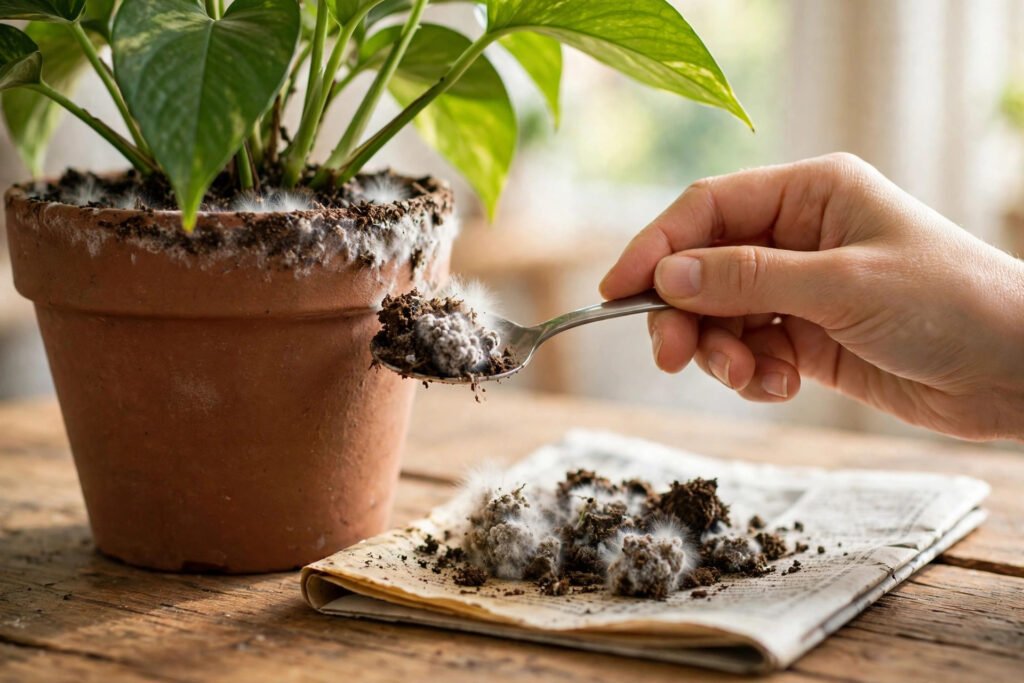
- Take the plant somewhere easy to clean — a sink, balcony, or a sheet of newspaper on the table.
- Scrape off the top layer. With a spoon or small trowel, lift away the top 2 cm (about an inch) of soil, taking the moldy patches with it. Put the removed soil straight into the bin — not the compost, and not onto other pots.
- Top up with fresh soil. Replace what you removed with fresh, dry potting mix.
- Let the soil dry. Hold off watering until the top few centimetres feel dry to your finger. This single change does most of the work.
- Improve light and airflow. Move the plant to a brighter spot and, if you can, somewhere air moves gently. Open a nearby window when weather allows.
- Check the drainage. Make sure the pot’s holes are clear and always empty the saucer after watering so the pot never stands in water.
An optional extra step: some gardeners lightly sprinkle ground cinnamon over the soil surface after cleaning, as cinnamon is a mild natural antifungal and smells pleasant. It is not essential — drying and airflow are what really solve the problem — but it does no harm.
How to Stop Mold Coming Back
- Water only when the plant needs it. Check the soil with your finger before reaching for the watering can. Our guide on how often to water indoor plants explains the simple check that prevents most watering problems.
- Water thoroughly, then let it drain. One deep watering that drains fully is better than daily sprinkles.
- Clear fallen leaves. Pick dead leaves off the soil surface before they rot.
- Give plants breathing room. Avoid crowding pots tightly together in a still corner; a little space lets surfaces dry.
- Refresh the top layer now and then. Replacing the top few centimetres of soil once or twice a year keeps the surface fresh and less inviting.
Mistakes to Avoid
- Throwing the whole plant away. Almost never necessary — surface mold is one of the easiest plant problems to fix.
- Watering on a strict schedule. The calendar cannot feel your soil. Constantly damp soil is what invited the mold in the first place.
- Covering the mold with fresh soil without removing it. Burying it hides the fuzz for a few days, but the wet conditions remain and it grows straight back through.
- Using strong chemical sprays indoors. Unnecessary for this problem, and harsh products can damage leaves and roots. The physical fix — remove, dry, ventilate — works.
- Ignoring what the mold is telling you. If mold returns again and again, the real issue is wet soil or poor drainage, and the roots will eventually suffer even if the plant looks fine today.
Frequently Asked Questions
Is the white stuff on my soil always mold?
Not always. A white, crusty layer that feels dry and hard is usually mineral salts from tap water and fertiliser building up on the surface — scrape it off and flush the soil with plain water occasionally. Soft, fuzzy, slightly raised patches are mold. Small white round granules mixed through the soil are perlite, a normal soil ingredient, and need no action at all.
Will the mold spread to my other plants?
Fungal spores are already present in every pot of soil, so it is less a matter of spreading and more a matter of conditions. If a neighbouring plant is also kept very wet in still air, it may grow mold too. Fix the watering and airflow, and you fix it everywhere at once.
Do I need to repot the plant completely?
Only if the mold keeps returning despite drier soil, or the mix smells sour and stays soggy — signs the soil itself has broken down. In that case, repot with fresh mix, shake the old soil from the roots, and check the roots are firm and pale rather than brown and mushy.
Is this the same as the white powder on my plant’s leaves?
No — that is usually powdery mildew, a different fungus that grows on leaves and stems and does affect the plant directly. White mold on the soil surface stays in the soil and feeds on organic matter. The two problems look similar in colour but need different responses, so check where the white growth actually is.
A Small Problem With a Simple Fix
White mold on plant soil looks worse than it is. Scrape it away, let the soil breathe and dry a little between waterings, and it almost always disappears for good — while the drier, airier conditions make your plant healthier in every other way too. For more calm, practical fixes to everyday plant troubles, explore our indoor plant care and problem-solving guides.