
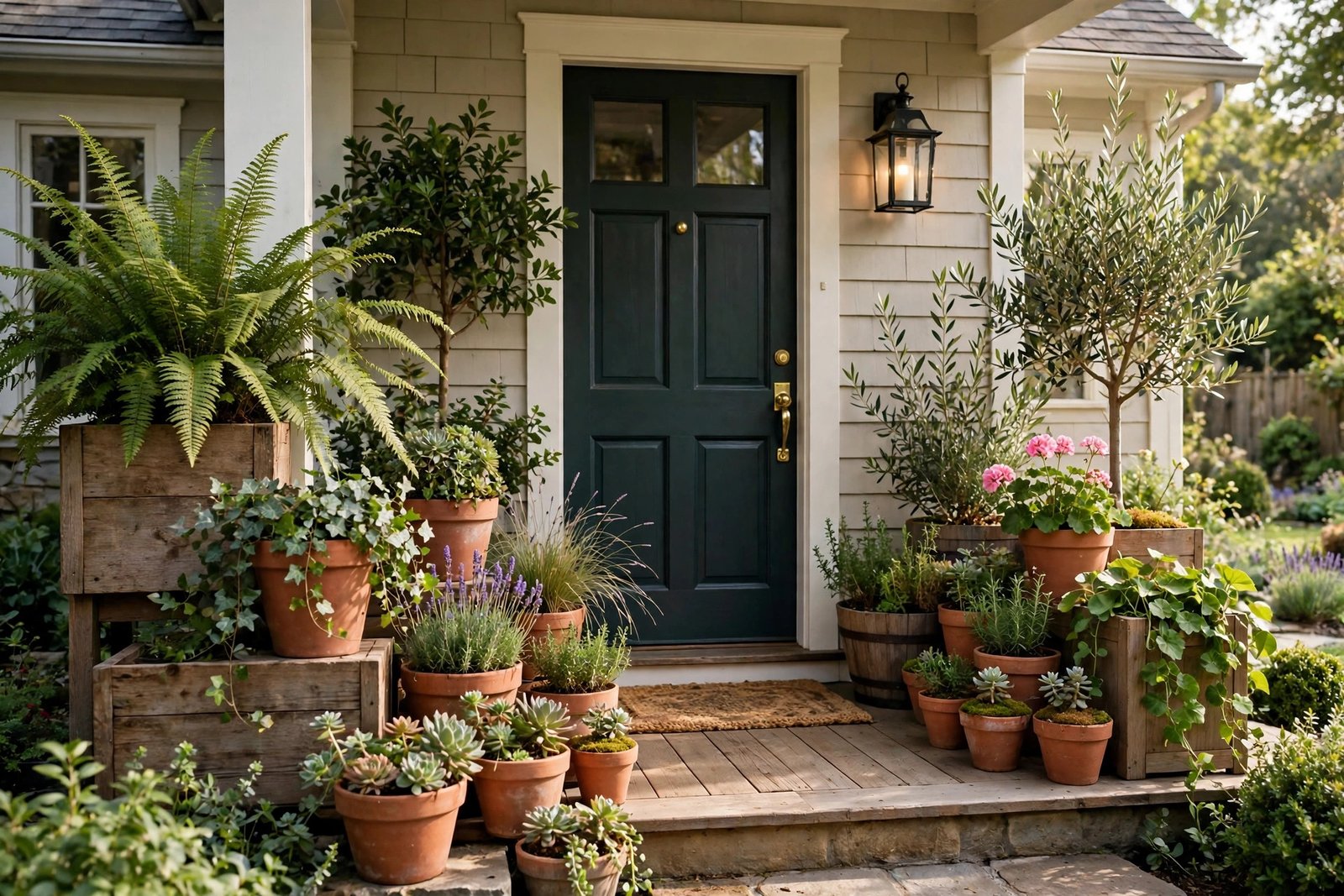
Your front porch is the first hello your home gives to everyone who visits — and to you, every time you come back at the end of the day. Yet for many homes it stays bare and purely practical: a door, a mat, maybe one lonely pot. The encouraging truth is that a cozy, welcoming porch does not need a big space, a big budget, or a lot of plants. It needs a simple plan: a couple of generous anchor plants, layers at different heights, and pots that look like they belong together. This step-by-step guide shows you how to build that look on any porch, from a wide veranda to a small front step.
Quick Answer
Start with two larger plants framing the front door, then build layers around them: tall plants at the back, medium pots in the middle, and small pots plus trailing plants at the front and along the edges. Keep your pots to one or two materials or colours so the arrangement looks calm and intentional, group plants in odd numbers rather than lining them up in a row, and choose plants that genuinely suit the light your porch receives. Finish with one soft touch — a lantern, a chair with a cushion, or a woven mat — and keep a simple weekly care routine so everything stays fresh.
Step 1: Look at Your Light and Space First
Before buying a single plant, spend a day noticing your porch. How many hours of direct sun does it get, and at what time of day? A porch flooded with afternoon sun and a porch in all-day shade need completely different plants, and choosing for the light you actually have — rather than the light you wish you had — is the single biggest factor in whether a porch display thrives or quietly dies. Next, measure the usable space. Note where the door swings, where people walk, and where post and deliveries land. Plants should frame the entrance, never crowd it: keep the walkway fully clear and leave comfortable room around the door itself.
Step 2: Start With Two Anchor Plants
Every good porch arrangement begins with structure. Place one substantial plant on each side of the door — in a generous pot, tall enough to frame the entrance rather than hide it. Small evergreen shrubs, a compact ornamental tree, or large leafy plants all work well, and evergreens earn their place because they keep the porch looking alive in every season, not just in summer. Matching anchors on both sides give a classic, symmetrical feel; if your porch is very small, one larger anchor plant on one side, balanced by a cluster of smaller pots on the other, works just as well and feels more relaxed.

Step 3: Build Layers With Height
A row of pots all sitting on the floor at the same height looks flat, no matter how pretty the plants are. Coziness comes from layers. With your anchors as the tall back layer, add a middle layer of medium pots on the floor or on the porch steps, then a low front layer of small pots and trailing plants that soften the edges of steps and containers. Then lift some plants up: plant stands, an upturned sturdy crate, a small stool, wall-mounted planters, and hanging baskets all add height without taking floor space. If you are choosing between fixing planters to a railing or standing pots on the floor, the comparison in our guide to balcony rail planters vs floor pots covers the pros and cons that apply on a porch too.
Step 4: Mix Leaf Shapes First, Then Add Flower Colour
Professional-looking arrangements are built on foliage, not flowers. Combine different leaf shapes and textures — broad leaves beside fine, feathery ones, upright plants beside soft, trailing ones — and the display looks rich even when nothing is in bloom. Then add colour with a plan: pick two or three flower colours that sit happily together and repeat them in at least two places each, so the eye reads the porch as one design rather than a collection of unrelated pots. A restrained palette in shades of one colour family, or a classic pairing like soft white with one accent colour, almost always looks more expensive and more peaceful than every colour at once.
Step 5: Keep Your Pots Cohesive
The fastest way to make mismatched plants look like a designed display is to unite the containers. Choose one main material or colour family — weathered terracotta, simple black or charcoal, natural wood, or clean white — and let most of your pots belong to it. An accent pot here and there is fine, but a porch where every pot is a different colour, shape, and material will always look accidental. If your collection of pots is mixed, painting the plainest ones in a single colour is a quick, satisfying fix. A handmade wooden planter adds warmth and character too, and it is an easy weekend project — our beginner guide to building a simple wooden planter box walks through it step by step.

Step 6: Add One or Two Cozy Finishing Touches
Plants do most of the work, but one or two non-plant touches turn a planted porch into a cozy one. A lantern or two beside the door, a small chair or bench with a cushion if space allows, a woven outdoor mat under the pots, or a simple wreath on the door all soften the scene and make it feel lived in rather than displayed. The key word is restraint: one or two touches add warmth, while a porch crowded with ornaments loses the calm, green feeling you built. Choose pieces that can handle outdoor weather, and bring soft furnishings in during long wet spells.
Step 7: Keep It Alive With a Simple Routine
A styled porch only stays cozy if the plants stay healthy, so build care into the plan. Group plants with similar thirst together so watering is one simple pass with the can, use the largest pots you can for the sunniest spots because small pots on a hot porch dry out daily, and add a mulch layer to slow evaporation. Deadhead flowering plants weekly to keep them blooming, and sweep fallen leaves off the porch — five tidy minutes transforms the feel of an entrance. Finally, swap a little with the seasons: spring bulbs give way to summer flowers, then to warm autumn colour and berries, then to evergreens and bare sculptural branches in the cold months, so the porch always has something to show.
Mistakes to Avoid
- Buying plants before checking the light. Sun-lovers sulking in shade is the most common porch failure. Watch the light for a day first.
- Lots of tiny pots scattered around. Many small pots look cluttered and dry out constantly. A few larger pots look calmer and need less watering.
- Blocking the door or walkway. Plants should welcome people in, not make them squeeze past. Keep the route completely clear.
- Every pot a different colour and material. Visual noise kills the cozy feeling. One pot family, repeated, looks designed.
- Forgetting the off-season. A porch built only on summer flowers looks empty for half the year. Evergreen anchors carry it through.
- Leaving dead plants on display. One brown, neglected pot undoes the whole welcome. Replace or remove failures promptly.
Frequently Asked Questions
What are the best plants for a shady front porch?
Shade is a gift if you choose for it: ferns, hostas, begonias, impatiens, and many leafy foliage plants look lush and relaxed out of direct sun, and they need less watering than sun-loving flowers. Add one or two with variegated or pale leaves to brighten a dark corner, and let texture — frilly ferns against broad hosta leaves — do the decorating instead of flowers.
How many plants do I actually need for a cozy porch?
Fewer than you think. A good starting arrangement is five to seven containers: two anchors by the door, two or three medium pots layered on the floor or steps, and one or two small or trailing pots at the front. Add a hanging basket and you have a complete look. It is better to start there and add one plant at a time than to overcrowd from day one.
How do I stop porch pots drying out so fast?
Use bigger pots with more soil, since volume is what holds water; add a mulch layer on the surface; group pots together so they shade one another’s soil; and water deeply in the morning rather than sprinkling in the evening. In a heatwave, even well-planned porch pots may need water daily — a quick finger check in the soil tells you the truth.
Can I style a tiny porch or just a doorstep?
Yes — small entrances often look the most charming. Use one anchor plant beside the door, one hanging basket or wall planter to use the vertical space, and a small cluster of two or three pots on the step itself. Keep colours tight, keep the pots in one family, and keep the doorstep clear enough to step on safely. Scale down the pieces, not the plan.
Conclusion
A cozy front porch is a recipe, not a shopping list: check the light, anchor the door with two generous plants, layer heights and textures, unite the pots, repeat a simple colour palette, and add one warm finishing touch. Style it once with this structure and it only needs small seasonal swaps and a few minutes of care each week to stay welcoming all year. For more outdoor styling and project ideas, browse our garden decor, DIY and outdoor living category.

1 thought on “How to Style a Cozy Front Porch With Plants (Step by Step)”