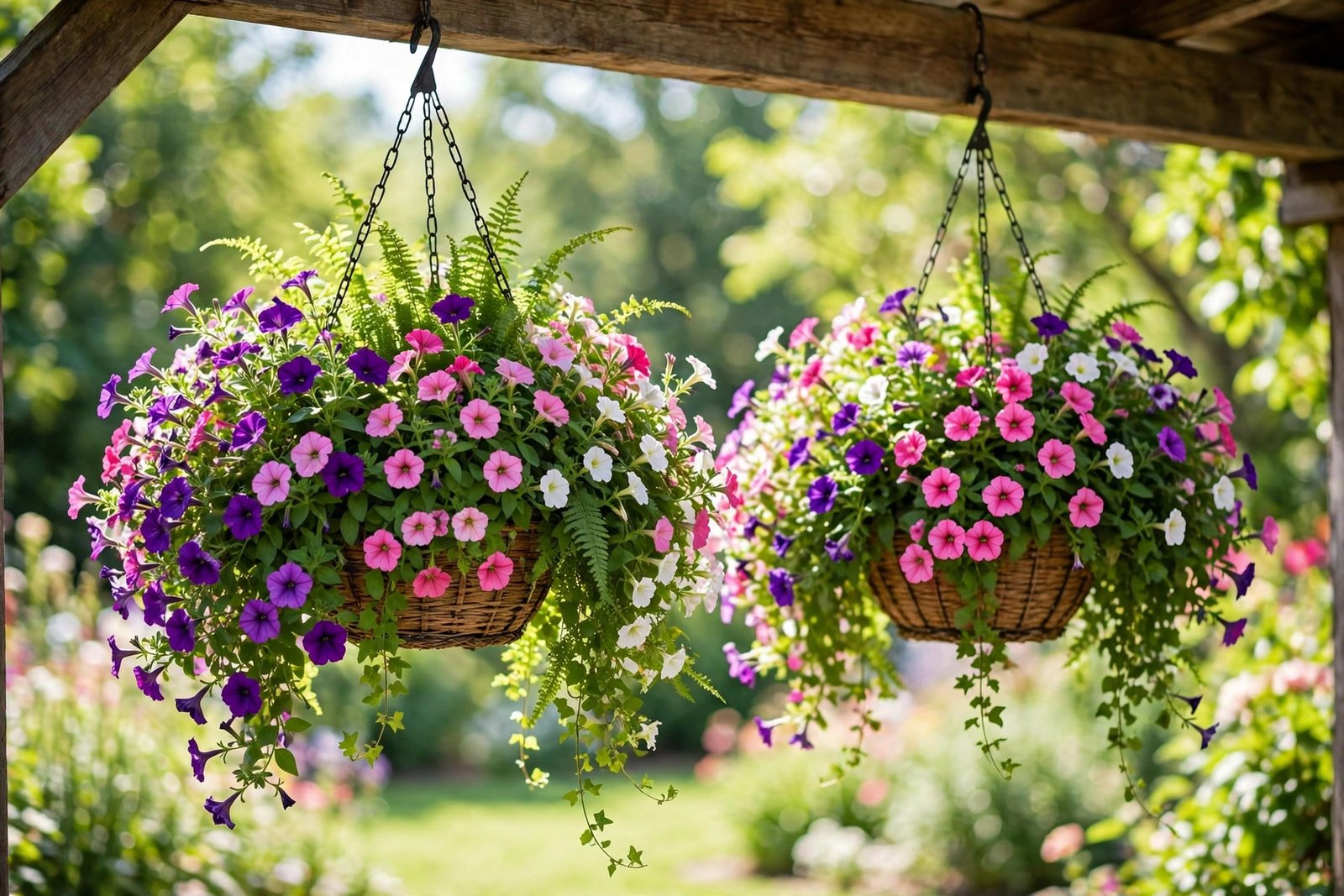
A hanging basket in full bloom is one of the prettiest sights in any garden or balcony — a floating ball of colour that turns an empty wall or bare porch into a feature. Yet hanging baskets also have a reputation: they look wonderful for a few weeks, then turn crispy and tired. The culprit is almost never the plants. It is water. A basket hangs in moving air, exposed on all sides, with a small volume of soil that dries from every direction at once.
The encouraging truth is that baskets are not difficult once you understand their thirst. Choose the right basket and soil, plant generously, and water with a simple routine, and your baskets can stay lush from planting day to the end of the season.
Quick Answer
To stop hanging baskets drying out: use the largest basket you can hang safely, line it to slow evaporation, and fill it with a moisture-retentive soil mix with water-storing granules mixed in. Plant closely, water deeply every day in warm weather (twice on very hot, windy days), and feed weekly. The single biggest upgrade is basket size — a bigger basket holds far more water, which matters for the same reason pots that dry out too fast are usually small ones.

Why Hanging Baskets Dry Out So Fast
A plant in the ground can send roots deep toward moisture. A plant in a pot on the ground loses water mainly from the soil surface. A hanging basket loses water from the surface, the sides, and the bottom, while warm air circulates freely all around it. Wind — even a gentle breeze — strips moisture away hour after hour. Add a sunny position and thirsty flowering plants at the peak of their growth, and a basket can go from freshly watered to bone dry in a single warm day.
Understanding this changes how you set the basket up. Every choice — size, liner, soil, position — should aim at one goal: keeping more water in the basket for longer, and making it easy to replace the water that leaves.
Step 1: Choose a Basket That Holds Water
- Go bigger than you think. A basket of 35–40 cm (14–16 inches) across holds dramatically more soil and water than a 30 cm one, and the plants perform better all season. Check that your bracket and hook can carry the weight of a fully watered basket, which is heavier than most people expect.
- Consider solid or plastic-lined baskets. Traditional wire baskets with moss or fibre liners look charming but lose water fastest through their open sides. A solid plastic or metal basket, or a wire basket with a plastic liner inside the fibre, keeps moisture in far longer while looking almost identical once plants spill over the edge.
- Match the basket to the spot. In a windy position, drying is even faster, so size and water retention matter more. In a sheltered, lightly shaded spot, a traditional open basket can still work beautifully.
Step 2: Line and Fill It Properly
If you use a wire basket, line it with moss, coir fibre, or a ready-made liner so soil cannot wash out. A simple trick used by many gardeners is to set a small plastic saucer or a circle of plastic (with a few drainage slits) in the bottom of the liner before adding soil. This creates a hidden mini-reservoir that catches water before it escapes, while the slits prevent true waterlogging.
For the fill, ordinary multi-purpose compost is a starting point, but baskets do better with a mix designed to hold moisture. A good basket soil combines compost with water-retaining ingredients — the principles in this guide to the best soil mix for potted plants apply directly: add water-storing granules (following the packet amounts) and some slow-release fertiliser at planting time, and your baskets start life with both a reservoir and a pantry. Fill generously and firm gently; soil settles after the first few waterings, so mound it slightly above the rim.
Step 3: Choose Plants That Can Keep Up
Baskets are a team effort, and the classic recipe works: a centrepiece plant for height, fillers for body, and trailers to spill over the sides. Good basket plants are vigorous, flower for a long season, and tolerate their roots being a little crowded. Reliable choices include petunias and calibrachoa for clouds of flowers, trailing lobelia and bacopa for soft edges, geraniums for structure and colour, fuchsias for shadier spots, and trailing herbs like thyme where an edible basket appeals. Group plants with similar thirst together, and avoid placing one very drought-tolerant plant in a basket you will water daily for its thirstier companions — it will sulk in the damp.
Plant closely for instant fullness, but not so tightly that roots have no room at all. As a guide, a 35–40 cm basket takes roughly five to seven plants depending on their size. Push a few trailing plants through the sides of a wire basket as you fill it, and the basket will look furnished from every angle instead of only from the top.
Step 4: Water Like You Mean It
Watering is where baskets succeed or fail, so it deserves a routine rather than good intentions.
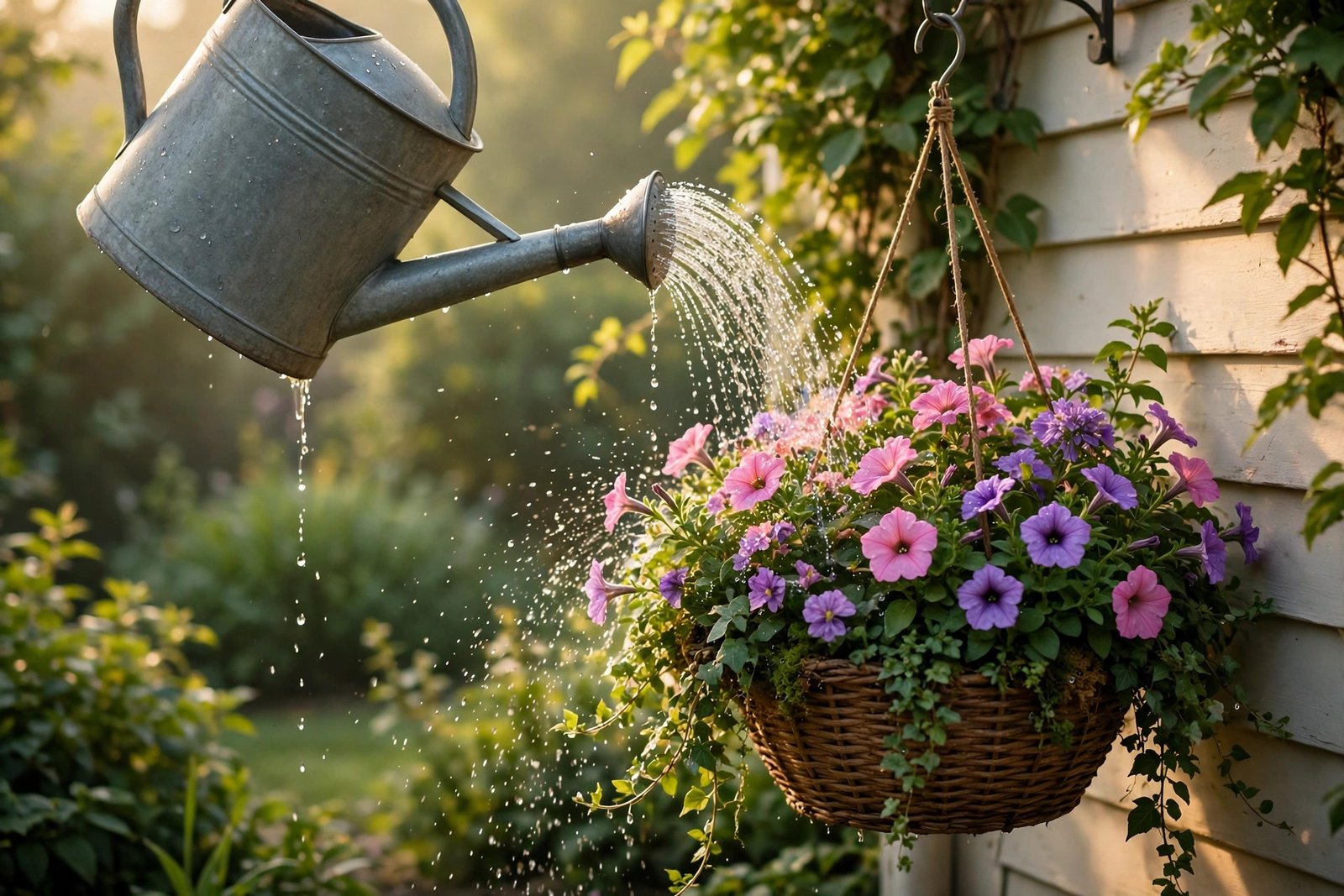
- Water deeply, not politely. A quick splash wets only the top. Water slowly until it runs from the bottom, pause, and water again — baskets absorb far more on the second pass.
- Water daily in warm weather. During hot or windy spells, check morning and evening; a second drink is often needed. In cooler, dull weather, every second day may be enough. Let the surface and a fingertip of soil be your guide, and lift the basket if you can — a light basket is a thirsty basket.
- Water early or late. Morning watering sets plants up for the day. Avoid the fierce middle of the day, when much of the water evaporates before roots can use it.
- Reach the basket properly. A long-spout watering can, a hose with a gentle lance, or a pulley that lowers the basket to you all beat stretching on tiptoe and missing half the soil. If watering is physically awkward, it will not happen daily — solve the access and the routine solves itself.
- Rescue a dried-out basket by soaking. If a basket has gone fully dry, the soil often shrinks and water runs straight through. Take the basket down and stand it in a bucket of water for 20–30 minutes until it feels heavy again, then drain and rehang.
Step 5: Feed for a Long Season
Daily watering washes nutrients out of a small soil volume quickly, and hungry baskets stop flowering by midsummer even when water is perfect. Slow-release fertiliser mixed in at planting gives a base supply, but a liquid feed once a week during the flowering season keeps the display at its peak. Deadhead spent flowers on plants that need it, pinch back straggly stems, and your basket will keep producing new growth instead of setting seed and retiring early. More container care guides live in the container gardening and planters category if you want to go further.
Mistakes to Avoid
- Buying the smallest, cheapest basket. It dries fastest, grows the weakest display, and demands the most work. Size is kindness.
- Skipping the liner reservoir trick. Water that runs straight out of a basket is water your plants never drank.
- Watering little and often. Shallow splashes train roots to the surface and leave the heart of the basket dry. Deep drinks, then a pause, work far better.
- Hanging baskets where you cannot reach them. Out of reach becomes out of mind, and baskets forgive nothing.
- Forgetting how heavy a watered basket is. Weak hooks and brackets are a genuine safety risk. Fix baskets to something solid.
- Giving up after one dry day. Most basket plants recover from a wilt with a thorough soak. Rescue first; judge later.
Frequently Asked Questions
How often should I water a hanging basket?
In warm weather, expect to water once a day, and twice on hot, windy days. In cooler or rainy spells, every two to three days may be plenty. The reliable test is weight and touch: if the basket feels light and the top of the soil is dry, water deeply.
What is the best soil for hanging baskets?
A moisture-retentive potting mix with water-storing granules and slow-release fertiliser mixed in. Plain garden soil is too heavy and compacts badly in baskets. The goal is a mix that holds water like a sponge but still drains freely from the bottom.
Can I grow vegetables or herbs in a hanging basket?
Yes. Trailing tomatoes bred for baskets, strawberries, and herbs such as thyme and trailing rosemary all grow well hanging up, which also keeps them away from slugs. Just remember edible baskets are even thirstier once fruit forms, so keep the watering routine strict.
Why does water run straight through my basket?
The soil has probably dried out completely and shrunk away from the sides, so water escapes down the gap. Soak the whole basket in a bucket of water until it is heavy again. Afterwards, water a little, wait a few minutes, and water again — the pause lets dry soil actually absorb moisture.
Conclusion
A hanging basket is simply a garden in the air, and like any garden it mostly asks for water given generously and regularly. Set it up to hold moisture — a big basket, a smart liner, thirst-quenching soil — then water deeply each day and feed each week. Do that, and the crispy-basket story never has to be yours: just colour, spilling over the edges, all season long.

3 thoughts on “How to Grow Plants in Hanging Baskets Without Them Drying Out”